 Greetings again from the darkness. The best movies revolving around alcoholism usually make us feel like we are intruding on someone’s personal train wreck. Three that come to mind, each resulting in at least one Oscar, are LEAVING LAS VEGAS (1995), DAYS OF WINE AND ROSES (1962), and THE LOST WEEKEND (1945). This one is based on the 2016 memoir by Amy Liptrot, who also adapted the book for the screen with director Nora Fingscheidt (known for her festival favorite SYSTEM CRASHER, 2019).
Having already been nominated for four Oscars, there is little debate that Saoirse Ronan is one of the top actors of her generation. And this may be her best performance yet. As Rona, she captures the quiet desperation and loneliness that isn’t always so quiet. We see Rona as the unemployed, Masters-degreed, sloppy drunk party girl. We see her as the drunken victim of sexual violence. We see her as the next-day apologetic drunk who destroys a relationship. We see her in rehab and attending AA meetings. We see her relapse. We see her strained parental relations, and we see her in near isolation in hopes of kicking an addiction that she’s not even sure she wants to kick. It’s heartbreaking when she admits, “I can’t be happy sober.” We feel for those who have experienced this with loved ones.
Living in London, Rona is all about the excitement and energy of dancing and partying and socializing … and drinking. She says she likes how it makes her feel, ignoring the next day misery and regret. Her boyfriend, Daynin (Paapa Esiedu) is supportive and understanding, right up until the point where he’s had too much of her self-destructive ways. Rona finally accepts rehab and after 90 days, she heads home to Orkney – a sparsely populated archipelago off the north coast of Scotland. Rona’s parents are divorced. Her mom (Saskia Reeves) has turned to religion, while her bipolar dad (Stephen Dillane) lives in a caravan and works his sheep farm on his good days. The desolate environment lacks the constant temptations of London (though she still finds a few), and Rona hopes time in Orkney will be restorative to her health and spirit.
Filmmaker Fingscheidt makes some interesting choices. The film jumps around in time with Rona’s flashbacks to moments in her past – some going back to childhood. This jumping around reflects the mental struggles she goes through in her quest for sobriety. There is also a substantial amount of science and nature included. In voiceover, Rona details the specifics of addictive drinking, as well as the mythology of seals and selkies. Saoirse Ronan is superb throughout, yet two scenes stood out for me. The first is when she meets a stranger on the street, displaying her desperation for companionship and socialization. The second comes when she explains to her mother how seaweed is her new passion (her new addiction?) and is her focus for the future.
The only thing close to being as photogenic as Saoirse Ronan is the coastal Scottish landscape. It’s both breathtaking for us and claustrophobic at times for Rona as she fights the urges. Rona’s job with RSPB had me doing a quick Google search for endangered Corncrakes, and though most of the film left me emotionally drained, watching Rona ‘conduct the ocean’ provided a welcome jolt of joy.
*** For those who are interested in reading Amy Liptrot’s thoughts on the film about her life, I recommend this commentary she published:
https://www.theguardian.com/books/2024/sep/22/amy-liptrot-outrun-life-as-alcoholic-on-big-screen
Opens in theaters on October 4, 2024


 Posted by David Ferguson
 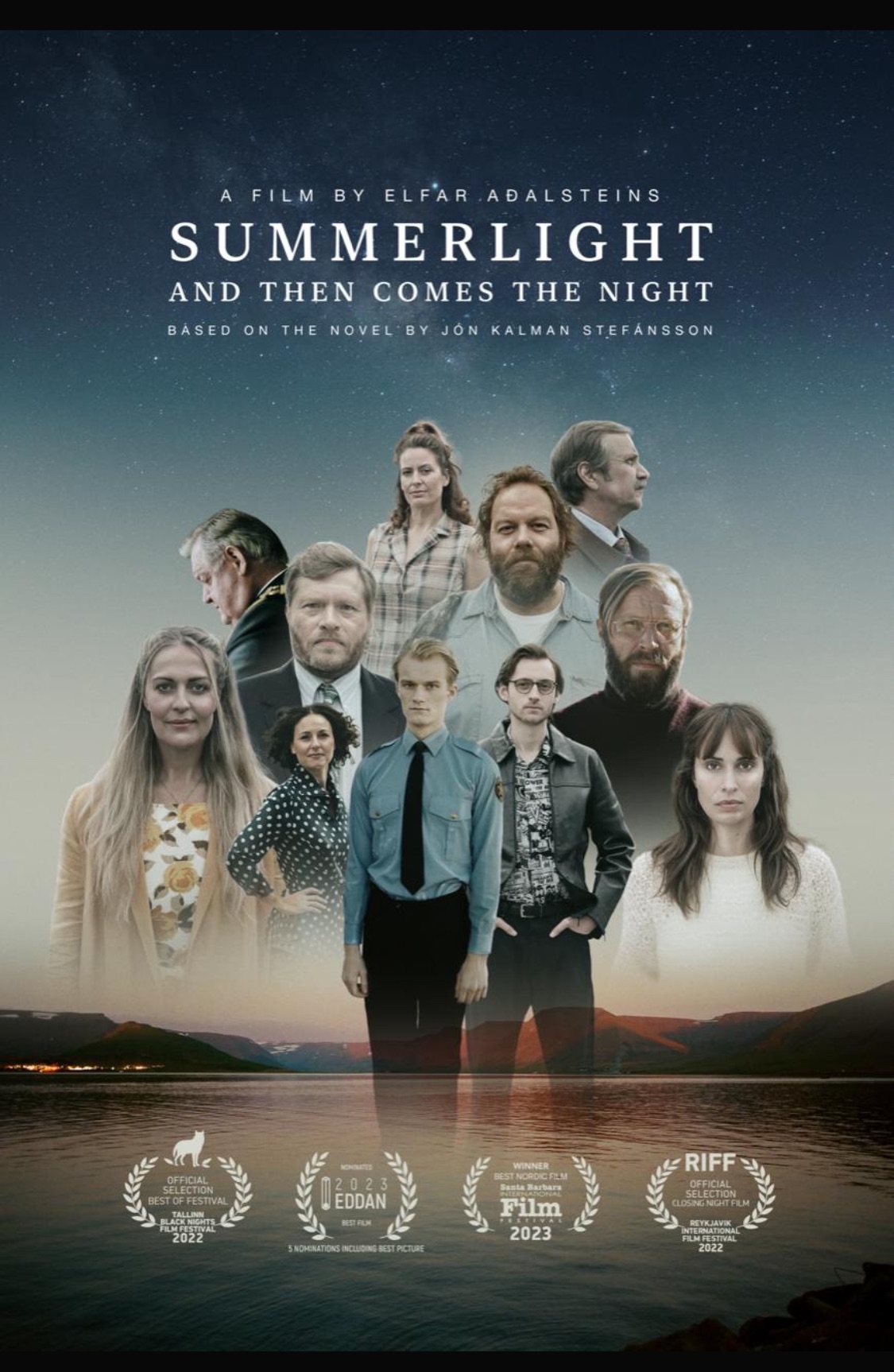 Greetings again from the darkness. I’ve always been enamored with movies which are paced so deliberately that it can easily seem like not much is happening, when actually we drift from dark comedy to tenderness to tragedy. It’s likely why I’ve been drawn to films from Iceland, including this one from writer-director Elfar Adalsteins (END OF SENTENCE, 2019) who has adapted the 2005 novel from renowned Icelandic author Jon Kalman Stefansson. The culture in this small village is such that folks mostly keep to themselves, and nature is a constant companion.
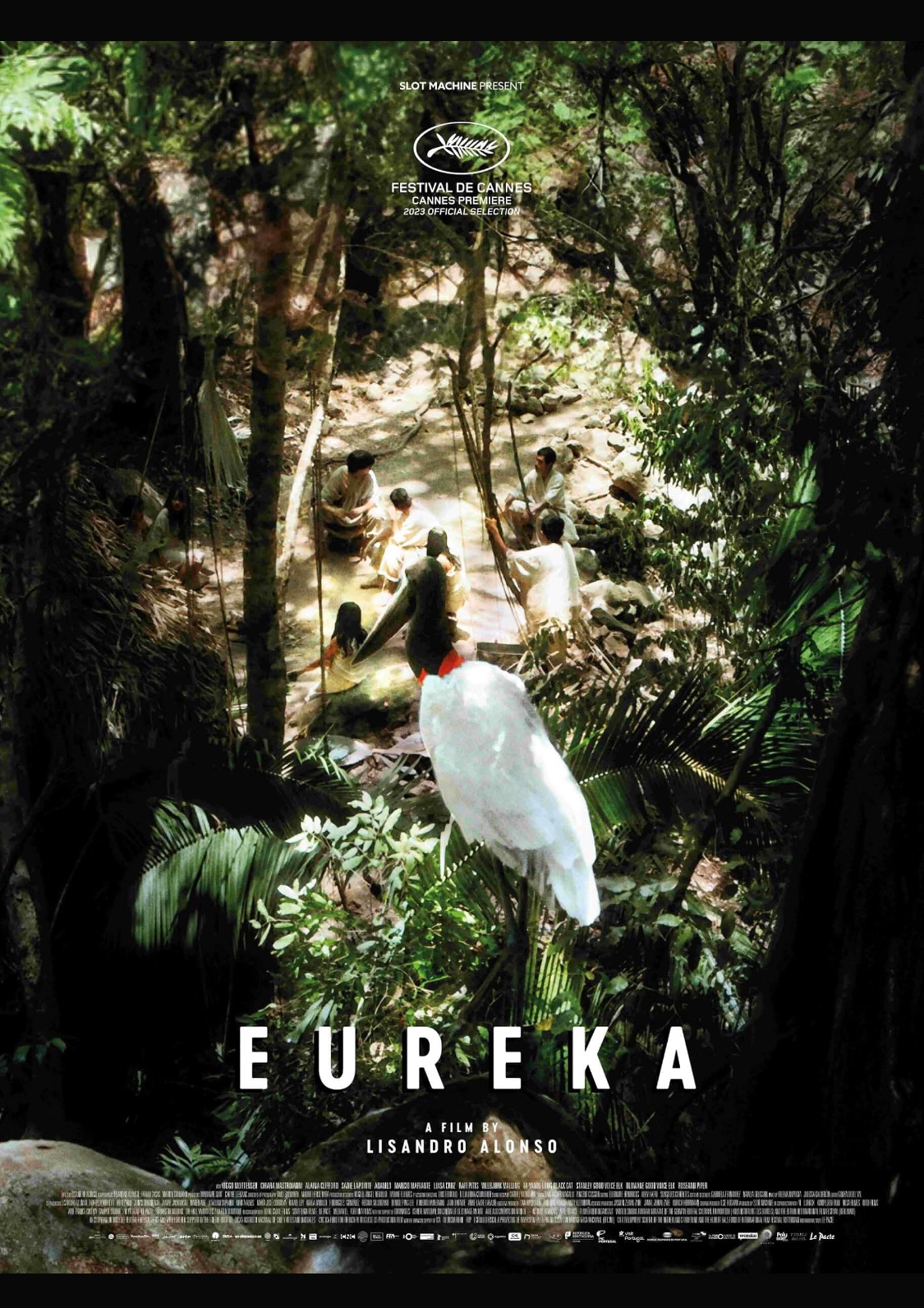 Greetings again from the darkness. Part of my attraction to arthouse films is the often-unconventional path to storytelling that the filmmakers take – sometimes expending more effort on the look and style than on the characters and plot. These films once only had life in film festivals, and today many also carry on in the streaming revolution. I’ll go ahead and admit upfront that this latest from Argentinian filmmaker Lisandro Alonso (JUAJA, 2014) and co-writers Martin Caamano and Fabian Casas is a bit esoteric for my tastes … although it looks beautiful.
 Greetings again from the darkness. Many of us (perhaps too many) are drawn to the dark side – topics that dig into the ugly side of human nature that Mr. Rogers mostly avoided in his neighborhood. A quick look at the popularity of true crime shows provides proof of the fascination that corresponds to those who don’t subscribe to the golden rule. Writer-director Pascal Plante has a track record of film festival success and his latest fits the mold – fascinating to watch with a twist that may have viewers questioning their own assumptions.
 Greetings again from the darkness. The Troubles of Northern Ireland were a 30-year political and social conflict that officially ended in 1998 with the Good Friday Agreement. Even today, the pain and memories and divisions remain. Writer-director Rich Peppiatt’s film is set in 2019 (West Belfast) and is billed as a “mostly true story” involving controversial hip-hop group Kneecap and the push to make Irish an official language. Early on we are told, “A country without a language is only half a country.”
 Greetings again from the darkness. No dialogue is spoken for the first two minutes, which is significant when you note this is a 16-minute Short Film. That first couple of minutes features Mrs. Kelly (Brid Ni Neachtain, THE BANSHEES OF INISHERIN, 2022) diligently going about her business as housekeeper and assistant for a rural Irish priest. As she polishes shoes, vacuums the church, and scrubs the tub, it’s clear Mrs. Kelly is a woman of faith and structure.
 Greetings again from the darkness. This is based on the true story of Irena Gut Opdyke who, during WWII, vowed “If I could save a life, I would.” Directed by Louise Archambault, it has been adapted for the screen by Dan Gordon, who was the playwright for the hit Broadway play. Cinema has been utilized many times over the years to shine a light on so many who acted altruistically in protecting Jews from the Nazis. Some of these heroes saved one life, while others saved hundreds. The courage of these folks deserves to be remembered.
 Greetings again from the darkness. One of the unheralded roles movies can play is to help us better understand various cultures around the world. It’s important to grasp the challenges others face based on where they live. The first feature film from writer-director Zarrar Kahn takes us to Pakistan and elegantly lays out cultural traditions that may have even outlasted laws that have passed.
 Greetings again from the darkness. I do not cook and have never had an interest in learning to. Still, I do understand how some are drawn to it as an art form … creating new dishes and new flavors, while generating such pleasurable sensations across the palettes of others. It’s a passion like many professions (or hobbies), and it’s one that is best shared with others.
 Greetings again from the darkness. For most folks, life is a constant battle each and every day as we attempt to avoid the chaos stemming from work, health, friends, family, and overall stress. Sometimes we kid ourselves into thinking we have things under control, but inevitably, a sharp reminder pops up letting us know “control” is a mirage, and life is meant to be more rollercoaster than smooth sailing. Longtime (and always interesting) writer-director Wim Wenders and co-writer Takuma Takasaki have teamed up for this Oscar nominated film (Best International Feature) depicting one man’s attempt to control his life.
 Movie Reviews from the Dark