OSCAR NOMINATED SHORTS – Live Action and Animated (2012)

February 21, 2013

Greetings again from the darkness. In what has become an annual ritual, I got to take in all of this year’s Oscar nominated short films.  It really is enjoyable and it reminds me of a mini-film festival.  Taking in so many films by so many different filmmakers in a short period of time is pure joy for a movie lover.  This yearthere was the added bonus of having each of the presentations (Live Action and Animated) “hosted” by previous short film Oscar winners William Joyce and Brandon Oldenburg (The Flying Books of Mr Morris Lessmore) and Luke Matheny (God of Love).  The best short films all share one obvious trait … the care and love that goes into the making of each.

Below is my recap by category, in order of preference (not my Oscar predictions):

LIVE ACTION

short death of a shadow Death of a Shadow (Dood van een Schaduw, Belgium) Directed by Tom Van Avermaet.  Very odd story of an “art” collector who captures souls through the shadows of those in their moment of death. Nathan is a former soldier who agreed to capture 10,000 shadows for the collector in the hopes of re-discovering his long lost love Sarah. Jealousy and disappointment lead to undesired consequences.  There are many life lessons crammed into this short film.  This one has a unique look and pace.

Henry (Canada) Directed by Yan England. Henry is an old man who has flashbacks as he tries to make sense of his current life.  He was a concert pianist who met his wife, a violinst during the war. These visions are clear in Henry’s head, but he doesn’t know why this lady keeps showing up … then he recognizes her … and then he doesn’t. It’s easy enough to figure out, but very touching with a top notch performance by Gerard Poirier.  The End card has a quote that is apparently from the director’s father.  It goes something like this: “The worst thing about being an old man is realizing you are losing memories”.

Curfew (USA) Directed by Shawn Christensen, who also stars as Richie, the slacker brother who his sister stoops to calling in a moment of desperation.  He agrees to look after his niece Sophia (Fatima Ptacek).  To do so, he has to climb out of the suicide tub he was in when the phone rang. Is this his chance at redemption? Sophia is very smart and fascinating to watch, but it’s tough to shake that opening image of Richie.  Dancing, a bowling alley and some special flipbooks add a level of poignancy to this one.

Asad (South Africa) Directed by Bryan Buckley, who is world renowned for his commercials – especially Super Bowl ads. Here we see that life in Somalia means you are either a Sea Pirate, a Street Thug, an old fisherman, or one of the scared, faceless masses. Asad is a smart, charismatic young boy too young to join the pirates and too smart to get killed by the thugs. His fishing trip would be among my worst days ever, but for him it’s a coming of age.  Did you catch that?

Buzkashi Boys (Afghanistan/USA) Directed by Sam French. My first exposure to the rough sport of Buzkashi … free-for-all polo played with a dead goat.  Ahmad and Rafi are young boys and good friends set against the backdrop of war-ravaged Afghanistan. It’s a tough world for Ahmad, an orphan who hustles on the street for a little food and small change. Life’s not much better for his more reserved friend Rafi, the son of a harsh blacksmith, who is no fan of Ahmad or wasting daylight hours. The ending is not what you might expect, but it’s beautifully shot and well acted by the boys.

ANIMATED

short head over heels Head Over Heels (UK) Directed by Timothy Reckart. Expert claymation depicting an aging married couple that have grown apart emotionally, but have a seemingly comfortable arrangement – despite the visual loss of equilibrium. The husband tries a simple gesture in an effort to re-connect, but the wife misunderstands and it turns their crazy world upside down (again). It’s a heart-warming story of re-discovery.

Fresh Guacamole (USA) Directed by Adam Pesapane aka PES. At 1 minute, 45 seconds this is the shortest short ever nominated for an Oscar. It’s a visual feast as it uses everyday items such as a pool ball, baseball, dice and poker chips to create a stunning bowl of fresh guacamole. Of course, there is no dialogue but it’s colorful to look at and will generate a smile.

Maggie Simpson in “The Longest Daycare” (USA) Directed by David Silverman, producer of the TV series and director of the feature length The Simpsons Movie (2007) and Monsters, Inc (2001).  Marge drops off Maggie (yes, with pacifier) at The Ayn Rand School for Tots.  Kids are divided into “Gifted” and “Nothing Special”. Maggie desperately wants the zen-like environment offered by the gifted area, but instead is hounded by a brutish boy who loves to stomp all living things.  Maggie’s mission is to save a poor butterfly and she uses much trickery in the process.  The short has no dialogue and seems like a segment pulled directly from the brilliant and long-running series.

Adam and Dog (USA) Directed by Minkyu Lee, also nominated for artwork in Wreck-it Ralph. This is a story of Adam in the Garden of Eden and his making friends with a dog. There is no dialogue in this short and it employees my least favorite type of animation. Still, it’s a nice treat watching Adam and the dog bond … well, until Eve enters the picture.  The dog remains loyal until it’s clear to him that Adam has not.

Paperman (USA) Directed by John Kahrs, an animator at Pixar for 15 years.  A chance meeting at the train station between an office clerk and a lovely woman lead to lipstick on the page and a feverish hunt to track down his dream girl.  Rarely have paper airplanes been so vital to a man’s day or the success of a film.  Serendipity and destiny are key players.


AMOUR (Austria, 2012)

January 22, 2013

amour2 Greetings again from the darkness. I have often defined an entertainer as one who delivers what the audience wants, while an artist creates what he must. Writer/director Michael Haneke strikes me as a true artist in cinema. And an exceptional one at that. Known for such unusual films as The White Ribbon, Cache‘, and the original Funny Games (1997), Haneke often has a way of showing us things about ourselves that we prefer not to see.

Amour means love, and this film could easily have been titled Love and Misery, as strong and indescribable feelings mount when a life partner begins the inevitable slide downhill … a trip which often starts with something as bland as a few moments of blankness at the breakfast table.

amour3 Georges (Jean-Louis Trintignant, A Man and A Woman) and Anne (Emmanuelle Riva, Hiroshima Mon Amour) somehow draw our eye as they sit in the audience as seen from the stage of a soon-to-begin piano concerto. It’s a thought provoking shot when paired with the familiar quip “All the world’s a stage …”. Next we see this octogenarian couple chatting over breakfast, clearly comfortable with each other in the manner that only two people who have shared decades together can become.

A trip to the hospital confirms Anne has had a stroke. And then another. The rest of the film revolves around Georges keeping his promise to Anne that she won’t be put back into the hospital. It’s a real life situation that so many face, yet the answers remain cloudy. So Georges proceeds to become caregiver to the increasingly incapacitated Anne. First wheelchair bound with paralysis on one side. Next she’s learning to operate a motorized chair. Then it’s speech therapy. Finally, she’ bedridden and devolving into someone who can’t express simple emotions. No, this is not typical Hollywood entertainment. This is life’s realities through the expressive and brave acting of two of France’s best.

amour5 It would be easy to say not much happens in the two hour running, but in fact, it is filled with the daily moments that make up life. The moments become an obstacle course when we must assist a loved one in the performance, or if we are the one being assisted. Nurses who may or may not be caring, friends who are struck helpless, and even family (played here by Isabelle Huppert, The Piano Teacher) who feel the responsibility to help, but are caught up in the responsibilities of everyday life.

Death is a common occurrence in movies. Dying is actually quite rare. Haneke doesn’t shy away from any aspect of this sorrowful and difficult journey. He forces us to consider the multiple sides of so many questions, and he certainly feels no obligation to amour4provide us with simple solutions or happy endings. Georges walls off society from doing “what is best” for his wife. He prefers to honor her wishes.

These are two extraordinary performances from two of France’s all-time best actors. Ms. Riva was rewarded with an Oscar nomination and Mr. Trintignant was just as deserving. Mr. Haneke has been nominated as Best Director and the film is up for both Best Foreign Film (Austria) and Best Picture. Don’t mistake any of that recognition as a sign that this is a mainstream movie. It’s exquisite filmmaking, but many will find it difficult or impossible to watch. You best be ready to analyze death versus dying.

watch the trailer:

http://www.youtube.com/watch?v=F7D-Y3T0XFA


RUST AND BONE (De rouille et d’os, Fr, 2012)

January 1, 2013

rust Greetings again from the darkness. Director Jacques Audiard offers up a much different story than his previous film, the powerful A Prophet. Audiard co-wrote the screenplay with Thomas Bidegain based on a short story from Craig Davidson, and the result is a quasi-love story with very little traditional romance.

The two lead performances are simply outstanding. Marion Cotillard plays Steph, a free-spirited Orca trainer at a Sea World type facility, who becomes a double amputee after a freak work site accident. Matthias Schoenaerts (Bullhead) is Ali, an emotionally stunted single dad who has all the qualifications of a big time loser … though with a glimmer of goodness. Their two lives intersect when Ali is working as a bouncer at a nightclub, and then again after Steph’s accident.

rust2 It’s very interesting to see how this story is treated by a French writer/director as opposed to how it might have been handled by a US filmmaker. Audiard allows much quiet simmering by the two lead actors as they both work through their own disabilities – hers physical, his emotional. They both straddle the fine line between human frailty and internal strength, often with the help of the other. It’s not difficult to imagine an American take on this story focusing on the Steph’s painful rehab and struggle to adjust, while also zeroing in on Ali’s physicality as a street brawler and sex machine.

rust3 Cotillard is a true movie star and Schoenaerts soon will be. It’s so rare these days to see two strong talents in such a “little” movie, especially one in which neither character comes close to approaching glamorous – and Ali is not even likable most of the time. This is a well written, well acted character study that points out how a good soul can often save another who might not even care to be saved.

Alexandre Desplat provides yet another strong score – this one complimented by many familiar songs. For those who tend to spend there movie time with only American films, this is one that will provide proof of just how different the view can be through the same camera lens.

**NOTE: very effective CGI allows for many intimate scenes featuring Steph after the amputations

watch the trailer:

http://www.youtube.com/watch?v=vyAJDL3mTxI


A ROYAL AFFAIR (En kongelig affaere, Denmark, 2012)

December 23, 2012

royal affair Greetings again from the darkness. I would venture a guess that most are as uninformed as I about this brief, but altogether impactive and fascinating period of history in Denmark. The story is bookended with the (late 17th century) letter that a seriously ill and deposed Queen Caroline sent to her children, the eldest who would later become King Frederick VI. Director Nikolaj Arcel co-wrote the script with Rasmus Heisterberg (the two also collaborated on the original The Girl with the Dragon Tattoo), and present insight into a most bizarre love triangle andpolitical power struggle that instigated national change … and then a severe reversal … and then change again.

We meet the luminous Caroline (Alicia Vikander from Anna Karenina) as she is traveling from England for her initial meeting with her new husband, King Christian VII of Denmark. Unfortunately, this intellectual and talented woman is stuck with a mentally unstable and childlike spouse. Once she fulfills her duty by delivering a son, the chamber visits are cut off and the two live mostly separate lives. The king is manipulated and controlled by the court and mostly just does what he is told to do, and signs royal affair2what he is supposed to sign. This keeps the aristocracy fat and happy, while continuing the harsh policies against the poor peasants.

A local doctor is arranged for the king’s European tour and we discover that this doctor has learned how to co-exist and gain the trust of the odd king. What few know is that this doctor … Johann Struensee is a revolutionary thinker and follower of Voltaire and Rousseau. He seeks social reform in Denmark and soon schemes with the idealistic queen to use Christian as their mouthpiece and gain control of the court.

It’s not long before Caroline and Struensee are sharing much more than ideas, and the big question is … will their downfall be their ideas for enlightenment or their dangerous love affair? Speaking of the love affair, it bears mention that this is one of those rare, royal affair3believable stories of true soul mates. Most movies, especially costume dramas, have us believe that soul mates are created by an exchange of glances across a crowded room. Here, the love between these two grows in step with their ideas for social reform. In other words, there is more than lust between Caroline and Struensee.

Sometimes the story gets a bit muddled between the love affair and the political maneuvering, but it’s not difficult to imagine that these conflicts actually occurred during this period. These are real people with real issues and it’s a pleasure to watch the tangled web.

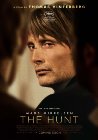
Mads Mikkelsen is known to most as the villain Le Chiffre in Casino Royale. Here he captures the nuances of Dr Struensee as both a revolutionary figure and an illicit lover. Alicia Vikander is clearly on the verge of stardom and is wonderful as the complex Caroline. The real scene stealer here is Mikkel Boe Folsgaard as Christian. This key role could have easily spoiled the film in the wrong actor’s hands. Instead he balances the mental issues with enough doubt that we viewers are left wondering how much is illness and how much is insecurity … just how much did he understand?

This is a very well crafted, if somewhat conventional film that tells a remarkable story from a turbulent time in Denmark. It’s a story that deserves a greater audience … despite it’s lame title … and this Oscar contender (Foreign Language category) should provide just that.

SEE THIS MOVIE IF: you are fan of costume dramas, especially when steeped in historical accuracies

SKIP THIS MOVIE IF: you believe all things are rotten from Denmark (see what I did there?)

watch the trailer:

http://www.youtube.com/watch?v=FGXNQu3fpP8


THE RULES OF THE GAME (La regle du jeu, FR, 1939)

July 4, 2012

 Greetings again from the darkness. What a thrill to see both of director Jean Renoir‘s masterpieces on the big screen within a couple of weeks of each other. The other is Grand Illusion and the two could not be less similar. In this film, Renoir presents a farcical display of societal “rules” of the time, and even draws a parallel between the upper crust and working class when it comes to love and lust.

The film was not well received upon its initial release because, times being as they were, very few enjoyed laughing at themselves. The film was seized by both the French government and later the Nazi’s. Both labeled the film dangerous to society. The original negatives of the film were destroyed and the film was pieced back together in the 1950’s and now, with technical advancements, we get to watch a beautiful print as Renoir intended. Today, however, it is quite fun to see how Renoir was poking and prodding and very precise with his aim.

 The story begins with the heroic landing of French aviator Andre Jurieux (Roland Toutain) after his solo trans-Atlantic flight. Once you realize this is 10 years after Lindbergh’s flight, you start to understand why the French were not pleased with the film. To make it worse, Jurieux acts like a teenager as he pouts in public when he realizes the woman he loves didn’t come to welcome him home. Nevermind that Christine (Nora Gregor) is married!

 Circumstances bring many to the country estate of Christine and her husband Robert de la Chesnaye (Marcel Dalio) for a hunting expedition. What we actually have is a gathering of wives, husbands, mistresses, lovers, house servants, and French ruling class in a tangled web that obviously influenced Robert Altman for his classic Gosford Park. Robert’s mistress (Mila Parely) is there and though Robert has promised Christine the affair is over, a wonderful scene finds her lowering binoculars to spot the two kissing in the distant. This leads Christine to be a more open to the advances of Andre the aviator.

 To bring in a bit more fun and action, we see the working class mirror the actions of their bosses. Lisette (Paulette Dubost) is married to the gamekeeper Schumaker (Gaston Modot) who doesn’t take kindly to poacher Marceau (Julien Carette) making advances on Lisette. During the shenanigan’s, Octave (Jean Renoir himself) alternates as both an entertaining clown/bear and peace-keeper to ensure that he is continued to be welcome into Robert’s home. He is a bit of a hanger-on.

 There is little plot per se, though we do get a surprising, erroneous murder, and that event brings even more unclear thinking to the group. The key to the film is the wonderful direction of Renoir. So much is going on simultaneously that your eyes must stay sharp and alert. Few directors of the time used such depth in the action … pay attention to the foreground and background or you’ll miss something! My favorite scene is when Robert unveils his latest find – a mechanical musical gadget (pictured left) that runs on precision. It’s in stark contrast to the party and the lives of these people.

** Note: Marcel Dalio and Julien Carette appear in both The Rules of the Game and Grand Illusion

watch the trailer:


THE INTOUCHABLES (France, 2011)

June 5, 2012

 Greetings again from the darkness. Sometimes acting elevates material to a level far beyond what a film might have otherwise deserved. Such is the case with this based-on-a-true-story effort from co-writers and co-directors Olivier Nakache and Eric Toledano. Despite the elements of truth, the core material here is a sentimental tale that seems quite familiar. Francois Cluzet (from the excellent thriller Tell No One) as Philippe and Omar Sy as Driss turn it into an extremely entertaining story with characters we quickly connect with.

Philippe is a wealthy quadriplegic widower who is interviewing candidates for a caregiver. Driss is a recently released from jail street hustler who is just trying to qualify for state benefits by going on the required interviews. Philippe is struck by Driss’ direct approach and energy level, and chooses Driss over the room full of more qualified types.

The rest of the movie is really a buddy flick where the polar opposites bring much to the other. Philippe slyly gets Driss to use his sharp mind a bit more effectively, and Driss taps into Philippe’s hidden lust for life. Though the supporting cast is strong, the film’s best scenes are those featuring Philippe and Driss.

This is a film from France and much as been made of the filmmakers’ decision to change the caregiver from the real life Arab to a more cinema-friendly Black man. The Earth, Wind & Fire dance may be a bit too much, but I choose to believe the casting of Omar Sy was the deciding factor, not his race. He lights up the screen and draws us right into his world and his choices – some of which are better than others.

The film shares much with The Sea Inside, Scent of a Woman, and The Diving Bell and the Butterfly, but this one has much more humor and bonding than any of those. It doesn’t shy away from the melodramatic moments and isn’t above trying to generate tears in viewers. There will be a U.S. re-make of this one, but the two lead actors here (especially Mr. Sy) make this one worth seeing.

SEE THIS MOVIE IF: you thought all buddy movies were over-the-top laugh fests or cop flicks OR you appreciate the small scope of French films (that’s a compliment)

SKIP THIS MOVIE IF: a subtitled French film featuring a rich guy in a wheelchair trusting a street thug to drive his Maserati seems a bit far-fetched

watch the trailer:


MY WAY (Mai wei, Korea 2011)

May 21, 2012

 Greetings again from the darkness. Was anxious to see a big-budget Korean take on WWII, and overall came away impressed … despite the shortcomings and annoyances. My history with Korean films has been limited to small, intimate stories told with quiet manner, or frenetic action flicks with sub-standard stunt work. Director and co-writer Je-kyu Kang attempts to combine an intimate story of two young men with an epic war film with a record body count and an excruciatingly frequent number of cuts/edits.

The movie starts off by showing us how the lives of two boys first intersect. Jun-shik Kim (by Dong-gun Jong) is a farmer’s son whose dad works on the estate of Tatsuo Hasegawa’s (Jo Odagiri) grandfather. A wide class difference separates the boys, but their love of running generates a severe feud … a rivalry that won’t die easily. All of this takes place in Japan-occupied Korea, and it’s clear early on that the filmmaker sets out to defend all Korean actions.

Inspired by a real life 1944 photo that shows Korean soldiers being captured while wearing a Nazi uniform, the fictional story here is as strange and complex as any you have seen … unfortunately, it is handled with the manipulative touch of Kathy Bates swinging a sledge hammer. As their marathon-running rivalry reaches a crescendo, both boys are drawn into the Japanese Army, albeit via substantially different routes. Tatsuo is an officer, while Jun-shik is an enslaved line soldier. Their bitter rivalry does not stop for a little thing like WWII and it leads to many moments of near insanity.

What really is impressive about the film is the three main battle scenes, especially the storming of Normandy Beach. If you have seen Saving Private Ryan, then you know the model … however, this one takes it even further. It is intense, loud and brutal. The question of whether the rivalry can survive capture by Russians and then Nazi’s, or whether survival instincts take over is really the heart of the story.

As terrific as the battle scenes are, it is impossible not to mention the hyper-editing that lasts most of the film’s 142 minutes. It is hard on the senses and makes the action difficult to follow … which is a shame for a film that offers so much realism in war scenes. Still, it’s not an easy film to watch, yet we care enough about the two characters to put up with the eyeball attack we get in most scenes.

SEE THIS MOVIE IF: you would like to see war footage from Korea that is as epic as any ever seen on film

SKIP THIS MOVIE IF: you don’t wish to read subtitles for two and a half hours

Watch the trailer:


HEADHUNTERS (Hodejegerne, Norway 2011)

May 8, 2012

 Greetings again from the darkness. Based on the novel by Jo Nesbo, this one quickly sets up the main character Roger Brown as someone we neither trust nor necessarily even like. He is a smooth talking recruiter who also steals valuable artwork to (barely) support his luxurious lifestyle, which includes a near-super model girlfriend and modern mansion.  That we remain interested in Roger for 2 hours speaks to the strength and creativity of the story.

The film is based in Norway and director Morten Tyldum seems to have a very wicked sense of humor as he really puts Roger (Aksel Hennie) through some things not even found in the worst fraternity or military hazing. While it can be classified as a very taut thriller, it is also a demented ride that would make the Coen Brothers proud. As a matter of fact, it would surprise me if this one doesn’t get a U.S. remake very soon. The story and characters lend themselves very well to a star vehicle.

However, I don’t wish to sell this version short. It is well done and entertaining in a devilish way. When Roger meets Clas Greve (Nikolaj Coster-Waldau), the real fun begins. Many will recognize Coaster-Waldau from “Game of Thrones” and he proves to be a terrific adversary for Roger. Neither are what they seem, and both seem quite pleasant to everyone else. Roger’s girlfriend Diana is played by the beautiful Synnove Macody Lund, and even she brings a nice element of doubt to the story. There is also a nice supporting turn from Julie Olgaard as Lotte.

The tone and twists remind me a bit of the Coen Brothers classic Blood Simple, but this one is even a bit more outrageous as things spin out of control for the characters. Much of the film is a spent in chase mode and that leads to some drama, thrills and chuckles. That’s a pretty nice compliment for any movie.

watch the trailer:


A TRIP TO THE MOON (La Voyage dans la Lune, 1902)

April 18, 2012

 Greetings again from the darkness.  If you have seen Hugo, you know that a central figure in the Martin Scorcese film is Georges Melies, the grumpy train station vendor who catches young Hugo stealing from him.  Frenchman Georges Melies was an early innovator in filmmaking and his most famous work was A Trip to the Moon (La Voyage dans la Lune) from 1902.  The film is still studied today because of it’s ground-breaking work in animation and special effects, and is considered the first science-fiction film.  The story goes that Melies went bankrupt after Thomas Edison and his technicians copied the film and distributed it in the U.S. before Melies could.  It is also thought that this started the process of film copyrighting, so that ownership of film rights could be determined.

There are many versions of varying length in existence, but I could not find a complete 16 minute version which features the final parade.  The version below has English narration added (albeit with a heavy French accent), and the famous moon landing is at about the 5:45 mark.


THE KID WITH A BIKE (2012, Le gamin au velo, Belgium)

April 9, 2012

 Greetings again from the darkness. When Guy (Jeremie Renier) states that he can’t take care of his son Cyril (Thomas Douret) right now, I felt a rush of anger and disgust. Imagine if you were his 11 year old son hearing those words. Young kids should be able to count on their parents for emotional security above all else. There should be no fear of abandonment … those are issues no child should be forced to deal with (barring a natural disaster).

The Belgium writer/director team of brothers Jean-Pierre and Luc Dardenne have a history of taking on parenthood and childhood in a head-on manner. Cyril is dumped in an orphanage by his dad, and is convinced that he is just misplaced, not abandoned. So being the fiercely determined kid he is, he re-traces his steps from coffee shops to bars to their old apartment. Cyril knows with certainty that his dad would never would have sold his treasured bicycle, no matter how desperate for money he was.  It is crushing when Cyril discovers this “certainty” was not so certain after all.

Whatever confusion and hostility that you think Cyril might experience, once he confronts his dad, the filmmakers display it in the rawest possible form. Cyril is a symbol of need, hiding behind a wall of rebellion. A chance encounter with Samantha (Cecile de France) leads to weekend visitations and the start of an awkward quasi-family life for both of them. Cyril tests Samantha and all other authority figures in every possible manner, often to the breaking point.  It’s not difficult to imagine most giving up on him, but Samantha doesn’t.

 As a parent, it’s easy to spot the vulnerabilities that a child faces before they have the maturity to handle it. We see how easily Cyril falls in with the wrong crowd and how quickly things can get really bad. Luckily for Cyril, Samantha doesn’t abandon him. She answers “I don’t know” to his question of why she let him stay with her. Although, the filmmakers never let us in on her deepest thoughts, we suspect she was once not all so different than Cyril, and someone stepped up for her.

This film won the Grand Jury Prize at Cannes in 2011 and it’s easy to see how. It shows how difficult and messy ordinary life can be, yet things often turn out OK, though rarely perfect. Film lovers will recognize Cecile de France from her many films, including the recent Hereafter and the excellent Mesrine.

SEE THIS MOVIE IF: you need a quick lesson in how a kid reacts to abandonment

SKIP THIS MOVIE IF: someone told you this is the best bicycle movie since Pee-Wee’s Big Adventure (2005)

watch the trailer: