 Greetings again from the darkness. Although I don’t tend to seek out the majority of romantic comedies released each year, this film’s title and backstory were enough to pique some interest. Writer-director Laura Piani was inspired to write this story during her time working (and reading) at Shakespeare and Company, a favorite haunt of writers and readers (and me) while in Paris.
Agathe (an excellent Camille Rutherford, ANATOMY OF A FALL, 2023) is a woefully unattached book seller who engages in humorous and sometimes pointed banter with Felix (Pablo Pauly), her co-worker at Shakespeare and Company. In Jane Austen terms, Agathe sees herself as an old maid, and Felix as a philandering scoundrel. She accuses him of being a master of “breadcrumbing” … her word for leading on a string of women whilst never committing. Still, as you can imagine, there is an obvious attraction between the two friends.
Felix secretly submits the first few chapters of Agathe’s novel, and to her shock, she is selected to attend a writer’s retreat at The Jane Austen Residency. It’s important to note that Agathe has no confidence as a writer and fears she will be exposed as a fraud. Felix drives her to the ferry and the two exchange their first kiss, igniting joy and excitement within Agathe. Picking her up on the other side is Oliver (Charlie Anson, DEATH ON THE NILE, 2022), who claims to be the great-great-great nephew (I forget how many ‘greats’) of Jane Austen. Agathe and Oliver have immediate personality clashes, including over the writing talent of Ms. Austen. Of course, every fan of rom-coms will recognize this as a mandatory step towards romance.
After the miserable and extended trip with Oliver, Agathe is greeted warmly by the hosts, Oliver’s parents, Beth (Liz Crowther) and Todd (Alan Fairbairn), the latter suffering from undiagnosed dementia – resulting in a few comical situations. Noting that Agathe was first inspired to begin her novel after spotting the image of a naked man in the bottom of her sake cup (the ladies version) at a restaurant, it seems only fitting that she accidently exposes her own full flesh to Oliver in a moment of absolute embarrassment.
As expected, Agathe battles a complete writing block during her stay, and it’s only at the throwback Ball where the contrast between Felix and Oliver takes center stage. Agathe and fun-loving Felix take a laugh-filled spin around the dance floor, but it’s the steamy and intense effort of Agathe and stuffy Literature Professor Oliver that keys her into what we viewers already know … thanks to the film’s best scene in a collectibles store where an awkward and enchanting exchange of personal disclosures occurs between Agathe and Oliver.
Filmmaker Piani includes a poem reading by renowned documentarian Frederick Wiseman near the end, and the film’s music adds to the artistic touches throughout. At the film’s opening, there is an incredible version of “Cry to Me” sung by Marie Modiano as Agathe dances through the shelving aisles, and beautiful piano music and a score by Peter Von Poehl add to the overall tone and feel of the story. The film contains many familiar Jane Austen tropes (although the style is more Mike Leigh than Merchant/Ivory); however, it’s a bit surprising that a few more nods to Austen’s work aren’t included. The message that Agathe learns, and the one best conveyed by the film, is that true love cannot be found until one first finds their true self.
Opens in theaters on May 23, 2025
WATCH THE TRAILER
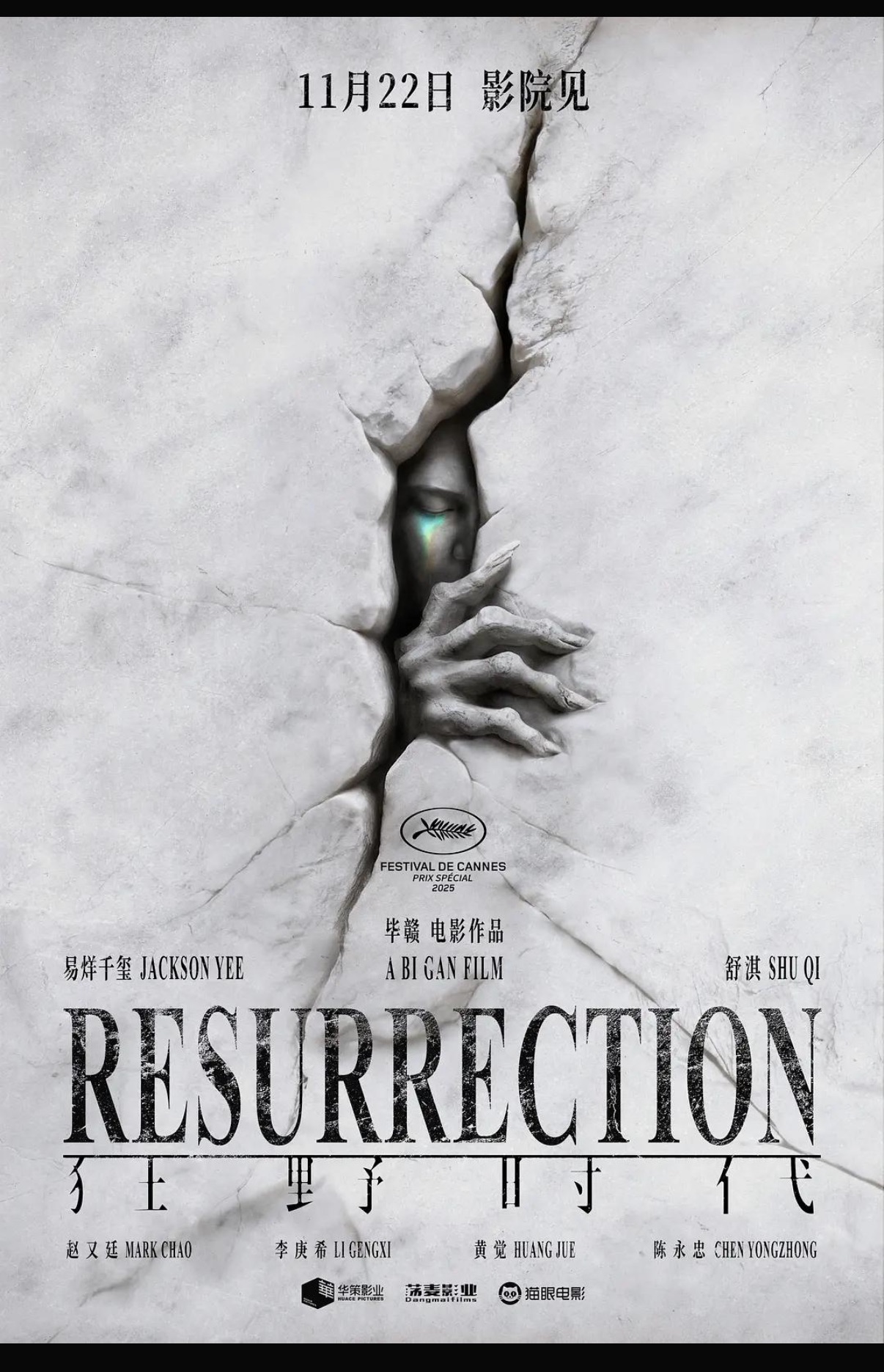 Greetings again from the darkness. Chinese filmmaker Bi Gan’s third feature continues his string of visually stunning films and dramatic visual effects. However, this one runs 160 minutes, and seems to be inaccessible to most moviegoers, while the film will surely mesmerize a few. Bi Gan is a cinematic artist who is at ease toying with time and our sense of normalcy.


 Posted by David Ferguson
  Greetings again from the darkness. What is true human nature? Is there even such a thing? Are we preprogrammed to do the right thing, or is it our nature to hold grudges, seek revenge, and take advantage of every situation? This superb film from Iranian filmmaker Jafar Panahi explores the topic, and it’s important to know that he was inspired to write the story after being imprisoned for creating propaganda against the regime.
 Greetings again from the darkness. Like most who obsess over cinema, I went through my French New Wave phase. Actually, binge is likely more accurate since the phase has yet to end. I’ll always make time for Truffaut, Godard, Chabrol, Rohmer, Varda, and Demy. American director Richard Linklater clearly shares this fondness as he releases this homage on the heels of BLUE MOON, his other superb 2025 release. Co-writers on this film are Holly Gent, Laetitia Masson, Vincent Palmo Jr, and Michele Petin … two of whom have previous collaborations with Linklater.
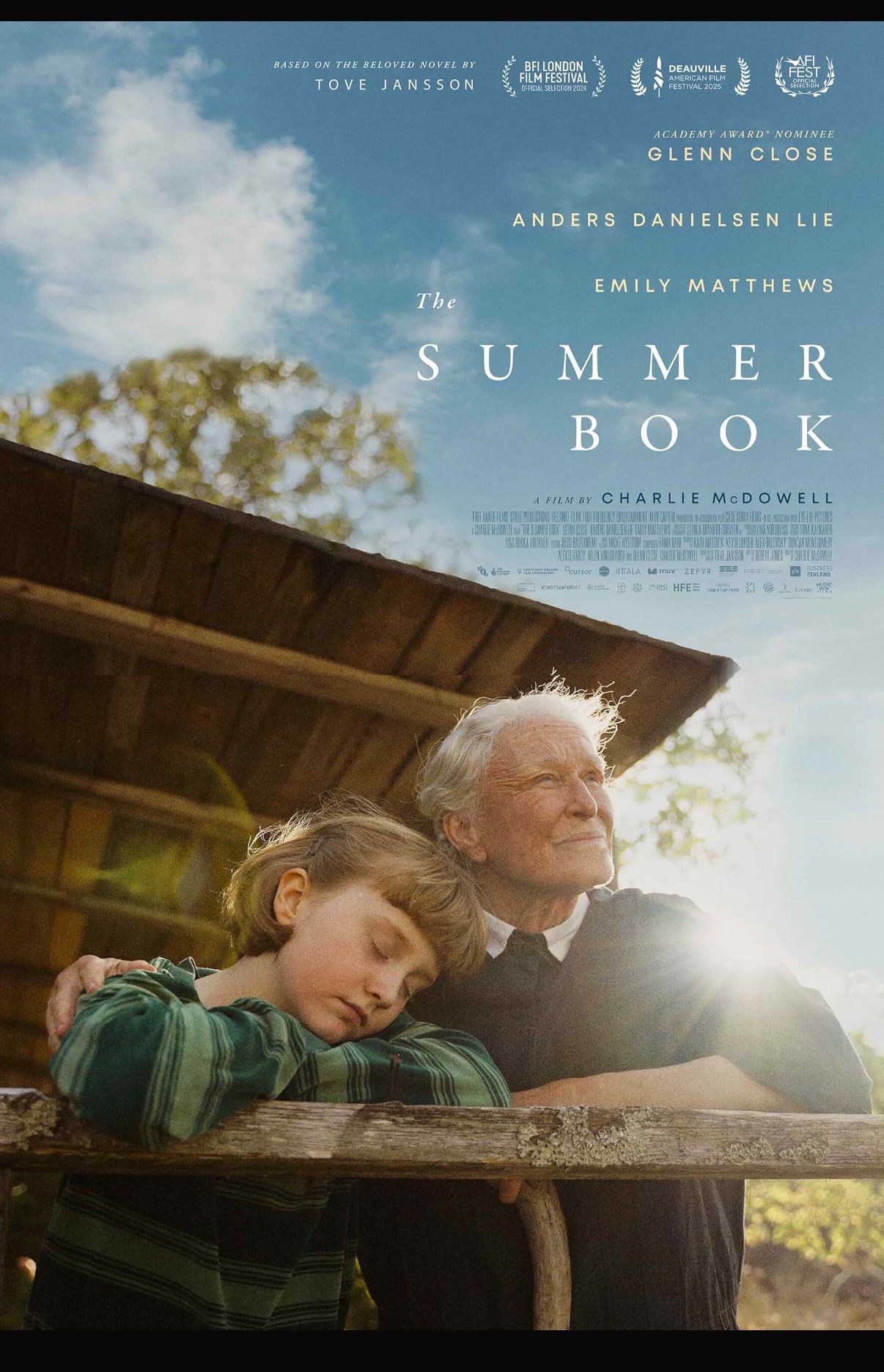 Greetings again from the darkness. Watching this film is how I imagine it would be to view a poem. It’s meditative and slow … somehow calming us as we contemplate the topics broached. Director Charlie McDowell (THE ONE I LOVE, 2014) and screenwriter Robert Jones have adapted the 1972 novel by Tove Jansson. Granted, it’s an unusual set up for a film shown anywhere outside of a film festival, yet because it is poignant and relatable, it’s an easy one to recommend.
 Greetings again from the darkness. When we first meet Mr. Blake, he’s tidily packing a small suitcase and informing an anxious phone caller that he will not be attending the ‘Man of the Year’ award ceremony, even as he’s being introduced as the guest of honor in the background. We realize Blake is leaving London because he takes one last forlorn glance at his long-time apartment before heading “back to where it began.” It’s rare for the author of the source novel to adapt and direct a film, but that’s the situation here with Gilles Legardinier and his 2012 book, “Complètement cramé !” Co-writer Christel Henon helped with the screenplay.
 Greetings again from the darkness. In the Mother Goose nursery rhyme, Jack and Jill not only went up the hill together, they also tumbled down. This latest from writer-director Samuel Van Grinsven and co-writer Jory Anast spin a Jack and Jill yarn that’s not nearly as cutesy, yet does involve some emotional tumbling … and one creepy spirit.
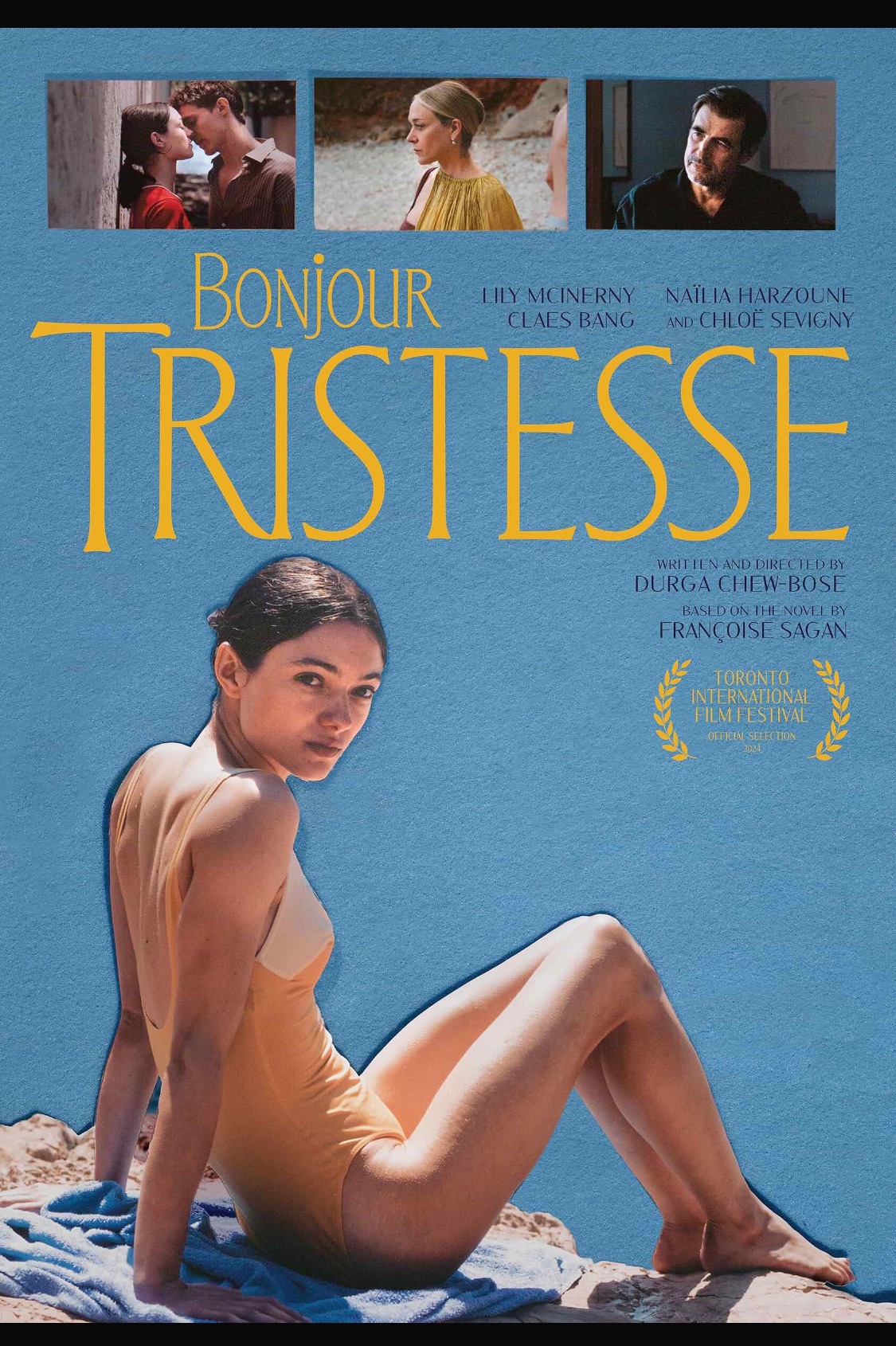 Greetings again from the darkness. Beauty. It permeates every scene in Durga Chew-Bose’s (TINY FURNITURE, 2010) adaptation of the 1954 Francois Sagan novel. The novel was previously adapted for the screen in 1958 by legendary filmmaker Otto Preminger, and this new version assumes a different tone while maintaining the essence of the novel. It should be noted that Sagan was only eighteen years old when her novel was published, adding pertinence to the character of Cecile.
 Greetings again from the darkness. Given the turmoil around the globe, being the first film co-directed by an Iranian filmmaker and an Israeli filmmaker makes this one even more impressive … both on screen and behind it. The co-directors are Zar Amir Ebrahimi (who also stars) and Guy Nattiv (who also co-wrote the screenplay with Elham Erfani). Nattiv previously won an Oscar for his superb short film SKIN (2018).
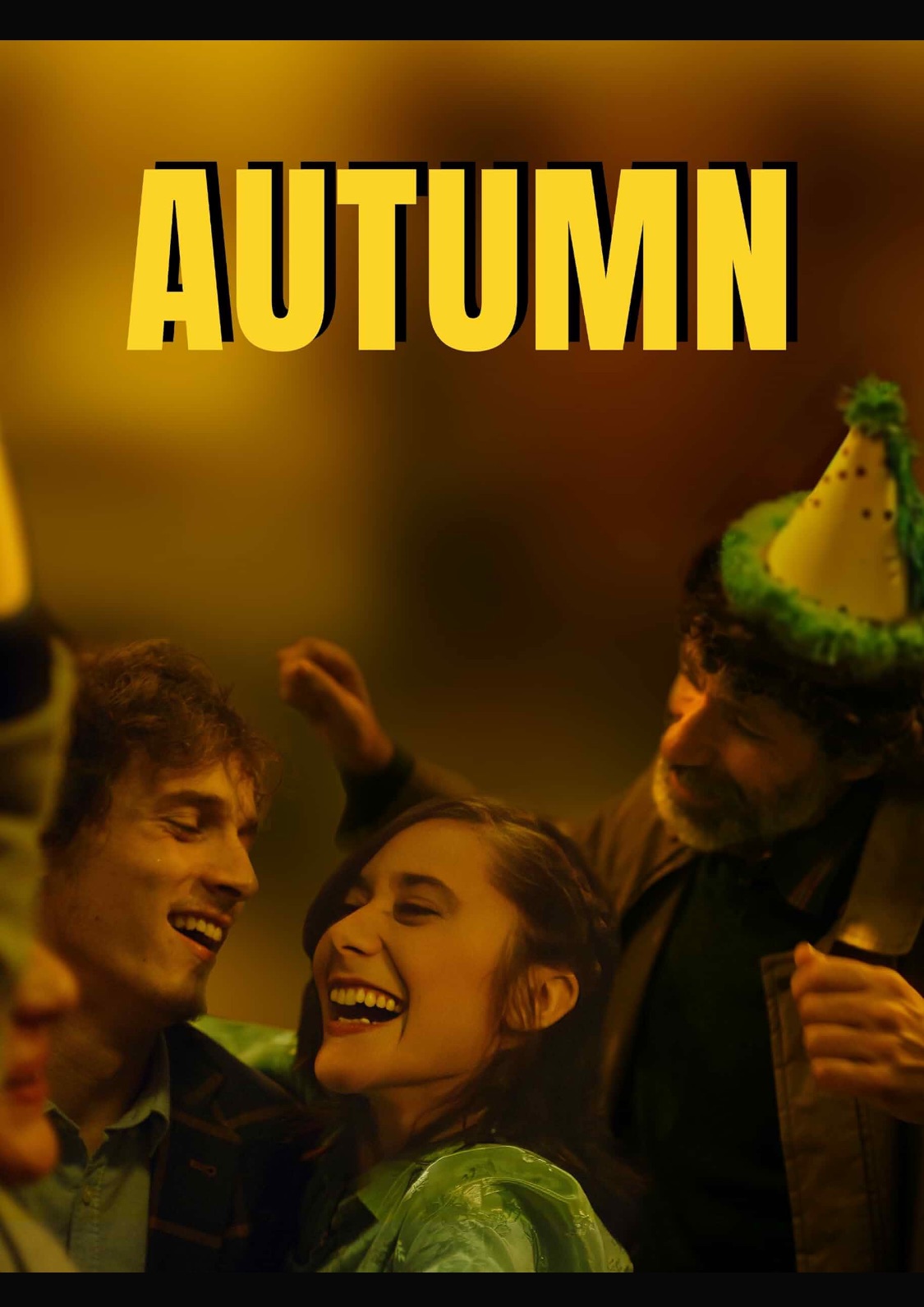 Greetings again from the darkness. Empty Nest Syndrome is one thing I’ve never really understood. As parents, for eighteen years we work diligently to raise independent, morally strong and confident individuals who can contribute to society and stand on their own. When that time comes, it should be a celebration, not an episode of sadness and depression. For so many parents, it’s the latter. This first feature film from writer-director Antonio Sequeira takes on this topic by showing not just the changing family dynamics, but also the changes for the individuals.
