Greetings again from the darkness. Alejandro Jodorowski is a long-time avant-garde and visionary director known for cult classics EL TOPO (1970) and SANTA SANGRE (1989). He’s now 91 years old, and this is his first film since ENDLESS POETRY (2016) – only categorizing this as a “film” is a bit of a stretch. More in line with what we see would be, ‘a procession of demonstrations of Jodorowski’s own trauma therapy that he calls Psychomagic’.
Fortunately, we kick off with Jodorowski himself explaining his therapy. He defines Psychoanalysis, founded by Sigmund Freud, as being based on science and words. In contrast, he defines his Psychomagic as based on acts and touch. We then transition directly into an ongoing session – a sequence likely to be the last one many people watch, as only the most curious (or those charged with reviewing the film) will subject themselves to more.
The rest of the runtime is broken into “cases” distinguished by the specific reasons people are seeking treatment. Few can argue that treatments for emotional trauma can vary widely, and that not everyone will be affected the same, and that we should all be open to whatever works. However, I can assure you, Psychomagic treatment is unlike anything you have seen or experienced. These filmed sessions come off more like an acting workshop than therapy, though we are to assume they are legitimate.
Not to spoil anything, but rather to offer a taste of what’s in store, you should brace for full body shoe polish while dancing at night, the shattering of dinner plates on the patient’s chest in nature, pouring cold milk on an unclothed person, the simulation of birth for ‘grown ups’, sledgehammers on pumpkins decorated with family photos (OK, this one actually makes some sense!), sprinkling water on a massive tree to treat depression, burying a wedding dress, and participating in Mexico City’s Walk of the Dead. And I have skipped over the connection between menstruation and finger-painting and cellos.
Artists often thrive with great freedom, and the therapeutic effects of art have certainly been proven many times. It’s just that watching this, I became something beyond skeptical. It reminded me of the old-time healers, and the fine line between healing and scamming. Perhaps it was the regular inclusion of clips from Jodorowski’s films that put me on high alert, or maybe it was simply the progression of segments that each struck as more outrageous than the last. Jodorowski is an old man with a history of creating art, so I’m choosing to give him the benefit of the doubt, though it’s not an easy task after enduring this.
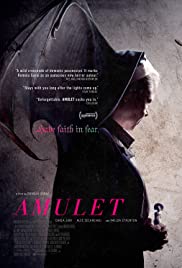
Greetings again from the darkness. Horror films tend to serve up relatively simple plot points so that viewers are controlled by emotions rather than deep thinking. The exceptions typically use multiple story lines and atmosphere to build up suspense that often ends with a twist or surprise ending. You might recognize Ramola Garai as an actress from SUFFRAGETTE (2015) or the TV series “The Hour”, and this is her first feature film as writer-director. She definitely chose the latter plot path, and the result is likely a film that will be divisive amongst the horror crowd.
Tomaz (Alec Secereanu, GOD’S OWN COUNTRY) is a former soldier with such a horrid case of PTSD that he must bind his own hands when he sleeps. He’s now homeless and adrift, merely surviving day-to-day. We see flashbacks to his time as a soldier working a checkpoint deep in the forest. The war is never identified, but one day he decides to help a frantic woman (Angelika Papoulia) rather than shoot her (as we assume his orders dictate). This story and their time together pop up periodically through the movie to the point where we start to believe we have an understanding of Tomaz’s background.
While squatting with other homeless folks, the building where they sleep catches fire, and soon after Tomaz is taken in by Sister Claire (Imelda Staunton), a caring nun who gives him a purpose – helping out a woman who is dealing with a sick, elderly mother. Magda (Carla Juri, BLADE RUNNER 2049 seems withdrawn and initially not particularly happy that Tomaz is living in her house. And, oh my, that house. Dilapidated is too kind as a description. So in addition to a bed, and Magda’s cooking, Tomaz begins repairing the house. And while you may have your own renovation stories to tell, did you ever pull an albino bat out of the toilet? Tomaz has.
Magda does not allow Tomaz to see her mother. He (and we) only hear the confrontations and see the bite marks on Magda’s arms. Clearly something is amiss. The flashbacks to Tomaz as a soldier with Miriam make for a stark contrast between the forest and Magda’s creepy house. It’s in the forest where Tomaz finds the titular amulet buried. If you’ve always thought of an amulet as a good luck charm, your definition will likely change.
It’s interesting to watch the shifts in the relationship between Tomaz and Magda, culminating with a night out dancing, where she reminds us a bit of Elaine Benis at the company party … although Magda’s is a pure emotional release, rather than a comedic effect. As you might expect, the film is at its best when Imelda Staunton is on screen. Unfortunately, these moments are too rare. The “old school” gothic graphics for the opening credits do make for a terrific stage-setter. While Magda’s locked-away mother provides some mystery, the tension of the story never really matches the creepy atmosphere of the house. Ms. Garai includes some excellent moments of horror images, but the deliberately slow pace doesn’t deliver a satisfying payoff.
Greetings again from the darkness. Polish-American writer Jerzy Kosinski’s 1965 novel “The Painted Bird” has one of the strangest and most controversial histories of any book. Initially celebrated as an extraordinary piece on the Holocaust era, the novel was banned in Poland, and author Kosinski was accused of falsifying claims of it being an autobiographical work. Later he was accused of plagiarism for this book and his 1970 book “Being There” (adapted into a 1979 movie starring Peter Sellers). This story of a young Jewish boy, abandoned by his parents and traveling the Eastern Europe countryside during WWII, is now accepted as a blend of fiction and his friend (director) Roman Polanski’s experiences. Czech filmmaker Vaclav Marhoul has turned the book into a stunning viewing experience.
First time actor Petr Kotlar is extraordinary as the unnamed (until the end) Jewish boy on a journey that might be entitled Dante’s Circle of Abuse or Homer’s Odyssey of Misery. This is a young boy in need of kindness from strangers, but unable to find much. The film opens with the boy running through the woods carrying what appears to be his pet ferret. He’s being chased by a group of sadistic Anti-Semite bullies. It’s a chase that doesn’t end well. We learn the boy is living with his “Auntie” Marta (Nina Sunevic) on her rundown farm, and we intuit that his parents thought he would be safer here than with them. When the woman dies suddenly and unexpectedly, the boy accidentally burns the house down, kicking off his walk across the countryside. Almost inexplicably, this is the most upbeat segment of the film.
Director Marhoul divides the film into 9 chapters, each named after the person the boy meets and lives with temporarily. I’ll recap the following eight chapters with a focus on not giving away too much … just know that this film is unrelenting in its brutality and bleakness. After Marta’s death, the boy stumbles into a village where he is considered cursed and labeled a vampire. The witch doctor Olga (Ala Sakalova) enslaves him until he escapes down river, where he is rescued by a mill worker. The head miller (Udo Kier) is a frightening man who takes exception with his worker (not the boy) gazing lustfully at his wife. Kier’s eyes manage to burn right through the black and white film, and soon he turns exceedingly violent towards his wife and the worker, leaving us with an unforgettable visual.
The boy then finds himself at the home of Lekhi (Lech Dyblik) who captures wild birds and regularly hooks up with Ludmila (Jitka Cvancorova), a wild woman who lives in the forest. The boy witnesses two horrific deaths, but not before the sequence which gives the film its title and ensures we understand what happens to outcasts – those who are different. At about the one hour mark, the boy finds an injured horse and walks it into the local village. It’s at this point where we hear him speak (kind of) for the first time. A violent Russian invasion of the village results in the Cossacks offering the bound and gagged Jewish boy to the German soldiers as a “gift”. Stellan Skarsgard is the veteran soldier who draws the assignment of taking the boy into the woods to shoot him.
When the soldier sends him on his way, a sickly Catholic Priest (Harvey Keitel) takes the boy under his wing and trains him to be an altar boy. All is fine until a parishioner (Julian Sands) with despicable intentions agrees to take the boy in and provide for him. This segment has what may be the most cringe-inducing death scene in the film, after which we find the boy trudging through snow and falling through ice, and crawling towards a cabin where Labrina (Julia Valentova) and a sickly old man live. The boy faces more abuse as he’s incapable of pleasing Labrina, which leads to situations he’s much too young to understand. Traumatized, the boy’s personality takes a turn.
In his next village, an attack by Germans puts the boy in contact with Russian sniper Mitka (Barry Pepper), who leaves him with the real life advice of, “an eye for an eye, and a tooth for a tooth.” Having only recently lost his innocence, the advice hits home for the boy. He ends up in an orphanage where a surprise occurs that causes the boy to lash out in anger … at least until he observes something that makes him understand the world has been cruel to others, not just him.
Normally, I wouldn’t recap or outline the segments of a movie in this manner, but it’s crucial to understand what you are about to watch. It’s a nearly 3 hour epic of human cruelty and survival instinct. Young Petr Kotlar spends much of the movie taking and witnessing abuse while his face is near emotionless (save for a couple of extremes). Joy is elusive, if not non-existent. The film shows us not all Holocaust horrors occurred in death camps. The atrocities of war and the cruelty of humans result in a film that is beyond bleak at times, but also makes a clear point about how differently people treat those not “like” us, regardless who the “us” is. This point is as evident today as it was during WWII.
Director Marhoul excels in showing, rather than telling … there is almost no ‘telling’ throughout the film. Cinematographer Vladimir Smutney makes expert use of the 35mm black & white film to provide images that are stark and brutal like the world the boy sees. The Production Design from Jan Vlasak puts us right in the muck, while the Sound from Jakub Cech is crucial to every scene.
The film is a joint project of Czech Republic, Slovakia, and Ukraine, as Poland refused to participate. It had quite the festival run last year, including some high profile walk-outs during the Venice Film Festival. It’s one of the rare movies that every cinephile is thankful to have seen, yet as human beings, we would likely never want to watch again. Murder, abuse, suicide, torture, bestiality, rape, violence, cruelty, slaughter, pedophilia, incest, war atrocities … these aren’t topics we typically seek out, and they thankfully aren’t topics that all show up in a single movie very often! There are a few moments of compassion if you watch closely, but mostly it’s a reminder of the cruelty of humans when the structure of society collapses, and hope is hard to come by. As Edwin Starr sang in his number one hit in 1970, “War, good God. What is it good for? Absolutely nothing.”
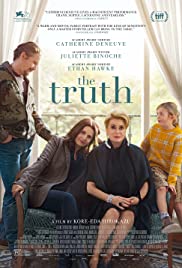
Greetings again from the darkness. Surely every movie lover will savor the chance to watch two of France’s screen titans go at each other as combative mother and daughter. Catherine Deneuve and Juliette Binoche don’t disappoint in this latest from writer-director Hirokazu Koreeda, who was previously Oscar nominated for SHOPLIFTERS (2018).
Ms. Deneuve stars as Fabienne Dangeville, an aging French Oscar winning actress who has recently published her memoir. To celebrate the book, her daughter Lumir (Ms. Binoche) is coming with her family for a visit. Husband Hank (Ethan Hawke) is a self-admitted second rate actor, and their daughter Charlotte (newcomer Clementine Grenier) is awfully cute and meeting her grandmother for the first time. Lumir is a scriptwriter, and harbors less-than-favorable childhood memories of dear old mom.
The personalities of mother and daughter are pretty easy to ascertain. Fabienne admits “I’d rather be a bad mother, a bad friend, and a good actress.” She’s a petty and sometimes nasty woman, who’s quite self-aware. Lumir is the type that has critiqued her mother’s memoir with post-it notes throughout, and calls her out on the false claims of being a doting mother. Most of the movie deals with memories, honesty, and family relationships. It’s not just Lumir who is bothered by book. Fabienne’s long time handler Luc (French screen veteran Alain Libolt) reacts strongly to being omitted entirely, as if he never existed.
Fabienne waves off the criticisms by claiming she’s an actress, so the naked truth is not expected … whereas interesting stories are. The film opens with Fabienne being interviewed by a journalist (Laurent Capelutto, “Black Spot”), and between this interview and what we learn of the memoir, we can’t help but chuckle at some of the real life similarities. First, Ms. Deneuve’s real middle name is Fabienne, and there are teases of her multiple lovers and “almost” movie with Alfred Hitchcock.
A large portion of the film is spent on the film-within-the-film that Fabienne is working on. It’s a science-fiction film (from a short story written by Ken Liu) that focuses on an unusual and difficult mother-daughter relationship. Lumir spots the obvious symmetry, but we are never really sure if Fabienne does, as she’s so busy firing barbs at the lead actress played by rising star Manon Lenoir (the first feature for Manon Clavel). For the elder Fabienne, acting has always been about being a star, so she struggles seeing the younger actress take a role she herself would have embodied 50 years prior.
Other supporting work comes from Christian Crahay as Jacques, Fabienne’s live-in cook (and more); Roger Van Hool as Pierre (man, not turtle) as Lumir’s father who is listed as deceased in the book; and Ludivine Sagnier (SWIMMING POOL, 2003) who plays a younger version of Fabienne’s character in the film-within-the-film. One key character we never actually see is Sarah, a deceased woman who was a friend and fellow actress to Fabienne, and a kind of surrogate mother to Lumir when she was a young girl. Sarah’s memory still hovers over the lives of Fabienne and Lumir, and may be at the heart of any possible reconciliation. Koreeda is a terrific director, and watching the performances here is quite entertaining. We do have the feeling that the script could have gone deeper emotionally had it not attempted to tackle so much. Additionally, many scenes felt like they were begging for more biting comedy than what was there. This is mostly played straight, which leaves Ms. Deneuve and Ms. Binoche to carry the load – a burden they handle quite capably.
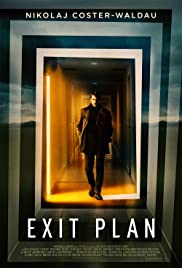
Greetings again from the darkness. Euthanasia, ‘Dignity in Death’ or assisted suicide. Whatever you prefer to call it, those against the idea have likely never been in the situation where medical treatment provides no hope. Max Isaksen (Nikolaj Coster-Waldau, “Game of Thrones”) is an Insurance Investigator. After his most recent scan, the doctor informs him that his brain tumor is growing and surgery is not an option. His bodily functions will slowly and mercilessly dissolve until death takes him.
Max is a non-descript kind of guy. The usually dashing Coster-Waldau is hidden behind old style wire-rimmed glasses and a mustache. He’s happily married, but can’t bring himself to tell his lovely wife Laerke (Tuva Novotny, ANNIHILATION, 2018) about the tumor or his inner thoughts. He’s frustrated that the special diet and app monitor didn’t ‘save’ him, so now he’s suffering with speech issues, headaches, and other ailments that serve as a reminder of the ultimate outcome.
While working with one of his clients, Max learns about the choice her husband made – Hotel Aurora, which promises “a beautiful ending.” It’s an enterprise that excels in secrecy and efficiency. Their sales pitch is an end to life that fulfills your fantasy. Just know that once you execute the agreement, there is no changing your mind. Instead, you are immediately given a sedative and put on a private plane where you are whisked away to the Danish-modern hotel in a remote, stunning setting. Support work is provided by Kate Ashfield (SHAUN OF THE DEAD, 2004) as the fake mother, and Jan Bijovet as Frank, the director of Aurora.
Denmark-born director Jonas Alexander Arnby and writer Rasmus Birch worked together on WHEN ANIMALS DREAM (2014) and here they explore an existential question about life and death, and whose choice it is. There is also the question of saying goodbye to loved ones and choosing the terms at the end. It’s a somber story that twists reality and dreams, and we can’t help but find some similarities to Yorgos Lanthimos’ THE LOBSTER (2015), although that one was infinitely more bizarre. There are a couple of moments of levity – such as asking for tips on tying a noose, and we do learn that Poppy Tea tastes best with lemon. Speaking of beverages, I lost count at the number of scenes featuring wine, juice, water or some other ingestible liquid. Sometimes it’s a bonding experiencing with a toast, while other times, it’s a biological need. Whatever the reason, taking a sip is somehow tied into the circle of life. As The Eagles sang in “Hotel California”, ‘you can check out any time you like, but you can never leave.” Welcome to the Aurora, where we never have to ask, ‘how was your stay?’
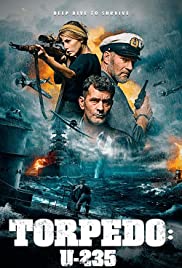
Greetings again from the darkness. “Desperate times, desperate measures” is a phrase that dates back to ancient Greek physician Hippocrates (he of the Hippocratic Oath), and has been applied in many and varied situations since … war strategy being one of the most common. We hear the phrase a couple of times in the War Room during an early scene in the feature film directorial debut of writer-director Sven Huybrechts submarine movie. The term “submarine movie” is used with the utmost respect, as I’m a huge fan of the sub-genre.
Opening with a well-orchestrated attack on Nazi soldiers, we are soon in the midst of a group of resistance fighters – a rag tag bunch committed to wiping out as many Nazis as possible. In the War Room scene, this group is referred to as “The Bad Eggs”, and everyone from all sides seems to want them stopped. However, there is a problem – this group is made up of the only ones crazy enough to accept the current ‘suicide’ mission: delivering a Uranium filled submarine from the Belgian Congo to the United States, where the cargo will be used for the Manhattan Project.
The cast is excellent, led by the ongoing conflict between two outstanding and renowned leads: Belgian actor Koen De Bouw as Nazi-hater Stan, and German actor Thure Riefenstein as captured U-Boat Captain Franz Jager. Co-writers Huybrechts and Johan Horemans effectively use the dangers and claustrophobia of the submarine, and are truly expert in their pitting Stan against Jager. Stan’s beautiful (and sharpshooter) daughter Nadine (Ella-June Henrard) is also on the mission, but it’s Stan’s tragic backstory (which we see in tension-filled flashbacks) that have filled him with a lust for revenge and over-protectiveness.
Training for submarine crews typically lasts a year, and this group of misfits has only three weeks to prepare. Some of the early soundtrack reminds of the iconic Elmer Bernstein theme to THE MAGNIFICENT SEVEN, which comes across a bit misplaced, but that’s a minor quibble for a film that gets most everything else right – except for a too-good-to-be-true sequence near the end. Along the way, we see vivid images of the brutality and cruelty of Nazis, which helps us understand why all of these folks are so committed to the mission.
Working with a low budget, the film still manages to deliver the danger and tense situations we expect from a submarine during WWII. There is even a sub vs sub battle for some underwater action. The lineup of other worthy submarine movies over the years include: Jules Verne’s 20,000 LEAGUES UNDER THE SEA (1954), THE ENEMY BELOW (1957) with Robert Mitchum, RUN SILENT, RUN DEEP (1958) with Clark Gable and Burt Lancaster, ICE STATION ZEBRA (1968) based on the Alistair MacLean novel, the nerve-rattling DAS BOOT (1981) from Werner Herzog, THE ABYSS (1989) from James Cameron, THE HUNT FOR RED OCTOBER (1990) from Tom Clancy’s novel starring Sean Connery, CRIMSON TIDE (1995) pitting Denzel Washington against Gene Hackman, U-571 (2000) with the great Thomas Kretschmann, and BLACK SEA (2014) with Jude Law. And let’s not forget the 1968 classic featuring The Beatles animated, YELLOW SUBMARIINE.
This latest begins in 1941 and the final scene takes place on August 6, 1945. Huybrechts’s film could be described as a cross between INGLORIOUS BASTERDS and DAS BOOT, and it includes plenty of material for conversation on race, religion, nationality, and duty.
Greetings again from the darkness. Every war is ugly and devastating, and few lasted as long as the Civil War in Guatemala, which ended in 1996 after many years and many deaths. Its history tracks back to the early 1960’s, and the fighting between the government and various leftist rebel groups was violent, resulting in more than 200,000 deaths (mostly Mayan) in the 1970’s and 80’s. In his first narrative feature, writer-director Cesar Diaz chose not to examine the causes of war, but rather the fallout … the tattered lives left in its wake.
Armando Espitia stars as Ernesto, a young anthropologist at the Forensic Foundation – an institute that specializes in locating, identifying, and carefully packaging the remains of the casualties of war. It’s 2018, and the news reports we overhear call this an “historic moment”, as war criminals are brought to trial. The film opens on Ernesto as he is assembling the skeletal remains taken from a mass burial site that the Institute was recently permitted to excavate. We soon learn that Ernesto has his own personal mission – finding out what happened to his father, who is identified only as a guerilla fighter. Ernesto’s mother (Emma Dib), with whom he lives, discourages him from searching for his dad. He states ‘I need to know’, while she says ‘I don’t wish to remember.’
Director Diaz includes a gut-wrenching sequence of women in a local village. It’s almost like a series of photographs … a lineup of local woman who are victims of the war. The work of cinematographer Virginie Surdej is extraordinary in this sequence. These aren’t actors, but rather natives to the area – women whose weathered faces show the story being told by the movie. They lead Ernesto to a mass grave on private land where many of the slaughtered men and children are buried. The atrocities toward the women were often worse than death, and now they are going about living, fully aware that their loved ones never received the respect in death that is so valued.
Ernesto takes statements from the women, and is so devoted to finding his father that his social life consists of sleeping in his car and fantasizing about the local bartender. Ernesto and the women, who are the face of war, are simply looking for closure. They want dignity for the dead, and he wants to know his roots. There is much family pain and pride, and often when family secrets gets solved, the result is more pain than relief. Director Diaz was born in Guatemala and delivers a mostly quiet film that is only 78 minutes in run time, but its message rings loud and clear … the horrors of war don’t end when the war does. The film was a multi-award winner at Cannes, and justifiably so.
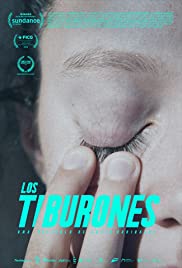
Greetings again from the darkness. Uruguayan writer-director Lucia Garibaldi has seemingly designed her first feature film specifically for film critics at festivals (it was well received at Sundance). I can’t recall a coming-of-age film with a less-accessible lead character, nor one that displayed that awkward phase between child and adult in a harsher manner. Watch that emotional step – it’s a doozy!
First time actress Romina Betancur plays 14 year old Rosina. The opening finds her running from her angry father right into the sea. It’s at this point she spots the dorsal fin of a shark. Of course no one believes her because sharks are not known to swim around this fishing village in Uruguay. We also learn that Rosina has recently caused an eye injury to her sister Mariana (Antonela Aquistapache), and Rosina claims it was an “accident.” It becomes apparent that her actions are not always the result of wise planning.
Rosina begins working on one her father’s labor crews as the town prepares for the summer visitors. Also on the crew is Joselo (Federico Morosini), an older boy in whom Rosina shows an interest. After their unconventional “date”, Joselo bores of the youngster, while she is rendered both curious and confused. Rather than a sexual awakening, Rosina seems to experience internal prods of which she is unsure how to handle. This transition phase is shown through the perspective of an awkward 14 year old girl who seems to handle everything with a constant stone-face … the envy of any poker player.
Once Joselo’s interest level shifts to others, Rosina fights back in what apparently is her dark nature. Some could call her a psychopath, as her instincts prove ill-advised at best, and possibly even flat out dangerous. Her quiet predator similarities to the shark are obvious, even as the question of ‘shark or no shark’ cloaks the community. Life in this area is not easy. Water is scarce, and these folks have no time to wrestle with Rosina’s twisted ways. Her mother is opening a new salon, and even a pregnant dog has a role in Rosina’s revenge plan.
Uruguay’s rocky coastline and wooded forests make for a picturesque background, and Ms. Garibaldi and cinematographer German Nocella take full advantage. The many tight shots of Rosina are meant to emphasize her isolation and separation, but at times it felt like this shot was used a bit too frequently. The electronic music was often distracting, and the slow pace certainly could have worked if the character development of Rosina had allowed us to better grasp her emotions and thoughts. Instead, the film is either restrained or dull, depending on your taste … although the flashes of humor certainly help. Director Garibaldi may relate to Rosina, but we never do. We are left thinking this could have been an extraordinary short film.
Greetings again from the darkness. In the movie world, good things rarely happen on a train. In fact, whether it’s the train whistle, the train depot, or the passenger compartment, it’s a warning to viewers that this journey is troubled. So brace yourself. This may be the first feature film for Russian writer-director Diana Galimzyanova (known for video and documentary shorts), but her visual flair and nods to cinematic history are evident and welcome.
It’s billed as the first female directed Russian noir, and it’s clear Ms. Galimzyanova offers up a tip of the cap to Alfred Hitchcock (and others) in this homage to 1940’s Film Noir. Filmed in stark black and white for dramatic effect, the film features a very interesting story structure. Events move forward for the characters on the train, but their individual backstories are revealed in reverse chronological order via flashbacks and recollections. It’s both linear and reverse linear … requiring the viewer to pay attention and keep up!
So, who are these characters? We have Ruslan, the OCD private detective played by Rashid Aitouganov. The self-described “Crime Solver” has his frustrations at being unable to solve a case playing out with him compulsively wiping his hands. Next we have arrogant and judgmental concert pianist Elina played by Marina Voytuk. Elina boasts that her face is recognizable from the marketing posters for her concerts. Lastly we meet screenwriter Arina, played by Irina Gevorgyan. Arina claims she is researching for her computer game being written from the perspective of the murderer.
What murderer you ask? Well it turns out there is a serial killer nicknamed The Fruiterer, who is responsible for 6 murders over the last 6 months – all on the same train route that our 3 characters find themselves on. The nickname stems from the fresh strawberry the killer leaves by each body. If you enjoy the armchair detective work that goes along with murder mysteries, you’ll get a real kick out of this. Processing the interaction between the characters on the train, and blending in the details we pick up from the flashbacks leaves us filtering out what matters and what doesn’t. During the flashbacks we meet an unconventional therapist name Izolda (Kolya Neukolin) who seems to have a strange power over clients. Izolda is a key character, and also entertaining are the two knockout train conductors who have quite the side gig going on this route they refer to as “murder express.”
The opening of the film shows us a suitcase being packed with instruments of destruction. As with most mysteries, each clue must be taken with a grain of salt. Strangers, suitcases, secrets and strawberries all play a part in keeping us off balance. The film works thanks to the psychological uncertainty as we attempt to assess each character and what each tidbit means. When one of the characters says, “I can’t stand to talk to grieving people. They are so self-absorbed”, we understand each of these people has their flaws, but no one jumps out as the obvious killer.
The black and white photography, harsh lighting with shadows, and story structure add elements to the suspense and the surreal tone of the film. The camera angles and shots via mirrors, as well as the disconcerting score (often harpsichord) add intrigue to the bounty of clues and fake clues. It’s a fun movie to watch and a challenge to try and solve ahead of the reveal. For fans of murder mysteries and/or Film Noir, it’s a train ride worth taking.
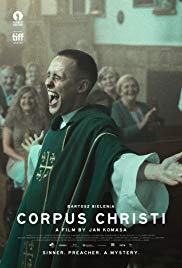
Greetings again from the darkness. There are two camps of thought. You either believe people don’t change, or you believe that people can change. This feature film from Poland has been Oscar nominated for Best International Feature Film. In this film inspired by true events, director Jan Komasa and writer Mateusz Pacewicz will challenge your thoughts on people and change, as well as the role of Faith.
Twenty-year-old Daniel (a powerful and mesmerizing Bartosz Bielenia) is being paroled from the Juvenile Detention Center he’s been at since committing a violent crime. While incarcerated, Daniel has experienced a spiritual awakening, and is disappointed when Father Tomasz (Lukasz Simlat) informs him that his criminal record bars him from attending Seminary and becoming a priest. After a night of partying with his old buddies and attending to other releases not permitted at the center, Daniel eschews the provided job at a sawmill. He then stumbles into a temporary spot as a priest in a small community where the elder vicar’s (Zdzislaw Wardejn) health issues require him to take some time off.
Wearing a stolen priest collar, Daniel studies feverishly in order to lead mass and hear confessions. He falls back on what he has seen and heard from Father Tomasz, and even assumes that name for identity. Daniel has stepped into a community that is still reeling from a tragic car accident that took the lives of many locals. The widow (Barbara Kursai) of the “other” driver has been ostracized by the community, while mourners gather at the same site each day. Daniel befriends Marta (Eliza Rycembel), the sister of one of the victims, and he is assisted with his duties by Marta’s mother Lidia (Aleksandra Konieczna), who is suspicious of young Daniel, and still carrying much anger towards the man (and his widow) responsible for her son’s death.
Of course we know, even if Daniel sometimes forgets, that his past will eventually catch up with him. In the meantime, his enthusiasm and sincerity and youthful wisdom win over many in the community, and start the healing process among those who didn’t think it possible. These are people desperate for guidance, and they find themselves drawn to this young man so devoted to helping. Some of the most interesting scenes include the town mayor (Leszek Lichota), who also runs the sawmill. He’s a power broker for the town, and Daniel instantly recognizes his arrogance.
What is true Faith? Has Daniel turned a new leaf or is it an act? We know violence is in his make-up, but we also see that he is actually helping folks – he’s making a difference. There is a funeral procession that is quietly affecting, and the theme of forgiveness is crucial throughout. Mr. Komasa’s terrific film has been very well received at festivals, and it is sure to inspire many deep discussions. People are drawn to those who will assume the pulpit, and though the ending is brutal and crushing, we are reminded that no feeling compares to doing good for others … it’s addictive.
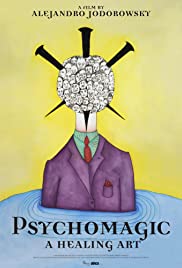 Greetings again from the darkness. Alejandro Jodorowski is a long-time avant-garde and visionary director known for cult classics EL TOPO (1970) and SANTA SANGRE (1989). He’s now 91 years old, and this is his first film since ENDLESS POETRY (2016) – only categorizing this as a “film” is a bit of a stretch. More in line with what we see would be, ‘a procession of demonstrations of Jodorowski’s own trauma therapy that he calls Psychomagic’.


 Posted by David Ferguson