THE HATEFUL EIGHT (2015)

December 27, 2015

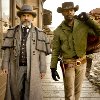
hateful 8 Greetings again from the darkness. If one is to believe Quentin Tarantino, the leaked script scandal nearly turned this into a novel, rather than what it clearly needed to be … a Quentin Tarantino movie (his 8th).  It could even be considered a companion piece to Django Unchained (though this takes place in snowy Wyoming, as opposed to the balmy Deep South). It’s set soon after the Civil War and there still exists a palpable uneasiness between Confederate and Union types, creating a constantly teetering milieu between violence and progress.

Tarantino’s obsession with classic film led him to utilize the same Ultra Panavision 70 lenses used for Ben-Hur (1959), which required the retrofitting of 50 theaters across the country for the “road show”. This presentation includes an opening musical Overture, a midpoint Intermission, approximately 6 minutes of footage that highlight this rarely used format … stunning snow-filled vistas and wide shots of the frontier, and zero previews for upcoming releases.  When the film opens nationwide, the digital version will be straight-forward (though still nearly 3 hours in run time). The “road show” features are bonuses for us film geeks, and will have no impact on whether one enjoys the film or not.

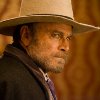
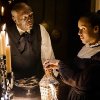
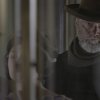
Rather than follow in John Ford’s majestic Western footsteps, QT has the vast majority of the story take place within a one-room set called Minnie’s Haberdashery. Thanks to a record blizzard, the general store/saloon turns into a human snake pit filled with nefarious types who are quick with a quip and a trigger. The diabolical assemblage is made up of John “The Hangman” Ruth (Kurt Russell, featuring world class whiskers), a bounty hunter who is handcuffed to his latest prize Daisy Domergue (Jennifer Jason Leigh); another bounty hunter (Union) Major Marquis Warren (Samuel L Jackson); British fancy boy Oswaldo Mobray (Tim Roth) who says he’s the hangman for Red Rock; the self-professed new Sheriff of Red Rock Chris Mannix (Walton Goggins); General Sandy Smithers (Bruce Dern), a former Confederate officer; quiet cowpoke Joe Gage (Michael Madsen); and Senor Bob (Demian Bichir), whom Minnie left tending the store in her absence.

Now as you might expect, some of the above descriptions may be true, while others could be considered “conveniences”. What you also might expect is a steady rain of Tarantino dialogue delivered by the perfectly chosen cast. Each of these players grasps the cadence required to make this work … they have the rhythm of a stage play – a new direction that Tarantino has hinted at. And have no fear, over-the-top violence fills the second half of the story as the confined space and contradictory missions begin to clash.

No more need be said about the characters or the story. Russell, Jackson, Goggins and Ms. Leigh are especially effective at enlivening their scenes, and they are joined by supporting actors such as Dave Parks (son of the great Michael Parks), Gene Jones (who didn’t wish to call the coin flip in No Country for Old Men), Dana Gourrier (as Minnie), QT favorite Zoe Bell (as Six-horse Judy), and even Channing Tatum.

Legendary composer Ennio Morricone delivers his first western score in about 40 years, which is important since he’s the man behind the iconic music of Sergio Leone’s spaghetti westerns. On the topic of music, Morricone’s score is complimented by only a smattering of other songs (including a Roy Orbison gem and a solo from Jennifer Jason Leigh), which is unusual in the Tarantino canon. Three-time Oscar winner Robert Richardson re-teams with Tarantino and seems to have a blast with the challenges presented by the one-room set … he plays with focus and depth to create some fantastic shots. It should also be noted that the Sound is spectacular – everything from gunshots, to swirling wind, to boots and spurs, to galloping stage coach horses, and even the pouring out of coffee.

All of the above results in a stunning movie experience with the anticipated QT humor, violence, and anti-racism sentiment (though the N-word usage is once again tough to take) … yet somehow the final product doesn’t equal the individual moments of genius. It comes across as a blend of Agatha Christie, (Tarantino’s own) Reservoir Dogs, and John Carpenter’s The Thing minus the cohesiveness required for a great movie. So enjoy the characters, the technical achievements, and the terrific dialogue, but know that it’s unlikely to be one of those that cause you to stop down while surfing cable channels in a couple years.

watch the trailer:


BONE TOMAHAWK (2015)

October 25, 2015

bone tamahawk Greetings again from the darkness. In an effort to be helpful to potential viewers, it’s customary to provide a synopsis that allows for a quick determination on whether this “type” of movie will hold appeal. The problem is that this debut from writer/director (and novelist) S. Craig Zahler can be encapsulated with a simple: four local men from a small, dusty old West town head out on a rescue mission to face a tribe of cannibal cave-dwellers. Unfortunately, that analysis doesn’t cover the originality and genre-twisting of this Western-Horror film featuring crisp and funny dialogue, plus some of the most extreme brutality ever witnessed on screen.

A very deep and talented cast milks the script for every possible chuckle, moan, shock of pain, and queasy squirm. Kurt Russell stars as Franklin Hunt, the sheriff of the ironically named town Bright Hope. Though a long-time fan of Mr. Russell, I’ve often been critical of his career-limiting role choices, and here he proves yet again that he has always been capable of taking on a challenging lead and delivering a nuanced performance. He is joined in the rescue posse by his “back-up deputy” Chicory (Richard Jenkins), the abducted woman’s injured husband Arthur (Patrick Wilson), and a nattily attired gunman (Matthew Fox).

The opening sequence featuring outlaws Purvis (David Arquette) and Buddy (horror vet Sid Haig doing his best Slim Pickins imitation) sets the stage for the brutal violence to come in the third act, as well as the film’s crackling dialogue that’s clearly influenced by The Coen Brothers, Quentin Tarantino, and Elmore Leonard. There are also brief but memorable supporting roles from Kathryn Morris (as the Sheriff’s wife), Michael Pare’ (as a self-centered stable owner), James Tolkan (as an uninspired piano player), and Fred Melamed (as the barkeeper). Lili Simmons (“Banshee”) has a key role as the abducted Samantha O’Dwyer.

An odd blending of John Ford’s The Searchers and Wes Craven’s The Hills Have Eyes, a substantial portion of the (long) run-time is dedicated to the slow trail ride/walk of the four men as they track the “troglodyte” tribe in hopes of rescuing the captured folks. The focus on these four men: the duty-bound Sheriff, the overly loyal deputy, the emotionally-driven husband, and the vengeful gunslinger, is an old West character study dressed up with some fancy oration. In fact, the excessively-perfect English sits in stark contrast to the other-worldly tribal wailings of the cave-dwellers who seem to have no real language at all.

It’s an unusual film that defies a simple synopsis, and certainly won’t appeal to all movie goers. A viewer must enjoy the prolonged journey and the interaction between the distinctive personality types (Jenkins is a particular standout in a Walter Brennan-type role), and also have an affinity (or at least a constitution) for gruesome brutality. The film is only receiving a very limited theatrical release, but should find an audience via VOD.

watch the trailer:


DIFF 2015 – Day 10

April 24, 2015

DALLAS INTERNATIONAL FILM FESTIVAL

Day 10 – Sunday April 19

The festival comes to an end on a high note, and once again, I recommend DIFF for any movie lover who wants to overdose on independent films and documentaries without fighting the crowds of Sundance, Toronto, Cannes, etc.  It’s a very well run festival and, with 160 films on the schedule., likely holds multiple films for you – regardless of your movie tastes.  My final three movies of this year’s festival:

LOVE & MERCY (2015)

love and mercy Greetings again from the darkness. Beach Boys fans may struggle a bit with this one since the light-hearted, airy feel to the “Fun, Fun, Fun” music of the band is mostly absent. Instead, director Bill Pohlad pulls back the curtain on the emotional and mental struggles of visionary songwriter Brian Wilson … the band’s creative force.

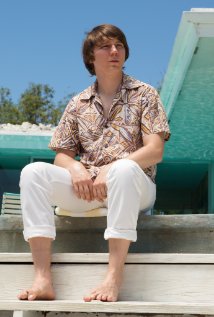
In an unusual artistic approach, Paul Dano plays Brian from the 1960’s period that resulted in the revolutionary Pet Sounds album and the ongoing battle with his domineering father; while John Cusack plays Brian from the late 1980’s – his most creatively bankrupt period and the subsequent debilitating influence of quackster psychologist Dr. Eugene Landy (Paul Giamatti).

The two periods are blended together as we (and Brian) bounce back and forth between the struggle of a budding musical genius working to release the sounds in his head, and a middle aged man so heavily medicated that speaking, eating and even getting out of bed are such overwhelming obstacles that music rarely registers. It’s during the latter period that Brian is truly at the mercy of Dr. Eugene Landy. Giamatti sports a floppy wig and proceeds to rage at Brian while trying to charm Melinda (Elizabeth Banks), Brian’s new romantic interest. Knowing this disgusting period was part of Brian’s life only adds to the anger and frustration we feel … not just as fans, but as human beings.

What sets this biopic apart is actually the performance of Dano and the peek inside the process of Brian’s genius. Watching Brian work the musicians and mold the music on the fly is breath-taking, even though we see the challenges of his early mental issues.  It’s a joy to see a tribute to the studio session players known as “The Wrecking Crew” … themselves the subject of a recent stellar documentary. It’s during this period that the Wilson brothers’ father (played by Bill Camp) constantly derides Brian and his “new” music.  There is also some insight into the Brian vs Mike Love battles – Brian exploring his creative music, while Mike just wants to keep cashing in with their expected “fun” style.

Some may find the two-headed approach to be distracting, but it drives home the point of what a different man he was in comparing the mid-1960’s to the late 1980’s. Mostly, I found the 1960’s portion to be an insight into what we hear from so many geniuses, regardless of their specialty. Brian says it’s like “Someone is inside me. Not me.” His struggles are non-relatable to others – even his brothers, and especially his dad. What is mostly a look at the darkness behind the “sunny” music, does come with real life redemption courtesy of Melinda’s strength … and witnessed in the video shown over the closing credits.

MANGLEHORN (2015)

manglehorn Greetings again from the darkness. For those of us who grew up with 1970’s cinema, it’s been painful to watch Al Pacino’s career over the last two decades … with only a couple of exceptions. We have longed for the actor who became Michael Corleone, and cringed with each outing that seemed to parody his Oscar winning performance in A Scent of a Woman (1983). Along comes the latest from director David Gordon Green and with it a reappearance of that actor so worshipped by John Travolta’s character in Saturday Night Fever.

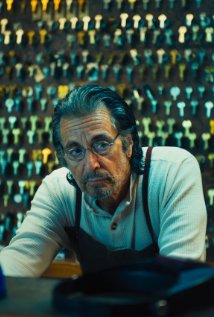
A.J. Manglehorn is an elderly locksmith who lives each day under his self-designed cloud of despair. His droopy eyes, droopy shoulders and droopy social skills are eclipsed only by his love for Fanny the cat, and his daily letters to Clara – the long lost love of his life. The only other signs of life in Mr. Manglehorn are displayed when he is telling a customer that it’s time to wash their car, when he is hanging out with his granddaughter, or when he is exchanging Friday flirtations with bank teller Dawn (a sparkling Holly Hunter).

Director David Gordon Green is best known for comedies such as Pineapple Express (2008), The Sitter (2011), and TV’s “Eastbound & Down”, and while this one (filmed in Austin, Texas) has some awkward and offbeat comedic moments, it would have to be categorized as a drama. Symbolism is everywhere as Manglehorn keeps his emotions “locked” away from his snooty yuppie son (Chris Messina) and retreats into his imaginary relationship with Clara, rather than embracing Dawn’s brave come-on.

There are a couple of extraordinary scenes … Pacino and Messina talking around, rather than about, their relationship and the type of men they are; and the excruciatingly awkward and heart-breaking first date between Pacino and Hunter. The forlorn Manglehorn remains behind the locked door and allows the shadow of his dream girl to cast a pall, despite having a real life dream girl sitting across the table.

Pacino recaptures his mastery of the close-up. Such emotion from so little apparent movement is the work of a once great master who proves he still has it. Some may be put off by the lack of big action, but these are people living life and trying to make the best of it. There is a line from the movie, “When you choose this life, there is no one”. It’s a line that tells us so much about Manglehorn’s daily approach. Whether he finds the right key matters to us for one reason … Pacino makes us care.

SLOW WEST (2015)

slow west Greetings again from the darkness. Every now and then a movie catches us off guard as the tone shifts during the story progression. The first feature film from writer/director John Maclean is an example of this, and even more impressive in the manner that it delivers contradicting and overlapping tones through much of its run time. Balancing life and death tension with laugh out loud comedic elements requires a deft touch, and Maclean proves his mettle.

Kodi Smit-McPhee (The Road, Let Me In) stars as Jay Cavendish a young Irish man traveling westward across the old west Colorado frontier to find his true love Rose (Caren Pistorius). Jay’s babyface, naïve approach and trusting nature make his survival dubious at best … at least until he hires a grizzled gunslinger named Silas (Michael Fassbender) to act as his guide and protector.  There is vital information about Rose known to all but Jay, which leads us to not be so trusting of Silas’ motives in sticking with the young man.

The trail provides the expected hardships and a reluctant bond between the two opposites. Some of the tension is created by crossing paths with a couple of bounty hunters … one a long range dead-eye who sports a priest collar, and the other a nasty sort played by the always dangerous Ben Mendelsohn who leads the gang Silas once rode with.

Jay’s mission to find Rose is quite a romantic quest, but the effective use of flashbacks and dreams tells us more of the story, and in particular, why Rose and her dad (Rory McCann) are on the run. So as this tension builds, the startling and abrupt use of off-the-wall humor takes us viewers out of our comfort zone and into the unusual place of utter surprise at the back and forth between violence, romantic notions and laughter.

Fassbender and Smit-McPhee are both excellent in their roles, and relative newcomer Pistorius oozes with potential. Jed Kurzel’s (The Babadook) music effectively adds to both the drama and comedy, and the script is smart and funny – a rare combination these days. It’s likely that viewers will feel guilty for some of the laughs, but that just adds to the ingenuity of Mr. Maclean. Even the body count tally forces one additional guilty laugh from us before leaving the theatre. Very well done.


THE SALVATION (2014)

March 8, 2015

salvation Greetings again from the darkness. It is initially a bit disorienting to settle in to watch a Western shot in South Africa by Danish filmmakers with a story based in 19th century America. However, any doubts are quickly forgotten thanks to terrific writing, powerful acting, and creative camera work set to a distinctive soundtrack.

Blood, dirt, politics, true loss and crackling gun play accompany what is, at its core, a story of vengeance … and of course, good vs evil. We open in 1871 America, seven years after Jon (Mads Mikkelsen) and his brother Peter (Mikael Persbrandt) left Denmark after fighting in the war. Today is the day that Jon’s wife (singer Nanna Oland Fabricius) and son (Toke Lars Bjarke) arrive, and the separation has been tough on all. The reunion is destroyed in the most awful manner imaginable thanks to a couple of drunken ex-cons sharing the stagecoach. Of course, salvation and vengeance would not be required if there were no turning point, and Jon’s natural reaction is what sparks the real fireworks in the story.

One of the bad guys on the wagon is the brother of powerful local gangster Delarue (Jeffrey Dean Morgan). We quickly learn he is not a rational man and cares little for anything other than making money and gaining revenge on his brother’s killer. Delarue stands for all the bullies of any era, while Jon and his brother Pete represent the huddled masses incited to action only through gross injustice. There are many details and elements that set this above the traditional western, and one of those is the presence of Madelaine (Eva Green) who was married to Delarue’s murdered brother, and was previously disfigured and muted by Native Americans.

It’s impossible not to notice the similarities and influences of John Ford, Sergio Leone and the classic High Noon (cowardly townspeople, morals corrupted under duress). Director Kristian Levring even superimposes the very familiar vistas of Monument Valley into some shots, and it’s done so well that our eyes simply accept the landscape. Mr. Levring also presents us a uniquely lit stagecoach in the moonlight scene that was beautiful to look at, despite the violent nature of what was happening. Composer Kasper Winding (brother to director Nicolas Winding Refn) adds a distinctive guitar that recalls the haunting effects of Ennio Morricone’s soundtrack to Leone’s classic Once Upon a Time in America … a very effective complement.

The lead actors are superb and well cast – though Jeffrey Dean Morgan goes 180 degrees against type as the evil-to-the-bone Delarue. Eva Green speaks volumes with her fiery eyes, and Mikael Persbrandt (who was so great in In A Better World) adds to the quiet-wild feel of the film. The bulk of the action falls to Mads Mikkelsen, who thanks to Casino Royale, The Hunt, and TV’s “Hannibal” has become one of the finest actors working today. His facial tics and emotional depth convey much with few words, and his character’s expert marksmanship with a Remington rifle is a welcome shift from the spraying automatic weaponry too common in film these days.

The politics of taking advantage of the unaware weak runs throughout the films, especially with the methodical “land grab” occurring so that the rich can capitalize on the “sticky oil” spoiling the water wells. You may not be a fan of Westerns, but there is much going on in this excellent script – and the visuals combined with expert acting should allow you to appreciate what expert filmmaking this is (especially given the low budget).

watch the trailer:


THE HOMESMAN (2014)

December 1, 2014

homesman Greetings again from the darkness. We have come to expect our Westerns to be filled with stoic heroes and nasty villains, but this film delivers a pious, yappy leading lady paired with a selfish, no frills drifter. Based on the 1988 novel from Glendon Swarthout, it’s also the second directorial outing from Tommy Lee Jones (The Three Burials of Melquiades Estrada, 2005).

Hilary Swank plays Mary Bee Cuddy, a name repeated so many times that it will surely stick with you … even if the movie doesn’t. Thirty-one years old and unmarried, Ms. Cuddy is not without talent. She works the plough horses, cooks up fried chicken, and plays a mean fake piano. As is pointed out to her a couple of times, she is also “bossy” and “plain” looking … neither trait especially appealing to men in the wild west.

Ms. Cuddy volunteers to take three local women to Iowa. The three women (Grace Gummer, Miranda Otto, Sonja Richter) have each gone insane, and somehow Iowa is the most civilized place within a wagon ride’s distance. Cuddy teams up with a low-life drifter played by Tommy Lee Jones, after they strike a deal that allows him to escape certain death. The verbal clash of cultures and personality between the two main characters provides most of the action on screen, as the three women being escorted are mostly muted and either locked in the back of the wagon or tied to a wagon wheel during riding breaks.

The film is at its best when focusing on the harsh realities of frontier life. Cinematographer Rodrigo Prieto (Brokeback Mountain) does a nice job of capturing the wide expanse and stark vastness of the landscape, while also tossing in some artsy silhouettes and proof of abruptness of this life. Director Jones utilizes some haphazardly timed flashbacks to help us better understand the plight of the three women, but this could have been done much more effectively. Courage, inner-strength, and morality all play a role here, and the contrast between frontier and civilization was most distinct.

Much of the film plays like an oddball buddy picture – think Nolte and Murphy in 48 Hours, or Bogart and Hepburn in The African Queen. If you find the interaction between Swank and Jones to be realistic, then you will probably buy into the whole film. If not, the lack of flow and choppiness of scenes will jump out. There seems to be a never ending stream of little more than cameos from a tremendous line-up of actors: Barry Corbin, William Fichtner, Jesse Plemons, David Dencik, Evan Jones, John Lithgow, Tim Blake Nelson, James Spader, and Hailee Steinfeld. There are even a couple of scenes near the end featuring Meryl Streep (her daughter Grace Gummer plays one of the 3 insane women). The slew of familiar faces actually detracted from the story for me, because the Swank and Jones characters just couldn’t hold my attention.

The ending seems quite odd and a bit out of place for what we have just watched, and I’m still confused by the line of dialogue addressing the difficult “winter” they must have had on the wagon trip … it’s clearly stated that the trip began in May and would take a few weeks. Even in Nebraska, May and June can’t be considered winter. If you enjoy Hilary Swank on a soapbox or Tommy Lee Jones dancing a jig, then perhaps the pieces will fit better for you than they did for me.

SEE THIS MOVIE IF: you are intrigued by a long, mostly uneventful wagon trip where 3 of the 5 people don’t speak and one rarely shuts up.

SKIP THIS MOVIE IF: Tommy Lee Jones dancing a jig (twice) or Hilary Swank playing air piano just aren’t enough to pull you away from holiday shopping.

watch the trailer:


THE LONE RANGER (2013)

July 6, 2013

lone ranger Greetings again from the darkness. The Western genre has always appealed to me. I love the clear division between good and bad. Heroes and Villains face-off and the good guys usually win, thereby protecting those too weak to protect themselves. TV had an impressive string of popular westerns: “The Rifleman”, “Maverick”, “The Big Valley”, “Rawhide”, “Bonanza”, and “Gunsmoke” (1955-75).

One of the most popular got it’s start on the radio in 1933: “The Lone Ranger“. When it hit TV in 1949, the great Clayton Moore donned the mask and badge, accompanied by Jay Silverheels as Tonto. Though they filmed a couple of movies, they were best known on the small screen. Then in 1981,  The Legend of the Lone Ranger was released in theatres. It was directed by William Fraker and starred Klinton Spilsbury. If you have never seen it … Mr. Fraker never directed another movie and Mr. Spilsbury never acted again. Enough said.

lone ranger2 Thirty-three years later, producer Jerry Bruckheimer, director Gore Verbinski and mega-star Johnny Depp have teamed up for a re-imagined Tonto and the Lone Ranger story. Yes, that is the proper order since this is mostly the story of Tonto, told by Tonto, with the camera focused on Tonto (Depp). There is very little respect for the roots of the story, and that’s probably because it would not be politically correct these days to have a subservient Comanche taking orders from a masked white man.

We first meet an aging Tonto as the “Noble Savage” in a 1933 Old West traveling museum. This approach reminds me of the far superior Little Big Man featuring Dustin Hoffman. Tonto proceeds to tell a young boy his version of history. We are never really sure if this is a tall tale or just a commentary on how our memory recalls events solely from our own perspective. Tonto’s character is given a full backstory, but John Reid, the square and square-jawed prosecutor who Tonto mentors into becoming the lone ranger4Lone Ranger (played by Armie Hammer) is presented as a naive buffoon. Reid’s courageous brother Dan is played by James Badge Dale, and the bad guys are played by Tom Wilkinson (Cole, the train baron), and William Fichtner (Butch Cavendish, the notorious outlaw who wiped out the Rangers).

It seems apparent that Verbinski was striving to create the next Pirates of the Caribbean franchise. The template is familiar … lots of action and wise-cracking, replete with the newest caricature in the Johnny Depp repertoire. Though Depp has many critics, I am not one. To me, he is a modern day Red Skelton, and I admire the nuances of his Captain Jack Sparrow, Wily Wonka, Mad Hatter, and of course, Edward Scissorhands. Tonto is another feather in his cap (so to speak) and his decision to base the look on Kirby Sattler’s painting “I Am Crow” adds a stark look along with fodder for comedy.  Depp performs an impressive stunt featuring a tall ladder and two trains … it plays like a tribute to the great Buster Keaton.

lone ranger3 Many film critics have been bashing the production – some even before the film’s release. In this day of information overload, we all are aware of the battle between the filmmakers and the studio. The final product does in fact wear the scars of entirely too many writers and budget mismanagement and limitations that come with the Disney brand. What should have been a perfect fit (ultimate good guy Lone Ranger) turned into a jumbled mess at times. The 2 1/2 hour movie easily could have been a full hour shorter. Maybe building two new locomotives worked great for realism, but was tough on the budget. With so few young movie-goers even aware of the Lone Ranger, creative freedom to re-imagine the character makes sense, but making him a klutzy sidekick probably doesn’t. So what we get are pre-release headlines telling us the film is a bomb. I find that unfair. It certainly appeared that most of the audience I was part of enjoyed the movie, though there were cracks about how long it was.

There are some very impressive segments within the film and having Rossini’s William Tell Overture playing over the heart-pounding climax adds a level of fun that most movies don’t have. The use of Monument Valley in Utah put me in the mood for a John Ford movie marathon.  So while I fully agree that the movie is much too long, the script should have been tightened, and more respect paid to the main character, it seems highly likely that the movie will be remembered much more fondly than film critics would have us believe … at least by those who give it a shot.

**NOTE: if you are unfamiliar with the legend, Britt Reid who became The Green Hornet, is the great nephew of John Reid (The Lone Ranger).

**NOTE: I totally missed the significance or tie-in of the blood-thirsty rabbits in this movie, though they did remind me of Monty Python’s Killer Rabbits.  If you “get” this, please explain to me.

**NOTE: Helena Bonham Carter.  ugh

SEE THIS MOVIE IF: you can ignore the critics and accept this as another blockbuster summer fun flick OR you want to see the latest addition to the Johnny Depp Hall of Oddity

SKIP THIS MOVIE IF: you are expecting the All-American hero as seen in the long ago TV series (this is really not his story)

Below are two videos.  The first is the 27 second opening to the TV series.  The second is one of the full trailers to the new movie:

http://www.youtube.com/watch?v=Td4RHvyAFsM


http://www.youtube.com/watch?v=3L5pbgKyWs4


BUTCH CASSIDY AND THE SUNDANCE KID (1969) revisited

February 5, 2013

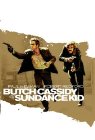
butch Westerns tend to be one of most divisive film genres.  “I hate westerns” is proudly proclaimed by otherwise intelligent and open-minded movie goers.  Ask these anti-western types for specifics on what it is they don’t like and their answers often include:  boring/slow pace, hard to relate to characters, simplistic dialogue, too few women characters and too much machismo.  Western lovers wouldn’t attempt to argue any of those points.  Instead, we prefer to believe that some of those are the BEST features of westerns!

What’s fascinating is, despite the haters, westerns have achieved immense popularity through the years.  Some have provided us the strong, quiet hero: High Noon, Tombstone, The Magnificent Seven.  Many have shown us the joy of revenge: True Grit, Django Unchained, The Searchers.  Some provided us with wonderful villains: The Wild Bunch, Once Upon a Time in the West (nice guy Henry Fonda as a badass).  Still others offered up the conflicted gunslinger: Unforgiven; The Good, The Bad and The Ugly.  Westerns can even be tearjerkers: Shane; comedies: Blazing Saddles, City Slickers; and animated: Rango.

butch5 The one western which seems to be the exception … it’s even beloved by western haters … is Butch Cassidy and the Sundance Kid.  It’s a mainstream film with three movie stars, a strong director, a renowned writer, one of the best ever cinematographers, a love story, a #1 charting pop song, enough action (but not too much), and a level of comedy that is witty and quotable.  Released 44 years ago in 1969, it was recently part of Cinemark’s Classic Film series.

Paul Newman (Butch) and Robert Redford (Sundance Kid) charmed audiences even as they made their way through the west robbing banks and trains.  It’s interesting to note that Steve McQueen was originally cast as the Sundance Kid.  Unfortunately, there was a disagreement over top billing and McQueen dropped out.  Newman and McQueen wouldn’t work together until 1974 in Towering Inferno.  On the bright side, Newman and Redford were terrific together and would team up again in 1973 for The Sting (Oscar winner for Best Picture).  It’s no coincidence that George Roy Hill directed the Newman/Redford duo in both films. He was known as an “actor’s director” and recognized the mass appeal of these two.

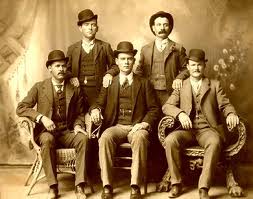
butch6 “Much of what follows is true” is our introduction to the film, along with a polychromatic montage of film clips and photographs of Butch and Sundance with The Hole in Wall Gang (renamed from The Wild Bunch, to avoid confusion with Sam Peckinpah’s recent release).  Butch (Robert LeRoy Parker) and Sundance (Harry Longabaugh) were real life outlaws in the early 20th century.  The Wild Bunch is pictured at left.  The real Butch is seated on the right, and the real Sundance is seated on the left.  Of course, many of the facts from the wild west have been displaced by colorful legend and lore.  It’s apparently true that their holdups rarely involved violence and they were in fact pursued by a posse, which in the film is portrayed as the Dream Team of posse’s assembled by Mr. E.H. Harrison of the Union Pacific Railroad.

One of the first real scenes in the movie has Sundance playing poker and being accused of cheating.  And we all know what that means in a saloon card game – it’s time for a gunfight.  The young stud making the accusations is none other than Sam Elliott, making his big screen debut.  Elliott went on to star in many movies and TV shows, and of course used his manly voice for “Beef. It’s what’s for dinner”.  In 1984, Elliott married Katharine Ross (they are still married today).  Ms. Ross became the dream woman of the 1960’s for many after appearing as Elaine in The Graduate and Etta Place in Butch Cassidy and the Sundance Kid.

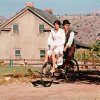
butch2 There are many individual scenes or moments that have become classics over the years: the bicycle scene while BJ Thomas sings “Raindrops Keep Fallin’ on My Head”; watching the great Strother Martin call Butch and Sundance morons as he spits chewing tobacco while riding a mule; the looks on their faces as Butch, Sundance and Etta arrive in the garden spot of Bolivia.  It also remains one of the most quoted movies with eternal lines such as:  “Who are those guys?” I’m better if I move”  “I’m not crazy.  I’m colorful” “Think you used enough dynamite there Butch”  “Are you crazy?  The fall will probably kill you” and my personal favorite “You just keep thinking Butch.  That’s what you’re good at”.

Although it’s certainly a star vehicle for Newman and Redford, and to a lesser extent, Katharine Ross, the supporting cast is diverse and exceptional.  In addition to Strother Martin and Sam Elliott, Butch has an infamous knife fight with Ted Cassidy (as Harvey Logan).  Cassidy is the 6’9” actor who also played Lurch on TV’s “The Addams Family”.  He is not 7’2” Richard Kiel who played Jaws in two James Bond films, though many people get them confused.  75 year old Percy Helton plays Sweetface.  Mr. Helton had over 200 career screen credits dating back to 1915. Henry Jones plays the opportunistic bicycle salesman, George Furth plays the young and loyal Woodcock, and the still active today (at age 86) Cloris Leachman plays the working girl who is so giddy to see Butch again.

butch3 The movie received 7 Oscar nominations and won 4: Cinematography (Conrad Hall), Original Score (Burt Bacharach), Original Song (“Raindrops Keep Fallin’ on My Head”), and Original Screenplay (William Goldman). It was also nominated for Best Picture, but that award went to the controversial Midnight Cowboy and its director John Schlesinger.  It should also be noted that there was a 1956 movie titled The Three Outlaws that featured Neville Brand as Butch, and Alan Hale, Jr as Sundance.  Mr. Hale is best known as the Skipper on “Gilligan’s Island”. In 1979 a pre-quel was released, Butch and Sundance: The Early Days. It featured Tom Berenger as Butch and William Katt as Sundance.  Mr. Katt is best known as the unfortunate prom date in Carrie.  Most recently, in 2011 Sam Shepard starred in Blackthorn, a film about an aging Butch Cassidy quietly hiding out in Bolivia.

So whether you “like” westerns or not, if you have never taken in the exploits of Butch Cassidy and the Sundance Kid, I would encourage you to do so.  If, after that, you still don’t like westerns, all I can say is “Boy, I got vision and the rest of the world wears bifocals.”

here is one of the short original trailers:

http://www.youtube.com/watch?v=X41Ylp02NRs


DJANGO UNCHAINED (2012)

January 2, 2013

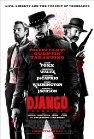
django Greetings again from the darkness. Well, after two viewings and endless analyzing, it’s time to commit thoughts to the page. Over the years, it has become very clear that a Tarantino movie generates a first reaction, and then proceeds to slither through your mind and morph into something else entirely. It would be very easy to accept this latest as an outrageous peek at slavery disguised as a spaghetti western. For most filmmakers, that would be plenty. The “whole” here is exceedingly impressive, but the real joy for cinephiles is in the bits and pieces.

One need not be a Quentin Tarantino expert to enjoy his movies, but there are a couple of things that help. First, he is at heart, a true lover of cinema and quite the film historian, showing sincere respect to the pioneers of this art form. Second, he loves to bring visibility to issues (large and small) by poking a bit of fun at the evil doers who wield unnecessary influence and control over weaker parties. Morality, vengeance, revenge and come-uppance invariably play a role in django4his story-telling … a bonus this time is the inclusion of the Brunhilde/Siegfried legend from Norse mythology and the Wagner operas.

In his two most recent films, QT has been on a kick for creative revisionist history. Inglourious Basterds made a strong statement against the Nazi’s, while this latest goes hard after slave owners. As you might expect, historical accuracy is less important to him than are the characters involved and the tales they weave. And to that point, it seems quite obvious that where in the past, Tarantino would center his attention on crackling dialogue and searing one-liners, he now offers up much more complete characterizations … these are people we understand, even if we don’t much like them.

The obvious love he has for Sergio Corbucci and Sergio Leone, the driving forces behind spaghetti westerns, is plastered on the screen. We even get the beautiful camera work through the snow as a tribute to Corbucci’s The Great Silence (1968). While this is not a remake or sequel or prequel, Franco Nero’s “I know” response to “The D is silent” generates a laugh and memories django2of a 25 year old Nero in the titular role of Django (1966). The Blaxploitation genre plays a significant role here as well since Jamie Foxx plays Django, a freed slave who buddies up with a German dentist-turned-bounty hunter, so that Django can get revenge on those responsible for the torture and mistreatment of his wife.

The details of the stories will not be exposed here, however, I would encourage you to pay close attention to the moments of film brilliance. There is a running gag with townspeople and slaves alike struggling to accept the sight of Django on a horse. You’ll laugh again when Django is offered the opportunity to pick out his own clothes and we next see Foxx in a velvet Little Lord Fauntleroy outfit straight out of The Blue Boy painting from Gainsborough. There is hilarious banter django5between Big Daddy (Don Johnson) and Betina as he tries to give guidance on how to give Django a tour of the plantation.  The phrenology sequence is not just unusual, but an incredibly tense scene and fun to watch.  Watching the final shootout reminds me of Peckinpah’s The Wild Bunch … only ten times as violent!

Some of the best moments occur when we recognize the actors in the vital foundation scenes. Don’t miss: bad guy Bruce Dern, Don Stroud (the drummer in The Buddy Holly Story) as the ill fated sheriff, Tom Wopat as a patient Marshal (“Dukes of Hazzard”), father and daughter Russ and Amber Tamblyn, Jonah Hill who struggles with the eye holes in his “bag”, the eyes of Zoe Bell, Ted Neeley (Jesus Christ Superstar), “Dexter” dad James Remar in two roles, Walton Goggins as a gunslinger, Michael Parks (multiple roles in Kill Bill and Grindhouse), and of course, Mr Tarantino himself (as an explosive cowpoke from down under).

django3 While each of these provide wonderful moments, the real bingo occurs courtesy of the main performances of Jamie Foxx (Django), Christoph Waltz (Dr King Schultz, bounty hunter), Leonardo DiCaprio (Calvin Candie, plantation owner), and Samuel L Jackson (Stephen, Candyland house slave). Any combination of these characters in any scene could be considered a highlight. It’s especially enjoyable to see DiCaprio cut loose after so many uptight characters recently. Samuel L Jackson has long been a Tarantino favorite, and his delivery as the diabolical Uncle Tom house slave who has some secrets of his own, will bring the house down when he first sees Django and, in a much darker way, when his suspicions are confirmed. Power is a big player in the story, and even as a slave, Stephen knows what to do with power when he has it. Mr. Waltz won an Oscar for his Inglourious Basterds performance, and his dialogue here is every bit as rich. It’s obvious how much Tarantino enjoys hearing his words spoken by Waltz. Foxx’ performance could be easily overlooked, but it’s actually the guts of the film. He is quiet when necessary and bold when required.

django - dj We must also discuss the soundtrack. Franco Migiacci‘s original “Django” theme is featured, as are classics and a new song from the great Ennio Morricone. If you doubt the originality of the soundtrack, try naming another western that utilizes a mash-up of James Brown and Tupac Shakur. How about a spot-on use of Jim Croce’s “I’ve Got a Name”? The film is beautifully shot by Robert Richardson, and Fred Riskin takes over for Tarantino’s long-time editor Sally Menke, who sadly passed away in 2010.

It should also be noted that the script puts hip-hop to shame by using the “N-word” more than 100 times. It is a bit disconcerting, and you can google Spike Lee’s comments if you care to read more on the topic. Otherwise, dig in to the latest gem from Tarantino and appreciate his approach and genius … either that, or stay away!

**NOTE: I have purposefully avoided the scandal associated with the film.  If you are interested in reactions from the African-American community, there is no shortage of published reports on those who support the film and those who are outraged.

watch the trailer:

http://www.youtube.com/watch?v=rC8VJ9aeB_g


HIGH NOON (1952) revisited

September 26, 2012

 Greetings again from the darkness. Thanks to the Cinemark Classic Series, seeing this one on the big screen became a summer highlight. Often rated as one of the all-time best, and easily one of the best from the western genre, the film was written (by Carl Foreman) as an allegory to Hollywood blacklisting brought on by Sen. McCarthy’s red-baiting crusade. The cowardly townspeople represent those who wouldn’t stand up against the wild and often false accusations.

The film won four Oscars, including Gary Cooper as Marshal Will Kane. The character is often compared to Atticus Finch from To Kill a Mockingbird. Both are shining examples of men doing the right thing in very difficult circumstances. It’s been noted that Gary Cooper’s constant look of pain during the film might not have been excellent acting after all. He reportedly was suffering from a bleeding ulcer and severe back during filming (though he was apparently strong enough to carry on an affair with his beautiful co-star).

Originally filmed in “real” time with the numerous clock shots to prove it, the film was re-edited prior to release, nullifying the effect. The Tex Ritter (John’s father) version of “High Noon (Do Not Forsake Me)” is heard throughout, and will stick in your head for some time after viewing. This was the first major motion picture for both Grace Kelly and Lee Van Cleef. Ms. Kelly plays Kane’s new bride, who doesn’t understand his need to stay and face Frank Miller. Mr. Van Cleef flashed his beady eyes here and went on to have a long career as a top notch movie villain.

 The film was directed by Fred Zinnemann who also directed From Here to Eternity, Oklahoma!, and A Man for All Seasons. Zinnemann lost the Oscar to John Ford, and film lost to The Greatest Story Ever Told. It’s considered one of the greatest Oscar upsets in history. Floyd Crosby was the cinematographer … he is the father of singer David Crosby (Crosby, Stills, Nash and Young).

Other supporting work is courtesy of Thomas Mitchell (Uncle Billy from It’s a Wonderful Life), Katy Jurado (excellent as Helen Ramirez), Lon Chaney, Jr, Harry Morgan (later Col Potter in “MASH“), and Sheb Wooley (later known for singing “The Purple People Eater”), and of course, Lloyd Bridges as Harvey, Kane’s ambitious, and not so loyal, deputy (and father to Beau and Jeff).

Cooper is at his most dominant in this role and it’s difficult to believe that just about every other Hollywood leading man of the time was offered the role prior to him. Cooper’s Will Kane is the epitome of the strong, silent type … and a real stand-up guy.

** watch the opening credits … featuring the opening shot of Lee Van Cleef and Tex Ritter singing the Oscar winning song:

http://www.youtube.com/watch?v=QKLvKZ6nIiA&feature=related


BLACKTHORN

November 3, 2011

 Greetings again from the darkness. George Roy Hill‘s Butch Cassidy and the Sundance Kid is one of my all-time favorites. Action, adventure, gun play, wise-cracking, romance, charming lead actors, and a touch of western legend, all combine for a very entertaining film. Spanish screenwriter and director Mateo Gil (s/p, The Sea Inside) takes up the story 20 years from the infamous freeze frame that ended Hill’s 1969 film.

Sure, you might need suspension of disbelief since we all remember the hundreds of Bolivian soldiers firing at once when Butch and Sundance attempted their escape, but this film is really more about aging and trying to put things right in a life that took a wrong turn. The Butch we are first introduced to is writing a letter to the son of Etta Place, after her death. He writes that it’s time to come home – meaning he is to leave the quiet life in rural Bolivia and make the long journey back to the U.S.

 This aging “Uncle Butch” is played by the great Sam Shepard. Mr. Shepard is not just a Pulitzer winning writer, but he has always had an incredibly strong screen presence … a wonderful face and trustworthy voice. Here is in full grizzled cowboy mode and sports the bright eyes we remember from Paul Newman, while displaying a newfound peace raising horses in the Bolivian countryside. He lives this life as James Blackthorn, not Butch Cassidy. He even has a relationship with one of the local ladies, who seems filled with the spirit that Butch had as a younger man.

 Blackthorn collects his savings from the bank … a bit ironic, eh? He sets off on the journey, but is quickly knocked off course thanks to the recklessness of a Spainish thief played by Eduardo Noriega. Noriega says he can makes things right and the two form an unlikely team. Unfortunately, Butch has become more trusting in his old age, and Noriega turns out not to be the partner than Sundance once was.

This whole story is a bit outlandish, but it’s at its best when Blackthorn runs smack dab into Makinley, one of the old Pinkerton men who was chasing him twenty years ago. Turns out, Makinley (Stephen Rea) is a social outcast because he was the only one who thought the boys survived that attack so many years ago. Seems both Makinley and Blackthorn have been cast aside and trapped for two decades in Bolivia.

 While Shepard is outstanding, he shares star billing with the terrain of Bolivia. It definitely holds its own versus the Monument Valley we have seen in so many westerns over the years. The salt flats are particularly beautiful and treacherous, and filmed with skill by the director. We are also treated to periodic flashbacks and a few of the key moments for the younger Butch (Nikolaj Coster-Waldau), Sundance (Padraic Delaney) and Etta (Dominique McElligott). We learn that the partnership was truly that … one for all.

This film will probably have little box office success, but it’s certainly worth a look for those of you intrigued by the Butch and Sundance legend, and are able to wonder just WHAT IF ….

SEE THIS MOVIE IF: you are a fan of the original Butch & Sundance OR you never miss a chance to see Sam Shepard onscreen OR you would like to see the rarely seen natural beauty of Bolivia

SKIP THIS MOVIE IF: a slow moving western hold little appeal for you OR you just aren’t willing to buy into the idea that maybe Butch and Sundance survived the Bolivian Army massacre

watch the trailer: