TMI (2-10-12)

February 10, 2012

TMI (Today’s Movie Info)

February: Director’s Month
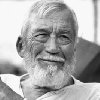
 JOHN HUSTON (1906-1987) put together an unusual career as writer, director and character actor … and excelled at all three.  He was the son of actor Walter Huston and father of actress Angelica Huston and actor Danny Huston (with different mothers).  John was writer/director for an impressive string of Hollywood classics: The Maltese Falcon (1941), The Treasure of the Sierra Madre (1948), Key Largo (1948), The Asphalt Jungle (1950), The African Queen (1951), The Red Badge of Courage (1951), Moulin Rouge (1952).  After a round of directorial success, John returned to acting and was nominated for an Oscar in Otto Preminger’s classic The Cardinal (1963).  He is also left quite an impression with his acting (as Noah Cross) in Chinatown (1974) and The Wind and the Lion (1975).  In the 1985 he directed his daughter Angelica to an Oscar in Prizzi’s Honor, making him the only one to direct his father (Walter in The Treasure of the Sierra Madre) and daughter to acting Oscars.  John was nominated for 15 Oscars, wining for Best Director and Best Screenplay for The Treasure of the Sierra Madre.  His final film The Dead was finished and released in 1987, the year he died.  He lived life to the fullest and is often described as a rebel and non-conformist … Hollywood’s version of Ernest Hemingway.  Along those lines, he once said “I`ve lived a number of lives. I`m inclined to envy the man who leads one life, with one job, and one wife, in one country, under one God. It may not be a very exciting existence, but at least by the time he`s seventy-three he knows how old he is”


TMI (2-8-12)

February 8, 2012

TMI (Today’s Movie Info)

February: Director’s Month

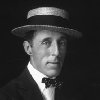
 D.W. GRIFFITH (1875-1948) grew up in Kentucky as the son of a Confederate Army Colonel and Civil War hero.  His father’s war stories would greatly influence Griffith’s film career.  Remarkably, Griffith made over 450 short films and 80 feature length films (sometimes at the rate of two per week!). He was celebrated for his visionary and ground-breaking techniques (cross-cutting, split-screen, flashbacks, etc), but was also labeled a racist due to the nature of some of his films.  In 1910, he was credited with making the first film in Hollywood, In Old California.  Many of the biggest silent film stars got their start in a Griffith film: Mary Pickford, Lillian Gish, Mack Sennett, Lionel Barrymore. His renowned 1915 historical classic The Birth of a Nation was the first film shown in the White House (President Woodrow Wilson). The film is considered the birth of American cinema, but it also caused race riots throughout the country. In 1920, he became one of the founders of United Artists, along with Charlie Chaplin, Douglas Fairbanks and Mary Pickford.  Griffith only made two “talkies”.  After the second, he retired stating “We do not want now and we never shall want the human voice with our films”.  He is credited with the invention of false eyelashes (for use in his film Intolerance: Love’s Struggle Throughout the Ages (1916) … and also credited with the phrase “lights, camera, action”, which is still used today by filmmakers.


TMI (2-7-12)

February 7, 2012

TMI (Today’s Movie Info)

February: Director’s Month

 FEDERICO FELLINI (1920-93) is revered as one of the most influential filmmakers of the twentieth century.  He was married for 50 years to Giulietta Masina (pictured together).  She was his creative muse and was cast in many of his films, most notably La Strada (1954) and Nights of Cabiria (1957).  “Felliniesque” is a film term used to describe baroque, dream-like sequences such as those Fellini produced.  The term paparazzi was derived from the character, Paparazzo, who photographs celebrities in the Fellini classic La Dolce Vita (1960).  He had four films nominated for Oscars as Best Foreign Film: La Strada (1954), Nights of Cabiria (1957), 8 ½ (1963), and Amarcord (1973) … all four won the award.  Additionally, he was nominated for twelve other Oscars (writing, directing).  Speaking (tongue-in-cheek) as a stereotypical Italian lover, he once said “It’s easier to be faithful to a restaurant than it is to a woman.”  Sadly, his wife of 50 years died a mere five months after he passed away.


TMI (2-6-12)

February 6, 2012

TMI (Today’s Movie Info)

February: Director’s Month

 CLINT EASTWOOD was almost 30 years old when he got his first big break and was cast in the TV series “Rawhide”.  In 1964, director Sergio Leone picked Eastwood for his “Man with no Name” trilogy of low-budget Italian westerns: A Fistful of Dollars (1964), For a Few Dollars More (1965) and The Good, The Bad and The Ugly (1966). In 1971, Eastwood directed his first film Play Misty for Me, and also starred in Dirty Harry, as a new breed of anti-establishment hero. Clint became a huge international movie star, but never strayed far from his love of directing films. To date, he has directed 33 films and even starred in most of them.  His directorial efforts cross many genres: Westerns, Action, Thrillers, Cop Dramas, Family Dramas, War, Biographies, Comedies, Love Stories, and even Sci-fi.  He also writes music for many of his movies and is quite an accomplished pianist.  After Gran Torino (2008), Eastwood proclaimed himself as retired from acting, but it was recently announced that he will be playing a veteran baseball scout in Trouble with the Curve (2013), directed by his longtime assistant director Robert Lorenz, and co-starring Amy Adams and Justin Timberlake.  Even though his Hollywood career spans 57 years, his Oscar recognition has come relatively recently.  He was nominated for Best Actor and won for Best Director and Best Picture for Unforgiven (1992), nominated for Best Director and Best Picture for Mystic River (2003), nominated for Best Actor and won for Best Director and Best Picture for Million Dollar Baby (2004), and nominated for Best Director and Best Picture for Letters from Iwo Jima (2006)

trivia: with Warren Beatty, they are the only two to receive Best Actor and Best Director Oscar nominations for two films. While directing, instead of “cut”, he has been known to say “that’s enough of that s**t”


TMI (2-4-12)

February 4, 2012

TMI (Today’s Movie Info)

February: Director’s Month

 DUNCAN JONES is a young, emerging sci-fi writer / director.  His first two feature films were the independent Moon (2009) and the box office surprise Source Code (2010). Both were critically acclaimed.  He is the son of rock star David Bowie, and served as the Best Man at Bowie’s 1992 wedding to supermodel Iman.  His original name was Zowie Bowie, but later went by Joe Jones – Jones is David Bowie’s original surname – and finally Duncan Jones.  He has not announced his next film project, but was recently passed over for the Superman re-boot, Man of Steel. Zack Snyder will direct instead.


TMI (2-3-12)

February 3, 2012

TMI (Today’s Movie Info)

February: Director’s Month

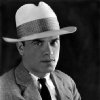
 FRANK CAPRA (1897-1991) As a child, he and his family came to the U.S. from Sicily.  He was hired as a gag writer by Hal Roach for the “Our Gang” series in 1924, and later spent time as a writer for Mack Sennett. In the 1930’s he became a full time director and was responsible for such classics as It Happened One Night (1934), Mr. Deeds Goes to Town (1936), You Can’t Take it With You (1938), Mr. Smith Goes to Washington (1939), Meet John Doe (1941). Of course, his 1946 film It’s a Wonderful Life, has recovered from its initial box office failure to become one of the all-time favorite holiday classics. His final theatrical film was Pocketful of Miracles (1961), which features the screen debut of Ann-Margret. He was nominated six times for a Best Director Oscar, winning three. Capra once said of James Stewart: his “appeal lay in being so unusually usual


TMI (2-2-12)

February 2, 2012

TMI (Today’s Movie Info)

February: Director’s Month

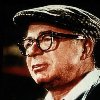
 BILLY WILDER (1906–2002) wrote many German scripts prior to Hitler’s coming to power.  Being Jewish, Wilder fled Germany.  Both of his parents died at Auschwitz. He collaborated closely with Steven Spielberg on the script for Schindler’s List (1993) but refused a screen credit. Wilder was nominated for eight Best Director Oscars (second most to William Wyler’s 12), winning twice: The Lost Weekend (1945) and The Apartment (1960). Wilder is one of only seven filmmakers to win Oscars for Best Picture, Best Director and Best Screenplay for the same film.  He won all three for The Apartment (1960).  He made 7 films with his favorite actor, Jack Lemmon, including Wilder’s final film Buddy Buddy (1981).  Wilder was such a versatile filmmaker, he won recognition for his film work in comedies, drama, war and film noir.  He directed four films that consistently show up on lists for the 100 best movies of all time: Double Indemnity (1944), Sunset Blvd (1950), Some Like it Hot (1959), The Apartment (1960).  He once said of Marilyn Monroe: “breasts like granite, and a brain like Swiss cheese”


TMI (2-1-12)

February 1, 2012

TMI (Today’s Movie Info)

February: Director’s Month

 ALFRED HITCHCOCK (1899-1980) directed more than 50 feature films in a career spanning six decades. He used very distinctive camera movement and pioneered a film editing style that created a new viewing experience.  He was married to Alma Reville from 1926 until his death.  She was his most valued behind-the-scenes collaborator on his films. If Alma didn’t like something, Hitch changed it.  Hitchcock was nominated five times for a Best Director Oscar, but remarkably never won. In fact, the only two Oscars won for his films were: Best Actress for Joan Fontaine in Suspicion (1941), and Best Song for “Whatever Will Be, Will Be (Que sera, sera)” from The Man Who Knew Too Much (1956).  One of his trademarks was a small cameo in most of his movies.  He overcame the challenge of Lifeboat (1944), which is filmed entirely on a small boat.  Watch closely and you’ll see Hitchcock in a newspaper advertisement for weight loss … he was both the “Before” and “After” picture.   His classic films include: Rebecca (1940), Lifeboat (1941), Suspicion (1941), Shadow of a Doubt (1943), Spellbound (1945), Notorious (1946), Strangers on a Train (1951), Dial M for Murder (1954), Rear Window (1954), To Catch a Thief (1955), Vertigo (1958), North By Northwest (1959), Psycho (1960), The Birds (1963)


TMI (1-31-12)

January 31, 2012

TMI (Today’s Movie Info)

WILHELM SCREAM – first used in the 1951 film Distant Drums, this stock sound effect has taken on a life of its own.  The name comes from the scream character Private Wilhelm makes after being shot by an arrow in the 1953 film The Charge at Feather River.  The actual scream was recorded in studio by Sheb Wooley, a well-known character actor of the day, who is probably best known as the singer of the 1958 novelty song “The Purple People Eater”.  Including the Wilhelm Scream has become somewhat of an “inside joke” in Hollywood as it has been used in more than 225 films … including those of Steven Spielberg, George Lucas and Quentin Tarantino.
 
This compilation includes Private Wilhelm in The Charge at Feather River, as well as Star Wars and Indiana Jones.  WARNING: Once you have it in your head, you can’t help but notice it in movies and TV shows (and even video games)


TMI (1-28-12)

January 28, 2012

TMI (Today’s Movie Info)

The first “Saturday Night Live” cast member to be nominated for a Best Actor Oscar: Robert Downey, Jr. He was nominated for Chaplin (1992) after having been on SNL for the 1985 season.

* Joan Cusack and Dan Aykroyd had both been nominated for Best Supporting Oscars prior to Downey’s nomination