TMI (2-22-12)

February 22, 2012

TMI (Today’s Movie Info)

February: Director’s Month

 ROBERT WISE (1914-2005) got his start as a sound effects editor, and his big break (and first Oscar nomination) as Orson Welles’ editor on Citizen Kane (1941).  Wise also directed two of the most beloved film musicals: West Side Story (co-director with Jerome Robbins, 1961), The Sound of Music (1965).  Wise directed his first film at age 29 and his final (TV) film at age 86.  During that span, he was nominated for seven Academy Awards … winning for:  Best Picture and Best Director, West Side Story; and Best Picture and Best Director, The Sound of Music.  He is also remembered for directing The Body Snatcher (1945), which was based on a Robert Louis Stevenson short story and starred Boris Karloff and Bela Legosi;  the sci-fi thriller The Day the Earth Stood Still (1951); I Want to Live! (1958); The Sand Pebbles (1966, 7 Oscar nominations); The Andromeda Strain (1977); Star Trek: The Motion Picture (1979).  Wise is one of the very few directors to have had success across so many film genres: drama, film noir, horror, musical, science fiction, war, westerns.


TMI (2-21-12)

February 21, 2012

TMI (Today’s Movie Info)

February: Director’s Month

 QUENTIN TARANTINO … his first full-length feature, Reservoir Dogs, received rave reviews at the Sundance Festival in 1992. Tarantino’s second feature exploded into Hollywood, as Pulp Fiction (1994) garnered Oscar nominations for Best Picture, Best Director and winning for Best Screenplay. While it may seen that Tarantino is a cinematic fixture, he has actually only directed 7 full length features to date. His eighth film, Django Unchained, is due for release on Christmas Day 2012. Tarantino is known for his encyclopedic knowledge of film and TV history, and each of his films features a tribute or nod to a film, TV series and/or song that influenced his work.  He also writes his own movies, and has a small group of confidants that he allows to read his drafts. He is quoted as saying “When people ask me if I went to film school, I tell them, ‘no, I went to films’”.


TMI (2-19-12)

February 19, 2012

TMI (Today’s Movie Info)

February: Director’s Month

 PEDRO ALMODOVAR was born, raised and lives in Spain.  He was unable to attend Film School because Franco had closed them all during his regime. Instead, he saved his money and bought a Super 8 camera, and taught himself how to direct by making short films. Pedro is known for writing strong, complex female characters for his films and often casts his mother and/or brother in supporting roles.  He has admitted that much of his writing comes from personal experiences … though not actually autobiographical in nature.  Pedro has become the most influential director from Spain since Luis Bunuel, and he frequently works with his country’s best actors: Carmen Maura, Antonio Banderas, Javier Bardem, Penelope Cruz, and Gael Garcia Bernal. His history with Academy Awards is a bit mystifying: Women on the Verge of a Nervous Breakdown (2002, nominated for Best Foreign Language Film), All About my Mother (1999, won for Best Foreign Language Film), Talk to Her (2002, won for Best Screenplay, nominated for Best Director).  At least two other Almodovar films probably deserved nominations. On his reasons for making movies he once said “Cinema can fill in the empty spaces of your life and your loneliness.”  He recently announced that his next film will be the 2013 comedy, Los amantes pasajeros.


TMI (2-18-12)

February 18, 2012

TMI (Today’s Movie Info)

February: Director’s Month

ORSON WELLES (1915-1985) directed what many consider to be the greatest film ever, Citizen Kane (1941). Amazingly, it was his first feature film and he was only 26 years old. He won the Oscar for Best Screenplay, but the Best Picture went to How Green Was My Valley … and not Citizen Kane, The Maltese Falcon or Suspicion.  Welles is one of the few writer/directors whose work has become more appreciated over time … many of his films were box office failures. He was also a prolific actor and radio personality, and is still remembered for his Halloween prank gone bad … the radio rendition of “The War of the Worlds”, in which many listening actually thought aliens had invaded earth.  Welles was also a talented musician, painter and magician. His other must-see film is Touch of Evil (1958). He turned down the offer to be the voice of Darth Vader in Star Wars (James Earl Jones accepted).  Commenting on his early career success, he said “I started at the top and worked down.”  In the late 70’s and early 80’s, Welles became the commercial spokesperson for Paul Masson wine … his “we shall sell no wine before it’s time” became the stuff of advertising legend.  Watch one of the ads:


TMI (2-17-12)

February 17, 2012

TMI (Today’s Movie Info)

February: Director’s Month

 MEL BROOKS has directed only eleven feature films.  Both of his acknowledged classics were released in 1974: Blazing Saddles and Young Frankenstein.  Brooks got his start as a TV writer on such shows as “Your Show of Shows” and “Caesar’s Hour”. His career took off in 1965 as he created, produced, wrote and directed the hit TV series “Get Smart”.  He then transitioned into films with The Producers (1968) … his satire of Broadway, involving the scam to produce a sure fire flop called “Hitler in Springtime”. It won him an Oscar for Best Screenplay. Brooks later took the film to Broadway where it became a smash hit.  He once said “I’m the only Jew who ever made a buck offa Hitler.” His knack for parody and sense of humor is certainly not for everyone, but Brooks put together a very successful career to go with his 41 year marriage to actress Anne Bancroft. (Bancroft passed away in 2005, but will always be remembered as Mrs. Robinson in The Graduate).


TMI (2-16-12)

February 16, 2012

TMI (Today’s Movie Info)

February: Director’s Month

 CHRISTOPHER NOLAN is about to release his seventh full-length feature film: The Dark Knight Rises (July 2012). This will be the third film in his trilogy of the re-imagined Batman series.  The first two films (Batman Begins, 2005 and The Dark Knight, 2008) have grossed almost $1.4 billion worldwide. The success of those films, plus his 2010 masterpiece Inception ($825 million worldwide, and two Oscar nominations), have placed him among the most powerful people in Hollywood.  On the flipside, his first full-length feature film Memento (2000) garnered him an Oscar nomination and quite a cult following, so Nolan is one of the few to be hailed in the indie world and then also reach box office peaks with studio blockbusters. Insomnia (2002) is his only film in which he didn’t write the script. He often writes with his brother Jonathan Nolan (the creator of the TV series “Person of Interest”) … including next year’s Man of Steel (the next Superman movie).  When discussing his recent experience with filmmaking, Nolan said, “Superheroes fill a gap in the pop culture psyche, similar to the role of Greek mythology. There isn’t really anything else that does the job in modern terms.”


TMI (2-15-12)

February 15, 2012

TMI (Today’s Movie Info)

February: Director’s Month

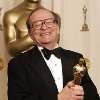
 SIDNEY LUMET (1924-2011) made one of the most remarkable feature film directorial debuts in history with the still powerful Twelve Angry Men (1957). The first half of the 1960’s brought some of Lumet’s best work.  This included: Long Day’s Journey Into the Night (1962), Fail-Safe (1964), The Pawnbroker (1964), The Hill (1965), The Deadly Affair (1966).  Lumet got on another roll in the 70’s with Serpico (1973), Murder on the Orient Express (1974), Dog Day Afternoon (1974), Network (1976).  In 1982 he directed another tense courtroom drama, The Verdict, which won Paul Newman an Oscar.  Though he would go on to direct a dozen watchable movies over the next 25 years, it wasn’t until 2007 (50 years after his first film) when he again achieved near-unanimous critical acclaim with Before the Devil Knows You’re Dead.  It would be his final film. Lumet loved New York City and filmed there whenever possible. He was once married to Gloria Vanderbilt for 7 years. Incredibly, Lumet was nominated for five Academy Awards, but never won … though he was presented with an honorary Oscar in 2005.  Having studied acting, he was considered an actor’s director. He once said “There’s no such thing as a small part.  There are just small actors.


TMI (2-14-12)

February 14, 2012

TMI (Today’s Movie Info)

February: Director’s Month

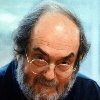
 STANLEY KUBRICK (1928-1999) only made 12 full length feature films, but 11 of them could be considered classics. His 1956 The Killing is still considered one of the best of the Film Noir genre, and Paths of Glory (1957) is a staple in Film Classes for war films. Spartacus (1960) and Lolita (1962) provided true insight into his filmmaking genius, and the turning point in his career was the critical acclaim and box office success of his war/political black comedy Dr Strangelove or: How I Learned to Stop Worrying and Love the Bomb (1964). After that, Kubrick had the power that only a handful of directors ever achieve – he was free to choose what movies he wanted to make, when he would make them, how he would make them, and with whom he would make them. In 1968 he collaborated with Arthur C Clarke to create what many still consider the best sci-fi film ever, 2001: A Space Odyssey.  In the 70’s came his ultra-violent masterpiece A Clockwork Orange (1971) and also Barry Lyndon (1975).  For many film lovers the classic modern horror film is Kubrick’s The Shining (1980), based on Stephen King’s novel (though King despised the adaptation).  In 1987, Kubrick explored the dark psychological damage caused by war in Full Metal Jacket.  His final film was Eyes Wide Shut (1999), which received very mixed critical reviews (he claimed it was his best film).  Kubrick died in his sleep in while working on another sci-fi film.  His friend, Steven Spielberg, finished the film and dedicated AI: Artificial Intelligence (2001) to Stanley Kubrick.  Over his career, Kubrick received 13 Oscar nominations, winning for Best Special Effects for “2001”. Since he gave so few interviews, he was often described as a recluse. Kubrick scoffed at the label saying “I have a wife, three children, three dogs, seven cats.  I’m not a Franz Kafka sitting alone and suffering.”


TMI (2-13-12)

February 13, 2012

TMI (Today’s Movie Info)

February: Director’s Month

 PETER JACKSON … his favorite movie is King Kong (1933), which he re-made in 2005, with Naomi Watts in the Fay Wray role.  Jackson has also been greatly inspired by George Romero’s Dawn of the Dead (1978).  He always co-writes his scripts with his wife, Fran Walsh, and his big breakthrough came in 1994 with Heavenly Creatures, starring a 19 year old relative newcomer named Kate Winslet. Jackson is one of 7 filmmakers to win Oscars for Best Picture, Best Director, Best Screenplay for the same film (Lord of the Rings: Return of the King, 2003) … he also has six other Oscar nominations. Already thought of as a cinematic genius thanks to his Lord of the Rings trilogy, Jackson is currently at work filming his two part film based on “The Hobbit” by JRR Tolkien.  Expected release date for part one is December 14, 2012.


TMI (2-11-12)

February 11, 2012

TMI (Today’s Movie Info)

February: Director’s Month

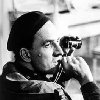
 INGMAR BERGMAN (1918 – 2007) was the son of a minister and many of his films include religious themes. He worked frequently with a small group of Swedish actors including Max von Sydow and Liv Ullman (with whom he also had a relationship and a child).  Woody Allen is huge admirer of Bergman’s work and admittedly set out to make a “Bergmanesque” film with his Interiors (1978).  Bergman (no relation to actress Ingrid Bergman) received nine Oscar nominations (no wins), but did direct 3 Oscar-winning films for Best Foreign Language Film: The Virgin Spring (1960), Through a Glass Darkly (1961), Fanny and Alexander (1982).  His other classics include: The Seventh Seal (1957, famous for the chess match with Death), Wild Strawberries (1957), Winter Light (1963), Persona (1966), Cries and Whispers (1972). Though Fanny and Alexander (1982) was his final theatrical feature, he continued writing and directing for TV and stage until his death.  His famous quote on movies: “No form of art goes beyond ordinary consciousness as film does, straight to our emotions, deep into the twilight room of the soul.”