GRETA (2019)

February 28, 2019

 Greetings again from the darkness. “Don’t touch anything on the subway.” That should be a warning posted in all New York City tourist brochures. Recent NYC transplant Frances didn’t get the memo. She not only picks up a “lost” handbag, but also wants to personally return it to the rightful owner – despite the counseling of her streetwise roommate.  Oscar winning director Neil Jordan (THE CRYING GAME) co-wrote the screenplay with Ray Wright, and they blend in many elements … not the least of which is making friends with someone you shouldn’t.

Chloe Grace Moretz plays Frances as the good-hearted Boston-raised girl who is almost too innocent to believe, given the day and age we are in. When Frances returns the purse, she is greeted warmly and appreciatively by a kindly Greta (Isabelle Huppert). The two bond over their individual loneliness: Greta says her daughter lives abroad, and Frances’ mother passed away about a year ago. It’s easy to see how a friendship forms through a substitute mother-daughter gap-filling.

An accidental discovery by Frances sends her out the door, intent on cutting ties with Greta. What Frances soon learns is that Greta is a crafty psychopath of the highest order. It’s at this point where filmmaker Jordan kicks in the twisted, dark humor and serves us a cheap-thrills ride via a full blown stalker movie. Greta is truly deranged and once Ms. Huppert cuts loose, we see how much fun she’s having. She even plays a piano teacher, which is kind of funny since she was also the piano teacher in THE PIANO TEACHER (2001). She becomes my first and favorite Liszt loving psychopath, who likely isn’t as technologically challenged as she makes out.

There are stylistic and story elements reminiscent of movies like FATAL ATTRACTION and SINGLE WHITE FEMALE, and Jordan’s camera angles and lighting combine with Javier Navarrete’s score to dish up some B-movie type comically dark moments. Maika Monroe (IT FOLLOWS) is terrific as Frances’ roommate. She’s the direct type who tells Frances that “this city will eat you alive”, but is also extremely supportive and protective (and good at yoga).

Stephen Rea and Colm Feore appear in limited roles, but the fun you have here is directly related to how you buy into the Greta vs Frances web. It’s rare to see an onscreen female predator, but neither Mr. Jordan nor Ms. Huppert round off any edges. We are reminded that being nice doesn’t always pay off, but having friends certainly does. There is some creepy evil fun to be had, as well as a key life lesson: never trust a woman with too many purses.

watch the trailer:


THE WEDDING GUEST (2019)

February 28, 2019

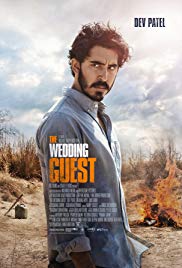
 Greetings again from the darkness. I pity the poor soul who, based on the film’s title, buys a ticket assuming it must be a light-hearted romantic-comedy starring Katherine Heigl. While we do watch a slow-building romance, this is much more of a road trip through parts of the world we don’t usually see on screen. Writer-Director Michael Winterbottom (A MIGHTY HEART, THE KILLER INSIDE ME, THE TRIP) has had a solid career with movies that tend to be quite watchable, though not particularly memorable. Chalk up another.

The film opens in a subdued manner with a man (Dev Patel) meticulously packing a suitcase, boarding a plane, landing in Pakistan and renting a car. These are all things any of us might do if headed to a wedding. Only this mysterious man of few words also buys 2 guns, plastic ties and duct tape. Either this is going to be a honeymoon unlike any other, or he’s on a different mission altogether. We don’t have to wait long, as the night before the wedding, Patel sneaks past the armed security guard and into the family compound so that he can kidnap Samira (Radhika Apte), the bride-to-be.

Mr. Patel plays a British Muslim man with various names and identities, and a supply of passports. He was hired by a shifty rich guy (Jim Sarbh) who loves Samira to prevent her from going through with the arranged marriage. The meet up gets delayed as the kidnapping and fallout make national news. The story evolves into a predictable and familiar road trip, but with a delightfully different setting and backdrop than what we are accustomed to. A train to Delhi plays a role with Samira and her kidnapper on the lam – working to remain anonymous.

The film does offer up some twists and turns for us, but after an intriguing first 15 minutes, we pretty much know where things are headed. Fortunately the camera work of Cinematographer Giles Nuttgens (HELL OR HIGH WATER) keeps our attention, as does the back and forth between Dev Patel and Radhika Apte, two excellent performers. So yes, the film is one we can enjoy watching, though it will likely never come up in conversation.

watch the trailer:


MAPPLETHORPE (2018)

February 28, 2019

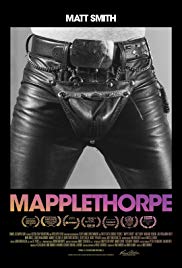
 Greetings again from the darkness. Writer-director Ondi Timoner goes head on (so to speak) with the story of Robert Mapplethorpe, the immensely talented and endlessly controversial photographer whose work in the 70’s and 80’s was often considered scandalous, if not pornographic. Ms. Timoner and star Matt Smith (PRIDE AND PREJUDICE AND ZOMBIES) are unflinching in this look at the artist, his personal life, and his work … although I personally flinched a few times.

The opening scene is quite unusual as Mapplethorpe is shown alone in his small dorm room, attired in full Pratt Institute uniform, just prior to dropping out. We next see his NYC meet with Patti Smith (Marianne Rendon), and watch the two oddball youngsters connect. Their relationship develops as Robert shifts from drawing to photography, stating, “I’m an artist. I would have been a painter, but the camera was invented”. The couple wriggles their way into the Chelsea Hotel and soon Mapplethorpe is focused on male nudes not just as artistic models, but also as personal pleasure. His interests send Patti Smith packing … and understandably so.

Mapplethorpe’s career takes off when Sam Wagstaff (John Benjamin Hickey) becomes his benefactor and lover. Sam’s connections in the art world lead to gallery shows and work that Robert might never have attained. The film never shies away from Mapplethorpe’s daddy issues, his promiscuity, his drug use, or his intolerance of those who didn’t “get” his work. His fascination with male genitalia in both art and personal life is on full display, as many of his actual photographs are shown throughout.

Once diagnosed with HIV/AIDS, his sexual irresponsibility probably should have been emphasized, but other than that, filmmaker Timoner never tries to sugar coat the man. He seemed to crave attention, yet so many wanted love from him – Patti Smith, Sam Wagstaff, his father (Mark Moses, “Mad Men”), and his brother (who worked with him), all tried to establish that bond, but things just never quite clicked.

Other fine supporting work is provided by Hari Nef, Mickey O’Hagan (TANGERINE), Brian Stokes Mitchell, and Brandon Sklenar. Mapplethorpe’s story would likely be best handled via documentary, but Mr. Smith’s performance is worthy of attention. The film does a nice job of relaying the two sides to Mapplethorpe’s work – the provocative and the portraits. He took some iconic photos of celebrities including the cover of Patti Smith’s debut album “Horses”.

Ms. Smith’s 2010 memoir “Just Kids” paints a more complete picture of their relationship, and it’s interesting to note that although he died in 1989, Mapplethorpe’s work continues to generate emotional responses. In fact, his work inspired a national debate about whether the government should fund the arts. Ms. Timoner’s film has been well received at LGBTQ festivals, and the Robert Mapplethorpe Foundation is devoted to protecting and promoting his work, while raising millions of dollars for AIDS research. His legacy is much more than some black and white photographs of nude models.

watch the trailer:


THE HEIRESSES (2019, Paraguay)

February 28, 2019

 Greetings again from the darkness. It would be a tight race to determine which is rarer: a Paraguayan film with distribution, or a movie centered on a middle-aged lesbian couple together for 30 years. The first feature film from writer-director Marcelo Martinessi is remarkable in its level of quiet, as everything that matters lies beneath the surface. Neither happiness nor sadness is particularly obvious at any given time.

Chela (Ana Brun) and Chiquita (Margarita Irun) live in the capital city of Asuncion and are both from wealthy families. They are in the process of selling off family heirlooms from their large (and well worn) house due to the debt run up by Chiquita … a debt that has her headed soon to jail after being found guilty of fraud. Chela, the introverted artist, is embarrassed and withdrawn by their situation, whereas the more affable and gregarious Chiquita takes it all in stride. We can’t help but notice that the items being sold and this couple’s relationship both seem relics of the past, trapped in a time warp.

Confinement and restrictions of movement play a role for both women. Obviously Chiquita is confined to jail, while the cave-like house surrounds Chela. Early on, we see further contrasts. Chiquita flourishes in jail, while Chela struggles with the placement of her coffee cup on the silver serving tray delivered by her maid (Nilda Gonzalez). In fact, the hiring of a maid is somewhat confounding to us – who does that while selling off furnishings to make ends meet?

Although Chela refuses help from the friends she has generously assisted over the years, circumstances are such that she kind of falls into a private uber-taxi business for the local ladies (doctor appointments, card games, funerals, etc). Chela slowly begins to discover living life again. After years of not driving, she’s a bit nervous at first, but driving the car is her literal vehicle to a new life approach. Her jail visits with Chiquita are a bit awkward, but things turn for Chela when she meets and becomes enamored with Angy (Ana Ivanova). Angy is a lively woman who ignites interest and hope within Chela. As an object of desire, Angy excels … turning Chela on to designer sunglasses and cigarettes.

All three lead actresses are relatively inexperienced, cinematically speaking; yet each delivers an exceptional performance. Ms. Irun is a stage veteran, while Ms. Ivanova has a terrific screen presence. Most remarkably, this is Ms. Brun’s first movie role, and she excels as a quiet listener and silent observer through doorways. As she emerges from the shadows, her transformation offers hope, while still remaining cloaked in sadness. A more experienced actress might have instinctually offered up a more showy performance, though Ms. Brun’s Chela is what keeps us mesmerized.

To call this film female-centric is an understatement. The few men are mere blurs on the screen. It’s no wonder the film has been so well received at festivals, as the story, performances, music and camera work offer something a bit out of the norm. It was Paraguay’s submission for Best Foreign Language Oscar, and it would have fit quite comfortably with the final nominations.

watch the trailer:


Oscar Nominated Live Action Shorts 2019

February 22, 2019

Oscar Nominated Live Action Shorts 2019

Top-to-bottom, this is the strongest shorts category I can recall. The quality of each is such that winning the Oscar would be well-deserved for any of the nominees. Four of the five are tension-packed, while the fifth is just as emotional – only in a more intimate manner. That being said, I have listed these in order of my preference. However, should you ask me tomorrow, the order might change. All five films are that strong. Just a reminder, these are not Oscar predictions, just personal opinion.


 MADRE (Spain) 19 min

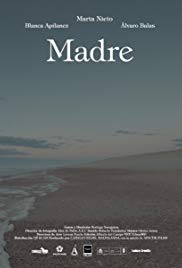
Greetings again from the darkness. Filmmaker Rodrigo Sorogoyen begins his film with a long, slow pan shot across a deserted beach until we see the waves rhythmically rolling in and out. It appears to be a most peaceful setting, but instead it’s actually the set up for one of the most intense and emotionally shattering short films ever.

Marta Nieto and her mother Blanca Apilanez are hanging around the apartment on what’s a typical day for them. When Marta’s answers a call, an unimaginable horror unfolds via cell phone. On the other end is her 6 year old son. He’s on holiday with his father, Marta’s ex. Only her son tells her, as his cell phone battery is dying, that dad left him and now he’s alone on a beach … he thinks it’s France, but could be Spain.

Marta and her mother juggle cell phones as they try to track down the father, while keeping the young boy as calm as possible. It’s a captivating and stunning performance by Marta Nieto, and a brilliant piece of filmmaking from Mr. Sorogoyen. It may be the most unsettling 19 minutes of movie I’ve seen, and if it had gone any longer, it might have become truly unbearable.
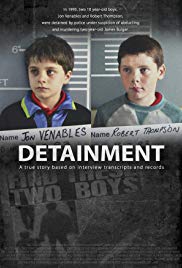
 

 DETAINMENT (Ireland) 30 min

Greetings again from the darkness. Evil personified. That is the only possible way to describe 10 year old boys Robert Thompson and Jon Venables. In February 1993, the British boys skipped school and spent the day doing typically mischievous activities around the local shopping center. Typical that is until they abducted 2 year old James Bulger.

This is writer-director Vincent Lambe’s 4th short film, and it’s based on the disturbingly true story of the abduction-torture-murder of toddler James by the two young boys. The film draws directly from the actual tapes of interviews/interrogations once the boys were identified from the grainy security footage. This dramatization includes the pleas of innocence from the boys, as well as the reactions of both their parents and the police officers. The scenes depicting the questioning of the boys is powerful, and the scenes of the 3 boys together is more than most of us can bear, despite little of the crime being shown (thankfully).

Young actors Ely Solan (Jon) and Leon Hughes (Robert) are both extraordinary in their performances. Director Lambe deftly applies judgment in what is shown on screen and what instead corrupts our thoughts. It’s heart-breaking to see what the parents of these boys must endure, but it’s beyond our comprehension to imagine what Baby James Bulger’s parents must have endured. The boys were tried as adults in 1993, and both subsequently released from incarceration and given assumed identities for their own protection. If somehow Lambe’s short film isn’t disturbing enough, it’s pretty simple to get the full report of what the boys inflicted on that poor child. Evil personified.


 FAUVE (Canada) 19 min

Greetings again from the darkness. Two young boys, obviously good friends, are spending the day just hanging out and exploring the area on the outskirts of town. They are engaged in an ongoing game of one-upmanship as they spontaneously compete over a string of mindless pranks to see who is the bravest or toughest.

Director Jeremy Comte places Tyler (Felix Grenier) and Benjamin (Alexandre Perreault) in common situations that most of us (at least from my generation) easily recognize. A vacant lot or deserted train car are easily turned into a playground as the mischievous boys deal with their unchaperoned independence. We find ourselves chuckling at their harmless teasing … well, harmless until it’s not.

Even with a run time of only 14 minutes, director Comte doesn’t rush the set up. It’s just a lazy, care-free day until the boys make their way into an open-pit mining zone. For someone with a quicksand-phobia (thanks to those early Tarzan movies), the shift in tone delivers an emotional gut-punch. A terrific final scene caps off a powerhouse short film that deserves the festival accolades it has received. From Canada with French dialogue, expect this one to receive even more award consideration.

 

 MARGUERITE (Canada) 19 min

Greetings again from the darkness. It was after the Oscar nominations were announced that I tracked down this one, the last of the 5 nominated live action shorts in the category that I’ve watched. While the other 4 nominees are tension-packed, this beautiful 18 minute film from writer-director Marianne Farley is serene and both heart-warming and heart-breaking.

Beatrice Picard began her acting career in the 1950’s, and here she is extraordinary in the titular role. Marguerite is a lonely elderly woman in the final stage of life. Understanding that her time is near, she has refused the daily dialysis recommended by her doctor. A window in her living room is literally her window to the world. As her body slowly fails, she is a captive in her home. Her time is spent anxiously awaiting the daily arrival of her in-home caregiver Rachel (Sandrine Bisson), a patient and compassionate woman who provides care, as well as Marguerite’s only human contact.

Bathing Marguerite, shampooing her hair, helping her get dressed, and applying lotion are part of Rachel’s routine. The importance of these moments is obvious by Marguerite’s face. One day she overhears a brief phone conversation between Rachel and her partner, which leads to an innocent question … the answer which ignites a memory in Marguerite that causes much reflection.

Forbidden love left unrequited and unmentioned highlights the generational and societal differences between these two women in ways we don’t often consider. It also brings them closer together. The wound that won’t heal on her foot is truly insignificant to the decades-long pain Marguerite has carried in her heart. Making peace with her past allows her final stage to play out thanks in part to the tender compassion shown by Rachel.

Marianne Farley is a French Canadian known mostly as an actress, yet this, her second short film as director creates a deep connection despite minimal dialogue between the two women. Cinematographer Marc Simpson-Threlford expertly uses lighting, color and framing to guide us through. C’est beau.
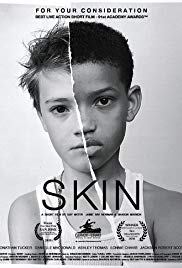
 

 SKIN (USA) 20 min

Greetings again from the darkness. Bestowed with an Oscar nomination for Best Live Action Short Film, this story from Israeli director Guy Nattiv, who co-wrote the script with Sharon Maymon, is stunning and frightening in how much of a punch it packs into 19 minutes. The influence parents have on their kids is at the heart of this devastating tale.

Jackson Robert Scott (Georgie from IT) stars as Troy, the young son of Jeffrey (Jonathan Tucker, “Justified”) and Christa (Danielle Macdonald, PATTI CAKE$). The film opens with dad Jeffrey taking the shears to Troy’s hair on the front porch. Then all 3 hop in the car with friends, singing a horribly inappropriate song on the way to shooting guns at beer bottles. Later, Troy convinces his dad to take him “surfing”. Of course, there are no waves in sight … you just have to see it to believe it.

Two things are abundantly clear: these are stereotypical hillbillies, and Troy loves his dad very much. Soon we learn something else. Dad is a white supremacist. While at the grocery store, a black man (Ashley Thomas) offers a friendly greeting to Troy, and dad snaps into vile racist mode. Seemingly out of nowhere, Jeffrey’s fellow gang of racists join him in violently pummeling the friendly black man. The vicious beating takes place in front of the man’s frantic wife, daughter and son (roughly the same age as Troy). It’s a family that mirrors Troy’s, with one exception – skin color.

It’s not long before a group of African-Americans take revenge on Jeffrey, albeit in a less violent, yet more permanent and clever manner. Bronny (Lonny Chavis, “This is Us”) is allowed to watch as the revenge plays out. The tables have been turned on Jeffrey, and the shocking ending proves that hate only leads to more hate … and sometimes hate is blind. Racism is a self-perpetuating culture that survives only when passed from one generation to the next. Filmmaker Nattiv and his producing partner-wife Jaime Ray Newman remind us that we reap what we sow. They have a feature length film being released later this year based on the true story of Bryon Widner – a story that likely influenced this impactful short.


Oscar Nominated Animated Shorts 2019

February 22, 2019

Oscar Nominated Animated Shorts 2019

The difference in production value is quite evident in the animated shorts category, as not all filmmakers are backed by the resources of Pixar or Disney. What really stands out here is the strength of the stories and how they play on our real life emotions and memories. Below you will find these listed in order of my preference. Just a reminder, these are not Oscar predictions, just personal opinion.


 WEEKENDS (USA) 16 minutes

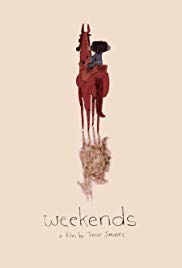
Familiarity, in fact, all-too-familiar, may be the difference for this story from Trevor Jimenez. A young son gets bounced back and forth between the homes of his divorced parents. Initially the mother keeps things simple, with an emphasis on love. In contrast, trips to dad’s place include scary movies, video games, fast food and plenty of hands-on play time (with weapons and costumes!).

Fittingly, dad’s car radio is on an endless stream of Dire Straits’ “Money for Nothing”, while the other times are covered by the familiar and recognizable chords of Satie. The boy is caught between the two adults trying to put their own lives back together, and some amazing animation takes us through the boy’s imaginative dream and nightmare sequences.

While at Pixar, Mr. Jimenez worked on FINDING DORY and COCO, and this one seems to carry personal memories for him.


 ANIMAL BEHAVIOUR (Canada) 14 minutes

The husband and wife animation team of David Fine and Alison Snowden (two very real, not animated creators) won an Oscar in this category in 1995 for their short BOB’S BIRTHDAY, which was then turned into a TV series “Bob and Margaret”. It’s not a stretch to imagine that the animators have hopes for the same path for their latest.

We enter a group therapy session for an unusual collection of critters, including: a praying mantis, a leech, a bird, and a pig.  The session is led by a dog, and is soon crashed by a newcomer – a boisterous gorilla. The gag here – beyond the obvious – is that each of these critters is dealing with normal traits for their species, though they sound particularly bothersome when stated aloud. Kids are not the target market here given all the talk about sex (stay away from the praying mantis) and orifices. Creativity is on display here, and don’t be surprised if some mutation of this ends up on TV.


 ONE SMALL STEP (USA, China) 8 minutes

Former Disney animators Andrew Chesworth (animator on MOANA and FROZEN) and Bobby Pontillas co-direct a script co-written with Taiko Studios founder Shaofu Zhang. It’s a story of a single father and his Chinese-American daughter Luna, and takes us through her early childhood dreams of walking on the moon to her college years taking astrophysics classes.

The devoted father is there to encourage his young daughter’s dreams, and later to quietly support her with meals and shoe repair. It’s yet another reminder of how the efforts of parents sometimes go unappreciated, but the commitment never fades. The ending here is predictable, yet no less powerful and emotional.


 BAO – Pixar (USA) 8 minutes

It should come as no surprise that Pixar has a nomination in this category. The premier animation studio employees some immensely talented folks, including Domee Shi (previously a storyboard artist on INCREDIBLES 2), who becomes the first woman to direct a Pixar short film.

As with many Pixar projects, this one will likely resonate with parents as much, if not more, than with kids. Of course there are some exceptional visuals; however, it’s more poignantly a look at the stages of life … especially the trials and tribulations of parenthood (especially the overprotective type). This one is far and away the most viewed entry since it ran before theatrical showings of INCREDIBLES 2, which itself is Oscar nominated for Best Animated Feature.

Some may struggle a bit with the idea of a homemade dumpling coming to life and being raised as a growing kid, but the ending will likely hit home with most every parent.


 LATE AFTERNOON (Ireland) 10 minutes

Louise Bagnall previously worked as an animator on the Oscar nominated SONG OF THE SEA, but this one is all hers. These days there is no shortage of projects putting dementia front and center, and we quickly realize the elderly Emily (voiced by the great Fionnula Flanagan) suffers from this dreaded affliction.

The fantastical dreamlike sequences carry us away in Emily’s memories of life. These snippets of her childhood and adult life tell us much about the woman who now finds happiness in a biscuit with her tea. The past and present are often a jumbled mess for Emily, and although her caretaker’s identity is no real mystery, it is still a wonderful moment when it clicks for Emily … even if we know it’s only for a short while.


EVERYBODY KNOWS (2019, Todos lo saben)

February 21, 2019

 Greetings again from the darkness. Sometimes we just click with the work of a particular filmmaker, and such is the case with Iranian-born Asghar Farhadi. From ABOUT ELLY (2009) to his two Oscar wins for Foreign Language films, the instant classic A SEPARATION (2011) and THE SALESMAN (2016), Mr. Farhadi has proven himself to be a terrific and distinct story teller. As an added bonus in this latest film, he works with cinematographer (and frequent Pedro Almodovar collaborator) Jose Luis Alcaine to take his visuals to a new level.

There is a playful and warm and familiar set-up before the switch is flipped. Laura (Penelope Cruz) has been living in Argentina with her husband Alejandro, teenage daughter Irene (Carla Campra) and young son Diego (Ivan Chavero), and has returned to her hometown outside of Madrid for her younger sister Ana’s (Inma Cuesta, THE BRIDE) wedding. Laura’s husband Alejandro did not make the trip, and that plays a role deeper in the story. Hugs and kisses are exchanged amongst some of the most attractive people you’ll see on screen as family and friends are reunited … including Laura and local vineyard owner Paco (Javier Bardem), who share a romantic history from years ago. We quickly learn that Laura’s daughter Irene is a bit rebellious and free-spirited as she re-establishes her connection with Paco’s lovestruck nephew.

Slowly, we are introduced to other friends and family members, including Paco’s wife Bea (Barbara Lennie). These introductions are vital, not for the raucous and music filled wedding reception, but for what happens after. Having put her to bed earlier, Laura comes back to find daughter Irene missing and the only clues are newspaper clippings from a local child kidnapping years past. A most festive evening has been jolted into panic and dread. Soon Laura receives an untraceable text (I guess that’s how it’s done these days) asking for a huge ransom. It’s at this point, where secrets previously kept begin to surface.

The Farhadi trademark kicks in about this time. Although Laura is understandably distraught and disoriented, it’s clear the story is less about the crime and more about the interactions of the characters – resentments, the weight of long held grudges, and more of those dark secrets that begin to find the light. Everyone is a suspect, including Laura’s husband Alejandro (Ricardo Darin, THE SECRET IN THEIR EYES) who shows up convinced God will protect his daughter. The worst traits of human nature are on full display as quick assumptions are drawn. There are lots of pieces to this puzzle and it’s dizzying fun keeping track.

Trust within the family and amongst friends is at the core of the story, and Mr. Farhadi makes solving the crime secondary to the actions and reactions of these folks who have known each other for so long. Melodrama abounds (in a good way) and there are some wonderful visuals, including drone photography from the wedding reception, and an opening sequence featuring the church bell tower and clock. This is the 5th film collaboration between real life couple Cruz and Bardem (the most recent being the disappointing LOVING PABLO), and both are exceptional here. Ms. Cruz offers up a gut-wrenching performance and Mr. Bardem is a joy to watch as he struggles with emotions too complex to verbalize. This is Mr. Farhardi’s first Spanish language film, but it’s clear his subject matter and characters are universally recognized.

watch the trailer:


THE IRON ORCHARD (2018)

February 21, 2019

 Greetings again from the darkness. No one knows for sure how many times someone in Hollywood has attempted to adapt the 1966 novel for the big screen, but we do know that director Ty Roberts is the only one to succeed. The actual author of the novel, Edmund Pendleton Van Zandt, used the pen name Tom Pendleton, as he was unsure how the book would be received and wanted to avoid embarrassment for his prominent family – a family very influential in the founding and development of Fort Worth. Also part of the Van Zandt family are the beloved singer/songwriter Townes, and the author’s own son Ned, who has a supporting role in the film. Since I missed the premiere at last year’s Dallas International Film Festival, I was glad to catch up with it recently.

The film tells the story of Jim McNeely, a dropout dumped by his girlfriend’s parents for not being good enough for their daughter. McNeely is a fictional character, but similar stories (some better, many worse) have played out in real life many times over the years. It’s 1939, and the country is trying to dig out of the depression. McNeely heads to west Texas in hopes of escaping his personal life and capitalizing on the new oil boom – a boom not unlike the gold rush of California almost 100 years prior.

Frank Pickrell’s Santa Rita No. 1 spewed forth boldly (in 1923) announcing the Texas Permian Basin as oil rich. Since then, the area and work have made and broken folks, and that pretty much sums up the story of Jim McNeely – played here by native Texan Zane Garrison (“Prison Break”). His initiation to the oil field crew is not kind, as the roughnecks don’t take kindly to the city boy. Of course, McNeely holds his own until he is ready to head out – and he takes the lovely wife of a local engineer with him. McNeely and Lee Montgomery (Ali Corbin) are soon setting up house and a new business.

It’s McNeely’s first drill and it leads to the obligatory oil gusher shot. This initial luck or success (depending on how you view it) reconnects him with a couple of buddies from his original oil field days: Dent Paxton (Austin Nichols, “Ray Donovan”) and scruffy oil field veteran Ort (played by familiar face Lew Temple). Dent is the dusty road philosopher while Ort is the one who understands drilling. What follows is a case study of how a person reacts to good times and bad. When dreams come true, does corruption of self follow?

Director Roberts is himself a Midland (west Texas) boy, and the excellent opening sequence of the windswept plains proves he has a feel for the area. His black and white shots slowly fade to color as we meet McNeely. Mr. Roberts not only directs, but also co-wrote the script with Gerry De Leon, produced the film, and edited it as well. Such is the life of a low budget production, and though he accurately captures the feel of oil fields, the film would have benefitted from a lead actor who could better pull off the charisma required to accomplish the fundraising and networking of the McNeely character – a man so unlikeable that we never understand why some remain loyal to him. The film does a nice job of showing the rise and crash, as well as the life lessons that prove one is never too old to come of age. It must be stated that following in the footsteps of Jett Rink (James Dean) in GIANT (directed by George Stevens), Daniel Plainview (Daniel Day-Lewis) in THERE WILL BE BLOOD (directed by Paul Thomas Anderson) and Larry McMurtry’s THE LAST PICTURE SHOW (directed by Peter Bogdanovich) is a perhaps a task too tall for even a Texan.

watch the trailer:


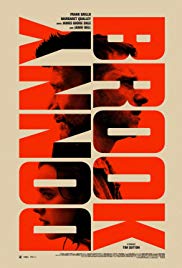
DONNYBROOK (2019)

February 21, 2019

 Greetings again from the darkness. Is it a coincidence that I’m reviewing this moving on Charles Darwin’s birthday? “Survival of the fittest” could be the subtitle to writer-director Tim Sutton’s bleak film adapted from the novel by Frank Bill. The film would have us believe that, once born into poverty and a hopeless existence, the only daily decisions to be made are: Do I try to survive another day? Should I kill myself? Should I kill someone else?

Is that bleak enough for you? Sutton’s film provides glimpses of each of the three questions, but mostly it’s an expose’ on the violence that is generated from a community of poverty, addiction, abuse, and crime. It isn’t clear and doesn’t matter which of those things comes first … they all lead down the same path. Jamie Bell plays “Jarhead” Earl, a military veteran looking for an escape route for his young kids and his junkie wife (Dara Tiller). Having a knack for fighting, and an apparent ability to take a beating, Earl decides the only way out is by winning the $100,000 grand prize for the Donnybrook … a no-rules bareknuckle cage fight. Of course his only route to the entry fee is via armed robbery. Have I mentioned this is bleak?

Earl doesn’t talk much, but he tries to protect his wife from the local meth dealer, a brutal savage named Angus (Frank Grillo, THE GREY) who has an awkward partnership with his younger sister Delia (Margaret Qualley, NOTIVTIATE) as they make the rounds taking care of business. Angus is the type that resorts to violence in every situation, and we witness his lack of value on human life is just about every scene he is in. Delia is a bit more complicated, as she longs for a way out, and accepts even a momentary reprieve. To top it off, we have a Detective Whalen (James Badge Dale, “The Pacific”) who is “chasing” this brother-sister outlaw duo … well at least he chases them between drug and booze fueled sidetracks.

The story takes place in the rural Midwest with towns and people those on both coasts never give much thought. When Earl finally reaches the Donnybrook, we are treated to what appears to be a redneck Burning Man festival where the revelers only stop hooting and beer guzzling long enough to sing the National Anthem while the American flag waves. We are left not knowing if this is a commentary on poverty, male aggression, or the forgotten class. It has some tonal similarities to the excellent OUT OF THE FURNACE, but isn’t close to that level. None of filmmaker Sutton’s first 3 movies have found much of an audience outside of festivals, and it’s a safe bet this one won’t either.

watch the trailer:


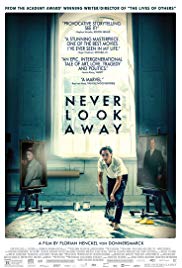
NEVER LOOK AWAY (2019, Germany)

February 13, 2019

 Greetings again from the darkness. As much as we pride ourselves on ‘artistic freedom’, the reality is that politics has long played a vital role – either as inadvertent inspiration for the work, or as organized suppressor or moderator. Rarely in history has the latter been more in effect than during the Nazi regime. This film begins at an art gallery in 1937 Dresden as a loving aunt takes her young nephew to an installation of “degenerate artists”. Nazi propaganda presented modern art by such artists as Picasso and Kandinsky as a blight on German culture, and proceeded to educate (or brainwash) the populace accordingly.

Writer-Director Florian Henckel von Donnersmarck was behind the extraordinary Best Foreign Language Oscar winner THE LIVES OF OTHERS (2006), as well as the all-but unwatchable THE TOURIST (2010). Fortunately, this latest is much closer to the level of the first one, and it has been rewarded by also being Oscar nominated. Miss May, the loving and free-spirited aunt of the opening sequence is played by the luminescent Saskia Rosendahl. As a student, a simple gesture of handing Hitler a bouquet of flowers destroys her psyche, which leads to even more dramatic ramifications. This was an era when being a free-spirit was treated harshly, which could mean mass sterilization or even being “relieved of a meaningless existence.”  Miss May crosses paths with Nazi gynecologist Professor Carl Seeband (Sebastian Koch), in a gut-wrenching scene that hovers over the entire film, and especially that beloved young nephew.

Tom Schilling (and his turquoise eyes) plays Kurt Barnert (the nephew at older age), one who possesses exceptional artistic talent. As Kurt begins making a name for himself (painting as directed), he meets and falls for design student Ellie Seeband (Paula Beer, FRANTZ). Yes, she is the daughter of the Professor who determined the fate of Kurt’s aunt, although Kurt is unaware. As the war escalates, Kurt and Ellie flee to West Germany, while the past haunts all involved.

Once accepted into the new art school, Kurt falls under the guidance of Professor van Verten (Oliver Masucci). It’s this Professor’s personal horror story that becomes a turning point for Kurt, and enables him to discover his own voice as an artist. During this time, Professor Carl Seeband has smoothly switched allegiances and become a communist to save his arrogant hide, though he is burdened with the knowledge that his war crimes past could catch up at any moment. This man is both family member and villain to Kurt and Ellie, tormenting and belittling at every opportunity. It’s fascinating to see how the couple perseveres through his psychological games and even medical malpractice – as if the war, Nazism and Communism weren’t enough of a daily challenge.

The film is loosely based on German artist Gerhard Richter, though mostly in the form of his earliest artwork. Mr. Richter is still alive today and still creating. Cinematographer Caleb Deschanel (father to Emily and Zooey) has produced a beautifully shot film, and the result is his 6th Oscar nomination. Brace yourself for a 3-plus hour run time, and the frustrations of how an artist can discover their voice despite an organized singular ideology that one is pressured to accept.

watch the trailer