SHORT FILMS – a recap of some recents (2024)
Greetings again from the darkness. With so many short films being released each year, I usually try not to devote too much time to them until the Oscar short list is announced. That’s the point when the narrowing down has occurred and there is a manageable list to work through. A number of film festivals act as ‘qualifiers’ for short films, and in the years where I attend a few festivals, I always try to schedule in a block of shorts. The creativity displayed by these filmmakers never disappoints, and many will go on to write and/or direct feature-length films. Below is a brief recap of some of the short films I’ve recently watched:
TEA (12:37)
 It’s normal to get nervous before asking someone out on a date, or even having that first conversation. One particular young man, Nick (Michael Gandolfini, THE MANY SAINTS OF NEWARK, 2021,) takes it to an extreme as he videos himself rehearsing for the big moment. When a bee stings him just as the opportunity with the dream girl arises, Nick’s severe allergic reaction leaves the girl (Olivia Nikkanen, “The Society”) initially confused by his slurred speech, and ultimately in a race against time to save his life.
Written and directed by Blake Winston Rice, the film infuses humor and tension to create an unusual short film based on the monologue (written and performed) by Isaac Lee. The setting of a parking lot behind the store is a nice touch, adding to Nick’s sense of isolation. It’s also a reminder that epi-pens should be readily available.
LUKI & THE LIGHTS (10:40)
 Explaining a severe disease to kids is among the most difficult situations a parent can find themselves in. This happened to Sascha Groen and her husband Anjo Snijders, after he was diagnosed with Amyotrophic Lateral Sclerosis (ALS, still commonly referred to as Lou Gehrig’s disease). The couple collaborated with co-writer Janna Brower-Schouten and writer-director Toby Cochran in this terrific animated film that addresses a need … and does so beautifully.
Luki is a friendly, happy robot who enjoys hanging out with his friends. One day while playing soccer, his hand won’t function properly. Luki’s tests by the doctor confirm the diagnosis of ALS, a neurodegenerative disease for which there is no cure. Rather than feel too sorry for himself, Luki maintains his spirit and love of life and friends. He even builds his own ‘Rascal’ so he can get around.
It’s a story of true friendship and passion for life, and his friends stay with him until the light goes out. After that, they celebrate their memories of Luki. While we long to protect kids, circumstances sometimes require us to explain the tough breaks. This little film works wonders.
For ALS information, educational material, and more, please visit globalneuroycare.org
ANUJA (22:11)
 There is an old adage, ‘you do what you have to do’. But what if the choice isn’t easy or obvious? Such is the dilemma of nine-year-old Anuja. She has dropped out of school to work with her older sister Palak at a local (probably illegal) garment factory in New Delhi. The girls are orphaned and doing their best to get by.
Palak (Ananya Shanbhag) has a bit of a rebellious streak, and also understands that Anuja’s opportunity to test for enrollment at a boarding school is her sister’s one chance to escape a life of poverty, and will sacrifice anything to give her sister this chance. Anuja is played by Sajda Pathan, who lived on the streets of Old Delhi before finding assistance from social workers.
The burden carried by this young girl is painful to watch, as she wants nothing more than to continue her life with her sister, and certainly take no steps that would harm her. Director Adam J. Graves includes an early story about a farmer’s wife, daughter, and mongoose that sets the stage for what we see. The film was awarded the “Best Live Action Short” at this year’s HollyShorts Film Festival.
IN THE GARDEN OF TULIPS (13:38)
 We immediately feel the tension between 16-year-old Cari and her father as they take a car ride through the Iranian countryside. The air lightens a bit as they stop at a roadside fruit stand for green plums, and then the two cut loose for a silly song about the plums.
The mood dramatically shifts again when law enforcement pulls the car over and begins questioning them. It’s not until the final scene that we realize this is the height of the Iran-Iraq war and we underestimated the stress and tension involved with this father-daughter road trip.
This film from director Julia Elihu and writer Ava Lalezarzadeh has been an award winner at some film festivals, and beyond that it’s a stark reminder of what’s at stake during war time. Ms. Lalezarzadeh also portrays the daughter, and excels in both writing and acting. The film was named ‘Best Live Action Short Film’ at the St Louis International Film Festival.
HIS MOTHER (13:27)
It’s probably not necessary to promote this as ‘inspired by a true story’. Writer-director Maia Scalia has perfectly captured an all-too-often-overlooked portion of an all-too-often-occurrence. A frazzled woman is working her way through traffic and desperately making phone calls.
Bethany Anne Lind (“Ozark”) plays Julie, the mother so desperate to reach her teenage son, her too-busy husband, and the Law Enforcement service too overloaded to understand the purpose of her calls. Her desperation is fed by the videos her son Harrison recently posted. When Julie gets a call from a friend “hoping” Harrison is safe since there is an active shooter at his school, the pieces all come together for us and we share the pit of the stomach turmoil with the mother.
Ms. Scalia’s film and Ms. Lind’s performance perfectly capture a parent’s nightmare, the societal concern with mental health issues, and the horror and far-reaching effects of school shootings.
TECHNICIANS (17:00)
 Everyone has their own story, and by definition, “I’m just doing my job” offers a perspective through a one-sided lens. We first see David (J. Alphonse-Nicholson, “P-Valley”) as he’s taking care of his sick mother and struggling financially. He anxiously accepts a phone call offering a chance to work and earn. The writing-directing team of twin brothers Kevin Luu and Kelly Luu examine a large issue through a short film.
David has been hired to install automated manicure stations at a nail salon. The successful completion of his job will result in numerous technicians losing theirs … and he feels the scornful looks from the staff as he arrives. Befriending one of the technicians brings into focus the clash of two needs, and how the nail industry dives deep into Vietnamese culture.
With the recent conflict between the shipyard workers’ union and management over the use of technology, we certainly understand how the issue is widespread. The film finds a temporary solution, and ends on a welcome note of personal sweetness.
CALF (14:46)
 After all these years, no one has yet been able to comprehend or explain or predict the behavior of teenagers. Even knowing the sometimes extreme nature displayed by teens, we can’t help but be shaken while watching Cait’s (Isabelle Connolly) reaction to an accident that occurs on her family farm in Ireland. Disturbing is the best description of this stunning film from writer-director Jamie O’Rourke … and it’s not all due to Cait.
This film grips you tightly early on, and doesn’t loosen the grip until well after it’s over. The desolate landscape and the simplicity of the family belies the hardships on the farm and within the family. Everything appears normal as one of their cows prepares to give birth in the barn. Cait carries her secret as the day progresses and she has a few interactions with her mother (Kate Nic Chononaigh), but nothing outside the norm.
Moments of suspense multiply here despite most of what we see being part of a regular day. The exceptions are extraordinary, and it’s not until the finale that we realize Cait’s behavior makes sense. This revelation heightens what has already been a gut-wrenching film to watch.
MILDRED 4 A MILLION (21:15)
 Marla Gibbs is probably best known for her role as Florence on the TV series “The Jeffersons”, which began airing in 1975. She’s now 93 years old, and still capable of carrying this short film from writer-director Kimmie P. Callaway. Here, she plays Grandma (and great Grandmother) Mildred who loves to chat with everyone (whether they asked for it or not). She can’t wait to share that her great-grandchildren are coming for a visit. She’s a lonely woman who lives for this moment of connection.
Of course, the reality is, no matter how much the silver shines or how many Snickerdoodle cookies you bake, kids are kids … great-grandmother’s house is but another playground to call their own. She’s especially excited to bond with 8-year-old Stella (Obriella Genesis Witron) as two share a middle name … Gigi. The visit ends too quickly as her granddaughter (Brie Eley) apologizes and explains, the only way to get her kids’ attention is to have a million followers on Tik Tok. So that’s exactly what Mildred sets out to do.
Now, Mildred is the type who has her cell phone hidden away in a drawer “for emergencies”. She asks her millennial postal worker (Hayley Keown) to help her get it set up, and then proceeds to go down her physical therapist’s (Julian Ashley Mitchell) checklist of nine ways to capture followers (number 8 is a sex tape!). The comedy here plays to Ms. Gibbs’ strength and she pulls off most every scene. The good time watching the film is balanced with a reminder that the world moves very fast for kids today, and sometimes grandparents just want to slow it down and concentrate on … just talking.


 Posted by David Ferguson
  Greetings again from the darkness. The best movies revolving around alcoholism usually make us feel like we are intruding on someone’s personal train wreck. Three that come to mind, each resulting in at least one Oscar, are LEAVING LAS VEGAS (1995), DAYS OF WINE AND ROSES (1962), and THE LOST WEEKEND (1945). This one is based on the 2016 memoir by Amy Liptrot, who also adapted the book for the screen with director Nora Fingscheidt (known for her festival favorite SYSTEM CRASHER, 2019).
 Greetings again from the darkness. A fun-filled film meant only to entertain is always welcome. Traditionally these show up during the summer months, but timing this one closer to Halloween makes complete sense. Written by Bryan Schulz (the grandson of the late Peanuts creator Charles Schulz) and Cornelius Uliano (his collaborator on THE PEANUTS MOVIE, 2015), the film is directed by David Henrie, best known for his role in “How I Met Your Mother”. It’s his first feature film gaining distribution, and it doesn’t disappoint.
 Greetings again from the darkness. Being courageous and heroic doesn’t mean one must wear a cape and possess super powers. In fact, some of the most courageous folks use their words (spoken and written), their feet (for marching into battle), and as we learn here, even their eyes. Lee Miller is a famous photojournalist who used her words to get to the front lines of WWII, her feet to march with soldiers, and her eyes to decide where to focus her camera. The film is based on the biography, “The Lives of Lee Miller”, by her son Antony Penrose. It’s directed by renowned choreographer Ellen Kuras (her feature film directorial debut) and co-written by Liz Hannah, Marion Hume, John Collee, and Lem Dobbs.
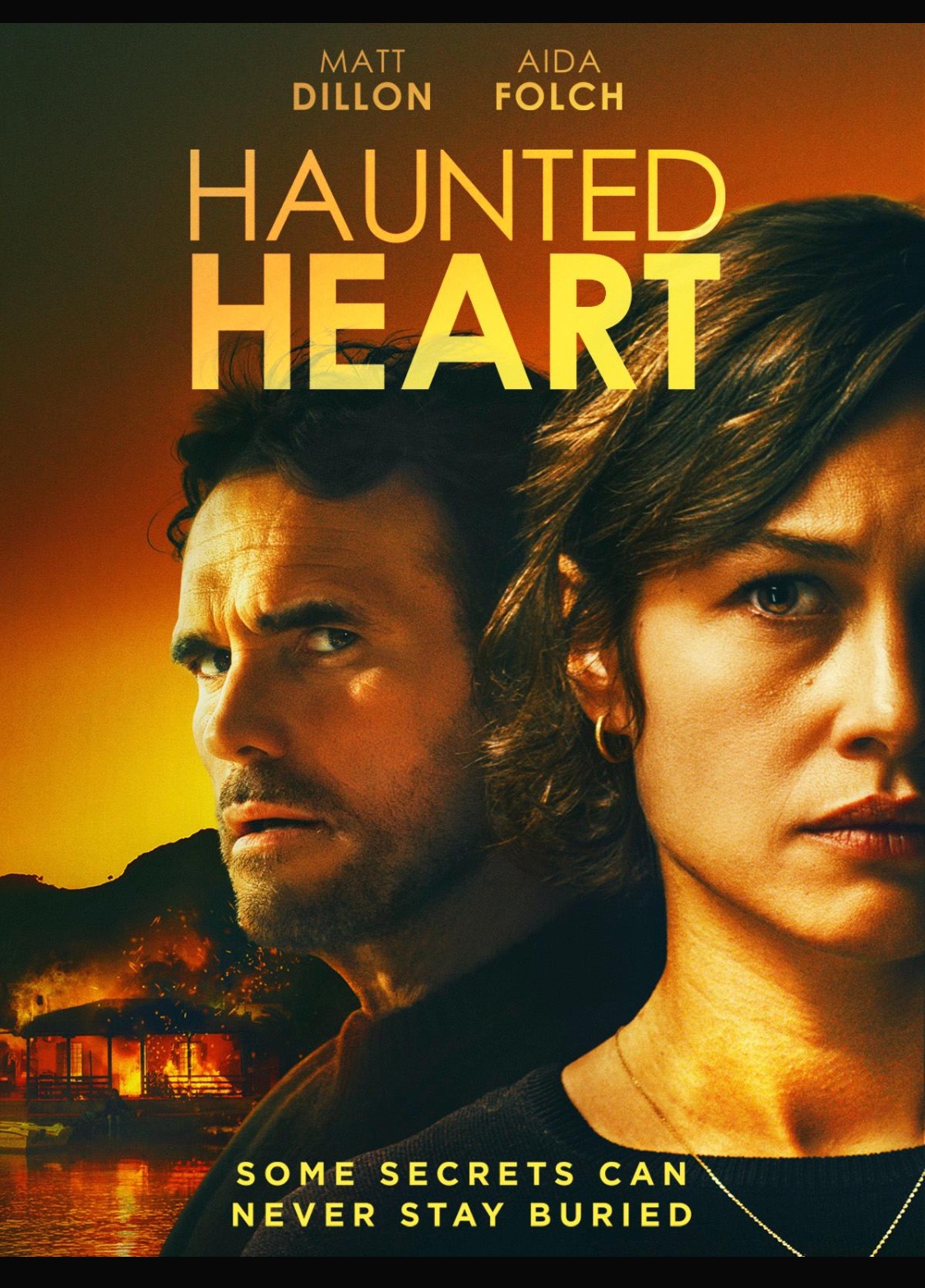 Greetings again from the darkness. With any discussion or article about relationships these days, there is inevitably a mention of ‘red flags’ … warning signs in a potential partner that shouldn’t be ignored. Thanks to writer-director Fernando Trueba (BELLE EPOQUE 1992, CHICO & RITA 2009) and co-writer Rylend Grant, there is now a movie that offers clear examples of red flags for those who can’t manage to spot them without assistance.
 Greetings again from the darkness. The distance between desperation and hopelessness can sometimes be very narrow, although desperate folks can make for interesting story characters thanks in part to the unexpected actions one can take when not thinking clearly. In his first feature film, writer-director Simon Hacker tackles a desperate man, only he kicks things up a notch by including a surprise visitor.
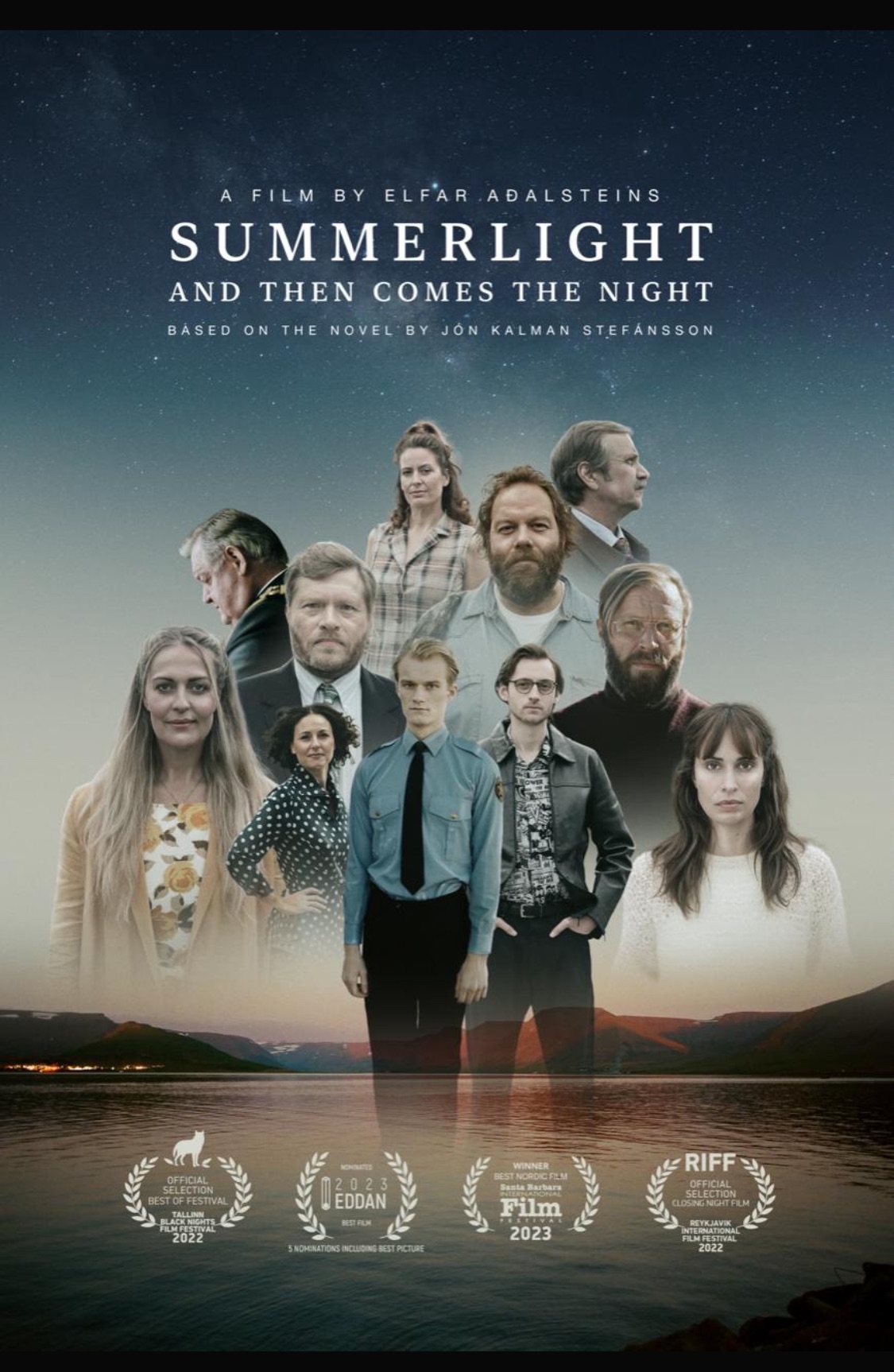 Greetings again from the darkness. I’ve always been enamored with movies which are paced so deliberately that it can easily seem like not much is happening, when actually we drift from dark comedy to tenderness to tragedy. It’s likely why I’ve been drawn to films from Iceland, including this one from writer-director Elfar Adalsteins (END OF SENTENCE, 2019) who has adapted the 2005 novel from renowned Icelandic author Jon Kalman Stefansson. The culture in this small village is such that folks mostly keep to themselves, and nature is a constant companion.
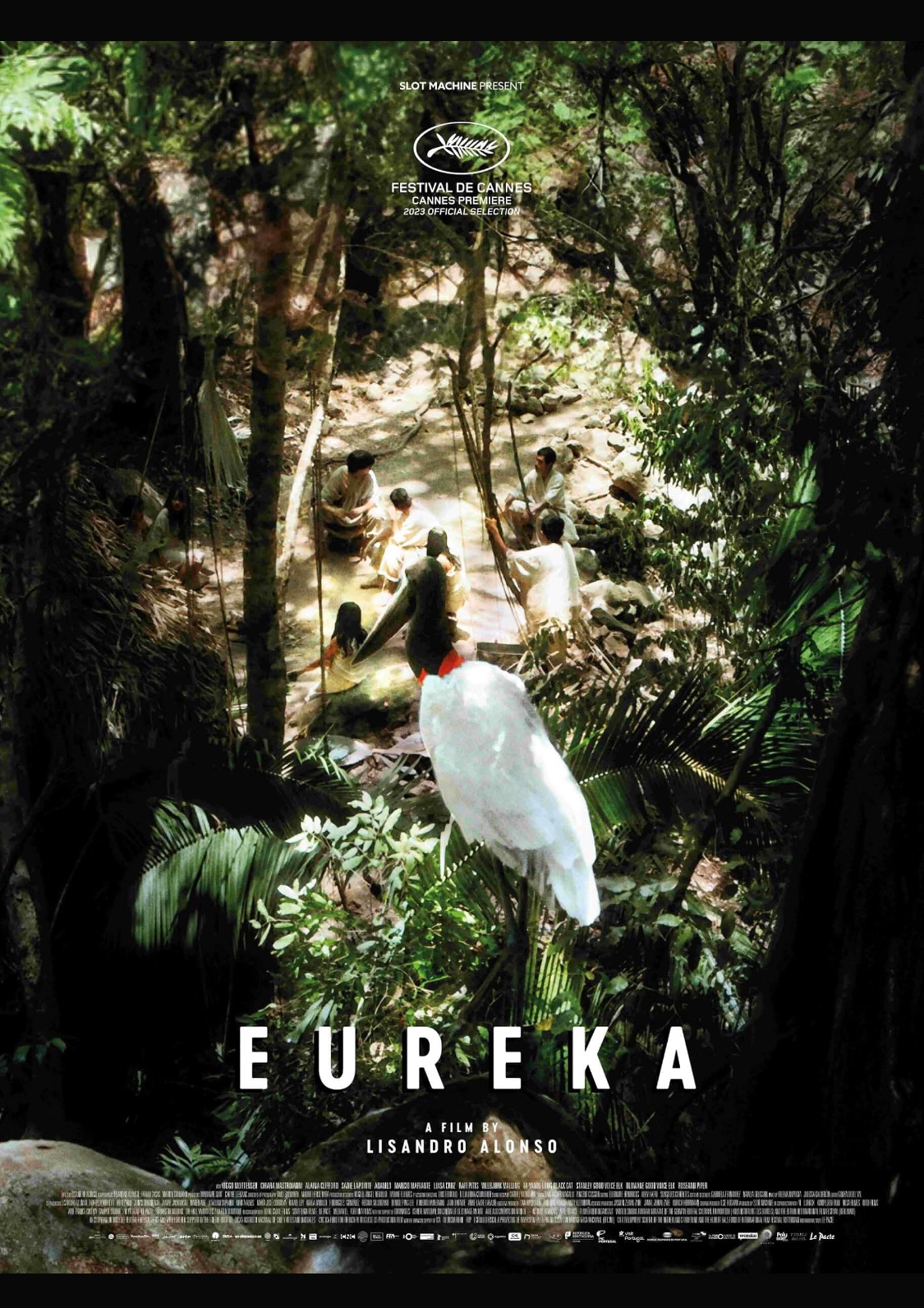 Greetings again from the darkness. Part of my attraction to arthouse films is the often-unconventional path to storytelling that the filmmakers take – sometimes expending more effort on the look and style than on the characters and plot. These films once only had life in film festivals, and today many also carry on in the streaming revolution. I’ll go ahead and admit upfront that this latest from Argentinian filmmaker Lisandro Alonso (JUAJA, 2014) and co-writers Martin Caamano and Fabian Casas is a bit esoteric for my tastes … although it looks beautiful.
 Greetings again from the darkness. Eighteen-year-old Elliott is counting down the twenty-two days remaining until she leaves home for her freshman year of college. For anyone who was once 18 or has raised an 18-year-old, you know that 22 days is the future. Writer-director Megan Park follows up her excellent feature film debut, THE FALLOUT (2021), with a different tone, albeit another one that focuses on the stress of being a teenager.
 Greetings again from the darkness. After the lukewarm reception at last year’s Toronto Film Festival, and complaints about the ending, director Anand Tucker (SHOPGIRL 2005, HILLARY AND JACKIE 1998) called the cast back for re-shoots. Oscar nominated writer Patrick Marber (NOTES ON A SCANDAL, 2006) adapted the 2015 novel, “Curtain Call”, by Anthony Quinn (a former film critic, not related to the two-time Oscar winner with the same name). Although I can’t comment on the original version, this one provides a bit of entertainment.
 Movie Reviews from the Dark