Greetings again from the darkness. One can’t help but wonder how differently this Oscar nominated documentary would have turned out had its subject, Pina Bausch, not passed away from cancer just days before filming commenced. Instead of direct insight from the famously creative choreographer, we witness the tributes she earned … dancing from those who brought her work to life.
Director Wim Wenders had planned for years to document Ms. Bausch and her fascinating interpretative dance company. When 3D technology became portable enough to work with, he knew it was time. Unfortunately, Pina was diagnosed with cancer and passed away just a few days later. What we see on screen are re-creations of her work by those dancers who worked so closely with her. The reverence is obvious during the brief statements from the key dancers. Wenders presents these segments, not as talking heads, but instead of live head shots with voice-overs. A very nice touch.
The earthy elements of water, soil and rock are on full display, as are the street scenes Pina utilized over the years. The dances are brought to life for the first time without Pina’s direction. It’s clear her presence and spirit remain with the dancers. The interpretive dance numbers may not be to everyone’s taste, but the talent of the dancers, and especially the famed choreographer are quite obvious and impressive.
SEE THIS MOVIE IF: you want to witness the lasting impact of a most influential choreographer of interpretative modern dance
SKIP THIS MOVIE IF: you are looking for concrete insight and biographical details on Pina Bausch
This is not a movie review, but rather an advance notice. In 2012, a full length documentary is being released detailing the influential cult band BIG STAR. The band was formed out of Memphis in 1971 by Alex Chilton, Chris Bell, Jody Stephens and Andy Hummel. If you are a music fan from the 60’s and 70’s, you will recognize the name Alex Chilton. He was the 16 year old lead singer for THE BOX TOPS on their hits “The Letter” and “Cry Like a Baby”. BIG STAR’s first album received wide spread critical acclaim, but was poorly marketed by their label, and the band never reached a wide audience before folding in 1974.
Years later, bands such as REM named BIG STAR as a key influence to their music … and a revival was born. Chilton and Stephens put a band together and began playing dates. In 2010, BIG STAR was to play SXSW Music Festival, but Chilton tragically died from heart problems just days before their scheduled performance. A special tribute show sprang from the fellow musicians at the festival and production on the documentary continued. It’s entitled NOTHING CAN HURT ME: THE BIG STAR STORY, is directed by Drew DeNicola and Danielle McCarthy, and will be ready for it’s debut during the Spring 2012 festival season. Here’s hoping Big Star finally finds the audience they deserve.
Greetings again from the darkness. Typically a documentary on an individual is either presented as a look back at their life or an observation of their lasting impact. Director Joseph Dorman provides both of these PLUS critical reviews and analysis of the writings of Sholem Aleichem, the writer whose work inspired Fiddler on the Roof. It is an absorbing look at who most would consider to be the most famous Yiddish writer and humorist. His work really bridged the gap between the old world Jews and the rapidly changing and evolving modernists from the turn of the 20th century.
At times the film plays like a classroom presentation for 8th graders in World History, but look closer and you’ll see many fascinating, rare photographs and video. There is even one bit of audio featuring Aleichem himself reading his own words. We also get Alan Rosenberg as the narrator and Peter Riegert as the voice of the other readings.
What makes this enthralling, interesting and educational are the terrific interviews with Yiddish experts, and the on camera presence of author Bel Kaufman, Aleichem’s granddaughter. There is no fluff or filler here. These people provide real insight and analysis and perspective on his life and writings. The photo montage of the funeral procession with 200,000 New Yorkers is a sight to behold.
Maybe you have read the original literary work “Tevye the Dairyman”. Perhaps you have seen the 1939 film Tevye. Maybe you were fortunate enough to have seen the original Broadway run of “Fiddler on the Roof”. Most likely you have seen the 1971 film musical with the great Topol (pictured, left) as Tevye. This film points out that the words and message of Aleichem have been twisted and shifted over the years, but there is no questioning the lasting impact and his determination to document … Tradition!
SEE THIS MOVIE IF: you have any interest at all in the historical journey of Jews from the 19th to the 20th Century OR you would like to see the foundation of the beloved musical Fiddler on the Roof
SKIP THIS MOVIE IF: historical perspective bores you and you prefer to just sing along to “If I Were a Rich Man”
Greetings again from the darkness. 80% of women in US prisons are survivors of domestic violence, rape and/or abuse. This statistic is provided by the movie and is crucial to understanding not just the story in this documentary, but moreso, the underlying issue that is screaming for attention. Wrongful incarcerations have a disproportionate impact on poverty-stricken families and communities.
This film focuses on the story of Deborah Peagler. Her charismatic, drug-dealing boyfriend violently abused her, forced her into prostitution and abused her daughters. At her mother’s suggestion, she asked a couple of crips’ gang members to convince her boyfriend to leave her alone. The convincing got out of hand. The boyfriend was dead. Deborah was arrested.
The Los Angeles District Attorney office threatened Deborah with the death penalty (not legally in play) if she didn’t confess to planning the murder. See, there was a $17,000 life insurance on her boyfriend and they were sure they could pin a murder-for-profit scheme on her. Deborah believed the DA and chose not to die. Her confession got her a 25 year to life sentence. This was 1983.
While in prison, Deborah earned two associates degrees, held a top prison job and was a social leader amongst the women prisoners. A model prisoner by any standard. In 2002, California passed a law allowing courts to reconsider decisions when evidence of physical abuse had been withheld from the original trial. Enter two young pro-bono attorneys, Joshua Safran and Nadia Costa.
I won’t go into detail with all of the corruption and cover-up and injustice that occurred over those next 7 years, but clearly it is a disheartening story that sheds light on the downside of a political office being responsible for justice. The Los Angeles District Attorney, Steve Cooley, is exposed for his power hungry ways and need to avoid scandal and the media firestorm regarding poor law work from his office.
The film was introduced at Sundance Film Festival and is both inspirational and motivational, though not particularly well made by director Yoav Potash. By her own self-admission, it is clear that Ms. Peagler regrets her involvement in the this crime of desperation. Witnessing her spirit over the years gives you hope for humanity, while also acting as expose’ on a system that is far from perfect.
Look, I am no bleeding-heart liberal, but I do recognize injustice when it slaps me upside the head. I firmly believe justice is compromised given the politicized system we now have. District Attorneys campaign based on their conviction rate … their ability to be tough on crime. Is it possible that corners are cut and poor judgement supersedes compassion and doing what’s right – all for the sake of a high conviction rate?
After the film, there was a panel discussion that included attorney Alan Bean from friendsofjustice.net and Reverand Gerald Britt from CitySquare (CitySq.org). Both of these men, and their many associates are fighting daily for JUSTICE over procedure. I am not pushing any agenda or any specific organization, but I do believe more conversation and insight is needed to ensure our Justice system is actually providing justice, and not just a system to serve those running for office.
SEE THIS MOVIE IF: you want to watch a real life horror story on the potential for abuse of power by those we trust to uphold justice OR you want two examples of young attorneys who continue to battle for “right”, not matter the obstacles or setbacks
SKIP THIS MOVIE IF: you are convinced the legal system is just fine and are willing to blindly accept whatever flaws it might have
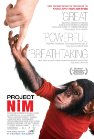
Greetings again from the darkness. It is rare that we find a movie so unsettling to watch, yet admire the expertise with which it is made. Such is the case with award-winning documentarian James Marsh (Man on Wire) and his presentation of Project Nim. This is the story of Nim Chimpsky, the chimp from the 1970’s who was taught sign-language and raised by humans.
The chimp’s name is taken from Noam Chomsky, the famous MIT linguist. Unfortunately, the linguistic side of this story actually is quite minor compared to what really occurred. Columbia professor Herbert Terrace wanted to conduct an experiment on a baby chimp to see if it could be raised like a human baby and learn to communicate with people. He started the project by snatching the baby from its mother at two weeks of age, and then plopping it right into a large, free-spirited family with no scientific or primate-training background. Heck, no one in the family even knows sign language! The film shows how quickly Nim adapts to the pampered lifestyle and is even breast-fed by Stephanie, the mother. Nim is also exposed to smoking pot, drinking alcohol and even has limited success being potty trained. All of this is explained away with “it was the seventies”. I was already bouncing between sadness and anger.
Admittedly, I am no scientist. I do know that a true science experiment or project would involve specific records and at least some type of plan … not to mention the recording of actions, tests and progress. Instead, Professor Terrace shows up periodically for some photo ops and a hug from Nim. Poof! He is gone again. While this is never really explained in the film, one can only assume he was benefiting nicely from a huge grant, not to mention “close” relationships with a couple of his assistants. The other thing left unexplained was how Nim’s mother had other babies taken from her in a similar manner. We get no detail on those “experiments”.
As Nim gets older, guess what … he gets bigger and stronger. He is difficult to control and even lashes out periodically at his caregivers, once quite violently. He is bounced from home to home and person to person. He does adapt, but he is just too strong and unpredictable to be part of human society. Finally, he is sold off to an animal rescue farm. That’s just great, except initially there are no other chimps. Not a good thing for a social primate.
The whole thing is just painful to watch. I couldn’t help but feel sympathy for the chimp and anger at the people … especially Professor Terrace. His selfish, ill-conceived project negatively impacted the life of a chimp and the safety and well-being of many good-hearted people along the way.
While there was proof that Nim learned approximately 125 signs, the question remains … did he really understand these words and phrases? Did he instead learn behavior that led to his reward? One of Nim’s later day caregivers (Bob Ingersoll) visited him often at the rescue farm until at the age of 26, Nim passed away. The average lifespan of a chimp in the wild is about 45 years. So, it would appear neither the chimp or the people really benefited from Project Nim. It is, however, a well made documentary.
SEE THIS MOVIE IF: you are always up for a quality documentary … even if it involves some difficult times for a cute chimp.
SKIP THIS MOVIE IF: David Letterman’s Stupid Human Tricks offers you all the ridiculous activity you need to see from people who should know better.
Greetings again from the darkness. Truth is often stranger than fiction. But what happens when the truth is elusive? Well Tabloid demonstrates how little the truth matters … strange is still strange! Master documentarian Errol Morris serves up his most ‘whacked out’ profile yet.
Mr. Morris has described his work in documentary films as falling into one of two categories: ‘Completely Whacked Out’ and ‘Politically Concerned’. The latter category includes his brilliant films The Fog of War and The Thin Blue Line. The ‘whacked’ category includes Fast, Cheap & Out of Control and Mr. Death: The Rise and Fall of Fred A Leuchter. I highly recommend any and all of these.
This latest subject, Joyce McKinney, may not be immediately familiar to you. In 1977, she became infamous as the key player in the British tabloid storyline named “Case of the Manacled Mormon”. She was accused of following a Mormon missionary to the U.K., kidnapping him, handcuffing him to a bed, and using him as her sex slave. To really understand the story, one must realize the lack of knowledge that the British press had towards the Mormon church at the time. They truly viewed it as a cult.
Ms. McKinney has never stopped her accusations that the Mormon leaders created a cult environment, and brain-washed both men and women. Her stance is a huge part of why her story, or stories, are impossible to take seriously. Her story is that she and Kirk Anderson fell in love and the church forced them apart by shipping Anderson off on a missionary trip to England. Mr. Anderson has refused all interview requests since his release, but he claimed he requested the trip to escape the obsessive clutches of Joyce.
The amazing thing that I noticed while watching this film is that I didn’t really care about the truth. Even the filmmaker, Mr. Morris, doesn’t seem to care about the truth. The fascination is with the personality of the enigmatic Joyce McKinney. Her direct interviews are mesmerizing. When she states “a person can tell a lie so many times that they believe it’s true“, we have to laugh outloud. Her stories are so convoluted, yet told with such conviction.
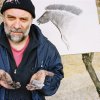
I certainly don’t wish to spoil the entertainment value afforded by her first person story telling, so I will concentrate on the presentation by Mr. Morris (pictured, left). He seems to really enjoy the tabloid approach and uses graphics and imagery to add detail and structure. His use of the score is highly effective and quite unusual for a documentary. He provides the stage for this former Miss Wyoming to perform. And perform she does! Her most famous quote will give you an idea of her personality: “I loved him so much that I would have skiied naked down Mount Everest with a carnation up my nose if he asked me to.”
You will notice I have been purposefully vague. The impact of the movie will be much greater the less you know about the details. For comparison purposes, I have nothing. My first thought was a train wreck. Then a circus side show. Neither of those do justice to this unique story of a most unusual woman presented by a visionary filmmaker. All I can say is, you must see it to believe it … or not.
SEE THIS MOVIE IF: like me, you enjoy practicing amateur psychology – we couldn’t ask for a better challenge than Joyce McKinney!
SKIP THIS MOVIE IF: the thought of listening to one more con artist, regardless of how entertaining she might be, is just more than your Reality TV mode can handle.
For a well written article on the entire story, click on this link to read what Mike Dash had to say in 2009 for The Charles Fort Institute: http://blogs.forteana.org/node/68
Greetings again from the darkness. Let me start by saying that you need not be a newspaper expert, reporter or reader to appreciate the points discussed in this documentary from Andrew Rossi. These key points include the battle of print vs social media, the need for true reporting, and the sustainability of the venerable institution that is The New York Times.
There is some argument given towards what constitutes journalism, but for me the real guts of the matter boils down to our absolute NEED for investigative reporting. I have always given value to bulldog reporting as a checks and balances for our system. Maybe, just maybe, our public officials and corporate leaders will toe the line if they are being watched. Sure, we can all rattle off a long list of when that hasn’t been the case, but I truly believe, having reporters following and snooping does make a difference in the actions of those in charge … and even if it doesn’t, it certainly makes a difference in the accuracy and depth with which their actions are written about.
The filmmaker has been given substantial access to the media desk inside the newsroom. We even get to sit on a portion of the morning meeting where the senior editors decide what the lead stories will be. Personally, I would have loved a couple more hours of just that! But just as fascinating is how Bruce Headlam manages the media news, and in particular, star reporter David Carr. Mr. Carr is a hardened reporter with the spectacular ability to cut directly through to the important point and focus on the details, verify those details, and then summarize in a concise, understandable manner. We see this in full glory with his handling of the crisis and scandal at the Chicago Tribune under Sam Zell‘s banner.
Today, we like our news spoon fed to us in 20 second sound bites. So we find our favorite websites and we scan the headlines, which themselves are scans of news stories. My favorite moment of the movie occurs on a discussion panel when David Carr holds up a printout of the home page of a news “aggregator”. Moments later he makes the point that without real reporters and news teams (like the NYT), this aggregator’s home page would look quite different … he then holds up that same home page with 95% of the stories cut out because their source is a real news organization.
Some attention is paid to Twitter and other social media outlets. This seems to be finally accepted by reporters as being effective for two things: a delivery system for information and a grapevine with lightning speed. Of course, no verification is required for a “news” story to hit Twitter, and therein lies its limitation.
We get interviews from both Gay Talese and Carl Bernstein on the importance of news reporting. Evidence is provided through mentions of the Pentagon Papers, Wikileaks and Watergate. Judith Miller and Jayson Blair are topics that embarrassed and did significant damage to the industry … but changes were adopted to (hopefully) prevent re-occurrence. The News of the World scandal is too new to have made the film, but it certainly would have added a fascinating subtext to it.
The bankruptcy trail of so many newspapers is discussed, along with the possibility of this happening at The Times. Personally I wish more detail had been provided on the survival strategy of this institution. Since the release of the film, there has been a change in the Executive Editor position. Bill Keller, who is featured prominently in the morning meetings, has stepped down and been replaced by Jill Abramson. Ms. Abramson is charged with driving and building online presence and revenue. We should all be wishing her success as the world is a better place with The New York Times.
SEE THIS MOVIE IF: you are questioning whether we benefit from news reporters OR you believe Twitter gives you all the scoop you need
SKIP THIS MOVIE IF:TMZ fufills your need for hard-hitting news
Greetings again from the darkness. This time it’s the darkness of Chauvet Cave in southern France, which was discovered by accident in 1994 by three spelunkers, including the cave’s namesake. Discovering a “new” cave must be incredibly thrilling. But what about one that houses the earliest human cave drawings ever found?
The French government quickly recognized the importance of this find and installed an electronic metal door to seal off the cave to all but a few scientists who spent years carefully mapping every square inch of the cave. Protecting the air and the type of intrusion will, hopefully, protect the 400 or so wall drawings. These drawings are beautiful and cause the imagination to run wild. We see animals similar, yet different than those we know today. Why is there a difference? Well these drawings have been dated to 32,000 years ago! Thousands of years prior to any other human drawings previously discovered.
Director Werner Herzog and his crew are given limited access and are severely limited on the type of equipment they can use. They are confined to a very narrow walkway and are not allowed to touch the drawings. In fact, these limitations work to provide an ethereal look and feel … it’s as if the flickering torches of the original artists are guiding us.
Mr. Herzog is well-known for his unique voice and approach to filmmaking. If you have seen his Fitzcarraldo or his documentary Grizzly Man, you understand what I mean. Here, he spends much time narrating what could have been, speculating on the inspiration, and wondering why so little proof of humans exist here. We see a footprint and some palm prints, but really the drawings are the only sign of human intrusion. Instead fossil remains of cave bears and other wildlife are present. Then again, it has been at least 20,000 since the cave was sealed by a natural rock-slide.
I am sure this will show up on the History Channel and an argument could be made that TV would have been the proper display for this piece. I will say that the big screen does allow for greater appreciation of the artwork, even if some of the interviews come across as filler and the pacing is quite slow. As for the epilogue featuring a French nuclear reactor and and the introduction of warm waters perfect for breeding mutant albino alligators that “may someday reach Clauvet Cave”, I say … oh, Werner.
SEE THIS MOVIE IF: you are a dedicated anthropologist, archealogist, paleantologist, spelunker OR would like a glimpse into an ancient world that you will probably never see first hand.
SKIP THIS MOVIE IF: you appreciate the historic significance of this find, but would just as soon check out the website
Greetings again from the darkness. I made a point to attend the opening night of the film as its subject, Buck Brannaman, was slated to hold an audience Q&A after the film. Unfortunately, he was running a bit late, so we only got a few minutes of his time. Still, this remarkable man made an impression … an impression of authenticity and realism. He may perform a “show”, but his is no “act”.
The inspiration for, and technical adviser on, the film TheHorse Whisperer, Buck Brannaman explains early in the film that a horse views a human tossing a saddle on his back much the way he would view a lion attack. Such is the manner in which this man makes his points to the eager and often doubting horse owners who attend his clinics. Buck then proceeds to win over horse and human alike with wit, strength, character, kindness and zen-like psychology.
First time documentarian Cindy Meehl does a decent job of presenting the similarities of horse training and child-rearing. Buck’s philosophy stems from the earlier work of Tom Dorrance and Ray Hunt, but is further influenced by the less-than-stellar parenting tactics of his father. Buck and his brother Bill (stage name Smokie) were child rodeo stars who performed rope tricks under the firm hand of their dad. It is clear from the footage that they feared their father. In an unlikely twist of fate, the boys are rescued from the abusive environment thanks to the actions of a football coach and deputy sheriff. To fully understand the brave actions of these two men, one must take into account the normal custom in rural America of minding one’s own business. These men didn’t do that and Buck was given a new life.
Watching a quick clip of the “old” horse training techniques really brings home Buck’s more gentle and understanding style. He stresses the importance of considering the horse and being clear with one’s affection and intentions. His flag waving and lead rope actions can win over a horse in a short time. The surprising part is that the horse’s owner learns every bit as much as their horse. Buck is clear in that the issue with most “problem” horses can be tracked right back to the owner. The same can be said for most problem kids. Just as he says trying to bribe a horse with carrots and sugar leads to a spoiled, unresponsive horse, the same argument can be made for that type of parenting approach.
The frustrating part of the film is that it doesn’t really climb inside the head of Buck. We see a glimpse of a man who has overcome childhood atrocities, but we also see a man who loves his family … yet spends months at a time away from them. We see fire in his eyes as he addresses a horse owner who has the gall to keep 17 studs in her pasture. It’s obvious he fights his own demons towards those who mistreat animals, yet as he lectures we wonder if his care is really for the horse more than the person. It was also strange that no real mention of his brother was provided in the film. We could say it’s none of our business, but the film brings up the issue of childhood and then leaves us hanging on the brother.
Truly the inspiration to Buck’s turnaround is his foster mother. She lights up the screen as she talks about Buck as a child and cracks wise with her observations and the telling of a joke. Her love for Buck is obvious and we hope he realizes just how fortunate he is to have had her in his life.
This is an inspirational man who is making a difference in the lives of people and horses. He has overcome childhood obstacles to make the world a better place. His cowboy philosophy is pretty simple. Everyone carries some darkness and baggage, and we can all make our own choices on whether to let that affect our value and enjoyment in life.
SEE THIS MOVIE IF: you are a parent, soon-to-be parent, may some day be a parent OR you are a horse lover OR you enjoy inspirational stories from “regular” people
SKIP THIS MOVIE IF: you aren’t open to a few life lessons from a real cowboy
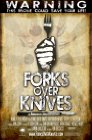
Greetings again from the darkness. Don’t show up for this documentary expecting Morgan Spurlock or Michael Moore. This one offers little entertainment value. But then, that’s not the objective of the filmmaker, writer Lee Fulkerson. Mr. Fulkerson provides the polar opposite of Spurlock’s award-winning Super Size Me, where Spurlock ate McDonalds fast food at every meal for a month, Mr. Fulkerson rejects our typical animal-based and processed food diet for plant-based whole foods.
This test is conducted under the watch of Dr. Matthew Ledderman, who along with his wife, run all pertinent blood and medical tests, and then proceed to teach Mr. Fulkerson how to shop, cook and eat in an entirely new way. The goals are weight loss, increased energy and a reduction of prescription drugs.
This film plays more like a PBS special or a film for medical class, as it pounds the viewer with data and information and studies and examples. A few doctors are interviewed and only minimal input is obtained from the “other” side.
The film gives the impression that Mr. Fulkerson set out to prove his point, much like Dr. Esselstyn and Dr Campbell give every indication that their goal is to prove their own points. The famous China-Oxford-Cornell study has received some heat over the years, but regardless, it seems very clear that WITH PROPER GUIDANCE, a plant-based whole food diet affords many benefits to the human body when compared to the animal-based and processed food that have become so prevalent in the U.S.
No attention is given to cigarettes or exercise as this film is totally focused on nutrition and it’s effects. There is also some information provided in regards to the governmental subsidies of corn crops, and meat and dairy farmers. This leads our filmmaker and many others to presume that the government is not necessarily interested in what’s best for us or school kids’ lunches. In fact, it appears both sides have a bit of self-interest at stake.
I would encourage everyone to see the film and educate yourself so that you can make the decisions that are best for you. Consult with multiple doctors and nutritionists. No one can argue with the goal of reduced disease and minimal drug intake … the big question is what’s the best way to achieve this.
SEE THIS MOVIE IF: you are looking for information and data as it pertains to plant-based whole foods
SKIP THIS MOVIE IF: there is absolutely no way you are giving up your cheeseburgers and T-Bones!
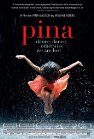 Greetings again from the darkness. One can’t help but wonder how differently this Oscar nominated documentary would have turned out had its subject, Pina Bausch, not passed away from cancer just days before filming commenced. Instead of direct insight from the famously creative choreographer, we witness the tributes she earned … dancing from those who brought her work to life.
 The earthy elements of water, soil and rock are on full display, as are the street scenes Pina utilized over the years. The dances are brought to life for the first time without Pina’s direction. It’s clear her presence and spirit remain with the dancers. The interpretive dance numbers may not be to everyone’s taste, but the talent of the dancers, and especially the famed choreographer are quite obvious and impressive.


 Posted by David Ferguson



















 Movie Reviews from the Dark