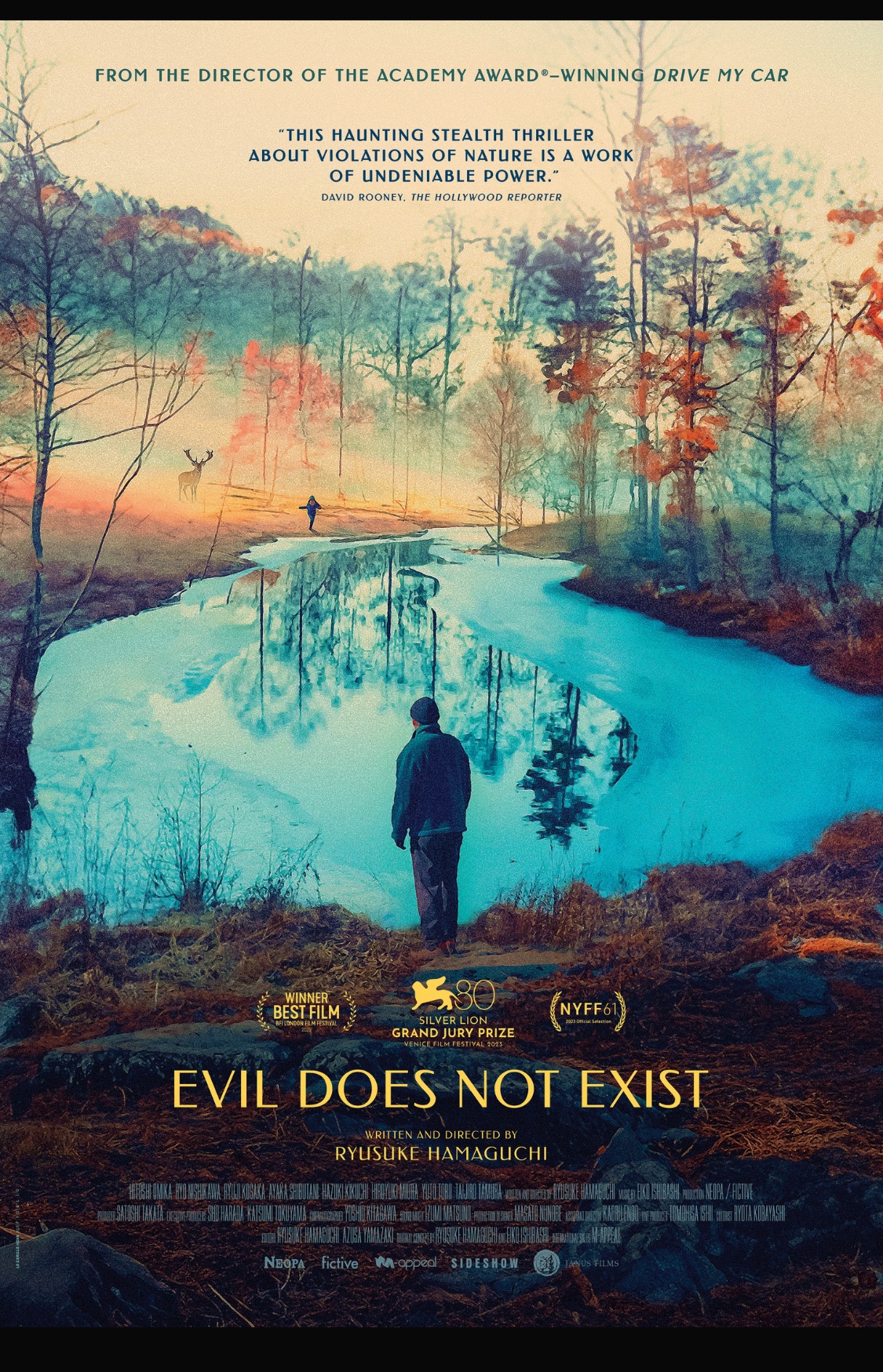
 Greetings again from the darkness. This was one of the films I watched in my end of year movie frenzy, and it immediately became one of my favorite foreign language films of the year (in a solid year for the category). Writer-director Ryusuke Hamaguchi is back after his excellent and Oscar nominated DRIVE MY CAR (2021). Sharing credit on the film’s concept is Eiko Ishibashi, a rare breed: a combination composer-story writer. I should probably clear this up immediately – despite the genre-sounding title, this is not a horror film. It falls quite comfortably into the “drama” category, and as previously stated, it’s a good one.
Mizubiki Village is a rural area located just outside of bustling Tokyo. It’s where Takumi (Hitoshi Omika) lives with Hana (Riyo Nishikawa), his 8-year-old daughter. Their life is simple, though not easy. Days are spent chopping wood and retrieving water from the stream. It’s a serene lifestyle fully linked to nature, and one that’s been similarly lived for generations. These scenes of Takumi and his daughter are slow-moving, yet vital to ensuring viewers understand the impact of what’s coming.
A Town Hall meeting is held by two representatives of the development company that is planning a ‘glamping’ project in the heart of the area. As the locals bring up topics that clearly haven’t been considered by the company, two things become painfully obvious: the two reps are woefully unprepared for the questions and pushback, and this development would drastically alter the ecosystem that provides a way of life for these folks. Sensitive issues like septic run-off, fire safety, and personal security have only been lightly addressed in the developer’s study.
Of course, we have all seen instances where corporate types see only dollars and potential profit, paying little attention to the impact on locals and nature. Rather than comprehensive analysis and communication, projects tend to get rammed through in support of the almighty dollar (or yen, etc). Hamaguchi’s point seems to be that the power of nature is a draw for all types, and this knowledge should be respected. Noteworthy here is that the film serves as the feature film debut for both Hitoshi Omika and Riyo Nishikawa, and both strike just the right note. We should also note that filmmaker Hamaguchi should be admired for always including life lessons in his beautifully filmed projects … nice to look at and worthy of consideration (even with an ending that’s a bit heavy-handed).
 Movie Reviews from the Dark