 Greetings again from the darkness. There are so many things that go unspoken about parenting, and first time writer-director Maggie Gyllenhaal specifically focuses her lens on the pressures of motherhood, by adapting the 2006 novel from the anonymous and talented and mysterious Italian writer Elena Ferrante. Of course, we are all aware of Ms. Gyllenhaal’s fine work as an actor, yet it’s almost beyond belief that this is her debut as a feature film director. The source material is strong, but Ms. Gyllenhaal, along with a terrific performance from Olivia Colman (Oscar winner, THE FAVOURITE, 2018), turn a coastline vacation into a mesmerizing psychological case study.
Ms. Colman proves yet again what a fine and versatile actor she is. Here she plays Leda, a divorced professor on solo holiday on a picturesque Greek island, staying in a refurbished lighthouse tended by longtime caretaker Lyle (Ed Harris). Leda is packing a satchel full of books and academia work, and is a bit perturbed when her isolated beach time is suddenly interrupted by a large and noisy family of vacationers from Queens. Being an observant loner, Leda eyes young mother Nina (Dakota Johnson) who is struggling with her daughter, as well as her husband and other family members. This triggers memories in Leda that are handled via flashbacks with a terrific Jessie Buckley (I’M THINKING OF ENDING THINGS, 2020) as young Leda, stressed out wife and mother to two daughters. She longs for her own space.
At face value, this appears to be a movie about a woman annoyed that she can’t just enjoy a quiet holiday on the sandy beach as she reads her books. However, there are so many layers to the story and to Leda, that as viewers, we must remain on high alert to pick up all the queues and subtleties. Watching Nina with her daughter and husband sends Leda deep into her past … a past that still haunts her to this day. At the same time, while gazing at Leda, Nina can’t help but wonder if she is looking at her own future self.
Much of what we see (past and present) reinforces the isolation and frustration felt by so many mothers. It has nothing to do with loving one’s kids, but rather maintaining one’s sanity and self-being. There are a few key moments, including one that creates tension between Leda and the vacationing family, and another that immediately connects the two. Leda’s past includes steps that would be considered taboo for any wife and mother, and the symmetry of her past and Nina’s present are striking.
Peter Sarsgaard (director Gyllenhaal’s real life husband) has a supporting role in the flashbacks, while Dagmara Dominczyk plays a critical role as Callie, part of Nina’s large family. Bonus points are won with a Leonard Cohen reference (that may or may not be true), and also playing key roles here are a missing doll (connecting Leda’s past and present) and the proper way to peel an orange. Cinematographer Helene Louvart works wonders balancing the beautiful setting with the not-always-beautiful actions of the characters. Especially potent here is the performance of Olivia Colman, who proves she can play most any role. It’s also remarkable what first time director Maggie Gyllenhaal has accomplished here. This is a multi-layered, nuanced look at how relentless parenting can often feel overwhelming and may even lead to feelings of guilt later in life. It’s rare to see such a raw look at the emotions behind what is often referred to as the joy of motherhood. The film leaves little doubt that the always-dependable actor Maggie Gyllenhaal is now one of the most interesting new filmmakers on the scene.
In select theaters on December 17, 2021 and on Netflix beginning December 31, 2021


 Posted by David Ferguson
  Greetings again from the darkness. If you are a fan of little films that seem quiet on the surface but deep down have jarring tremors of emotions, then this 3 hour art-house gem from Japanese writer-director Ryusuke Hamaguchi is a must-see. The director, along with co-writer Takamasa Oe, adapted the script from the short story by Haruki Murakami, part of his “Men Without Women” collection. The story revolves around Russian playwright Anton Chekhov’s “Uncle Vanya”.
 Greetings again from the darkness. Fans of filmmaker Guillermo del Toro anxiously await his new projects knowing full well that each will have a stylish atmosphere, a certain fantastical creepiness, and characters a bit outside the norm (whatever normal is these days). Beyond that, the mystique derives from whatever new approach the extraordinarily talented filmmaker will surprise us with this time. For his first follow-up to his Oscar winning THE SHAPE OF WATER (2017), del Toro and co-writer Kim Morgan have adapted the 1947 cult noir classic by director Edmund Goulding (starring Tyrone Power), which itself was adapted from William Lindsay Gresham’s 1946 novel.
 Greetings again from the darkness. In a cinematic oddity, this is my second SWAN SONG film to review this year. The first was a SXSW starring vehicle for Udo Kier, and now we have the first feature film from writer-director Benjamin Cleary, who won an Oscar for his 2015 short film STUTTERER. It’s safe to say the two ‘Swan Songs’ share no similarities other than their title. Cleary presents a sci-fi drama that applies moral and ethical questions to advanced medical science, and our inherent desire to protect loved ones.
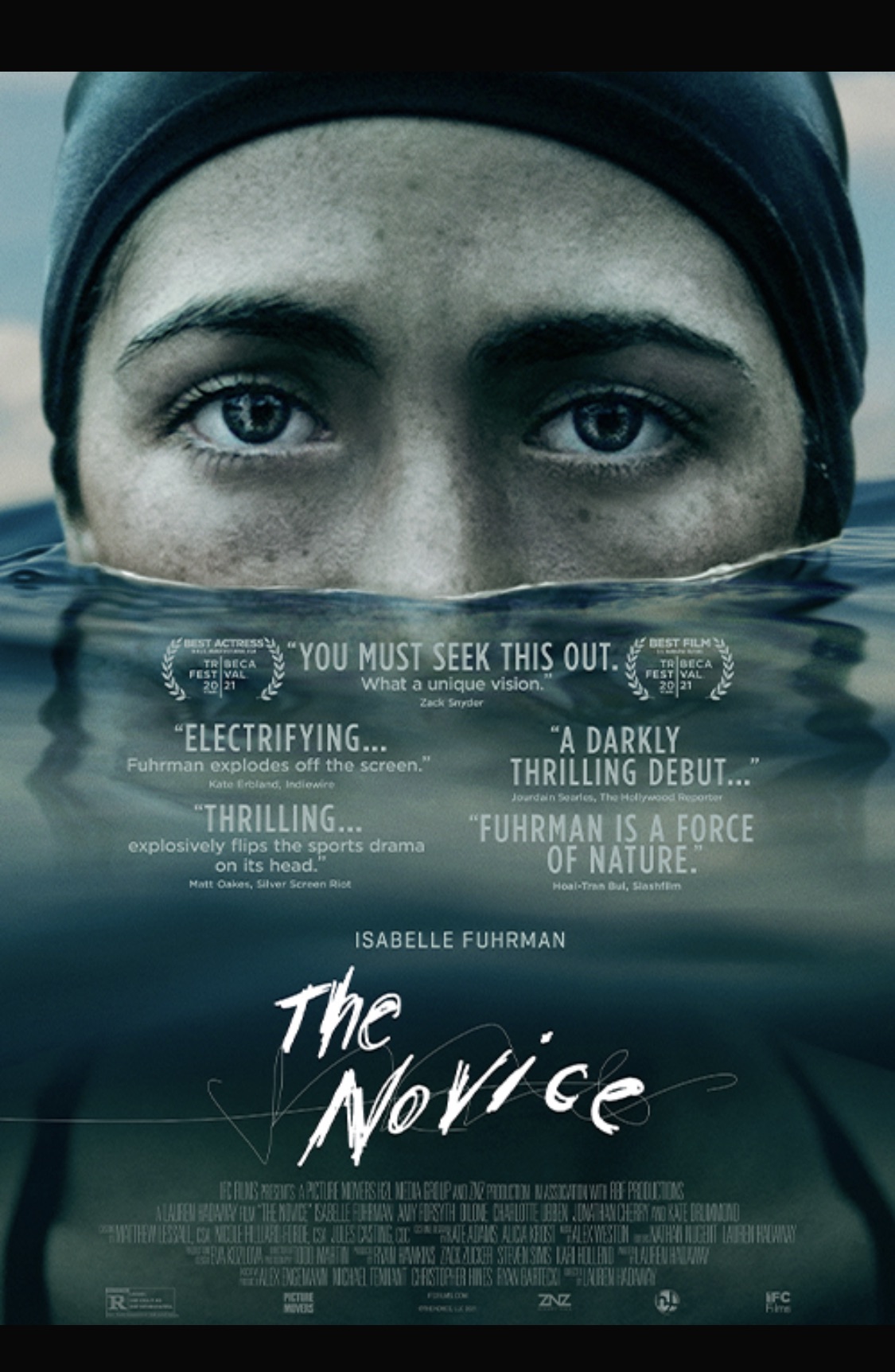 Greetings again from the darkness. The debut feature film from writer-director Lauren Hadaway is not the inspirational sports movie we’ve come to expect. There are no last second heroics. No Gatorade showers. No coaches being hoisted on the players’ shoulders. In fact, despite being centered on a college rowing team, this is much more of a disturbing psychological thriller than a sports movie. And it’s a pretty darn good one at that.
 Greetings again from the darkness. What would happen if human survival depended on the Griswolds (from the VACATION movies) battling the rogue robots programmed to take over the planet? Filmmakers Michael Rianda and Jeff Rowe answer to that scenario is hyper-active, frenetic, overly-busy visual chaos that attempts to blend apocalyptic science fiction, extreme action sequences, and dysfunctional family comedy-drama. It’s a lot to tackle, and for the most part, it works.
 Greetings again from the darkness. What happens if Chicken Little was right, and the sky really is falling? Writer-director, and Oscar winner, Adam McKay proved with THE BIG SHORT (2015) and VICE (2018) what occurs when he turns his unique commentary towards a target. Two questions remain. Is political or social satire just too easy these days? Has insanity permeated our globe to the degree that pointing out the lunacy has become ho-hum? McKay wrote the script from journalist David Sirota’s story, and it’s even more extreme than his previous work, and likely meant as a wake-up call to all of us.
 Greetings again from the darkness. You don’t have to be one of the 60 million who, between 1951 and 1957, tuned in each week to watch the latest episode of “I Love Lucy” to feel like you know Lucy, Desi, Ethel, and Fred. Most of us have watched the syndicate re-runs over the past 70 years, and that fact added challenges to this project for writer-director Aaron Sorkin – not the least of which was casting the role of Lucille Ball. Everyone had an opinion, and when you go to cast a true icon, it’s a slippery slope.
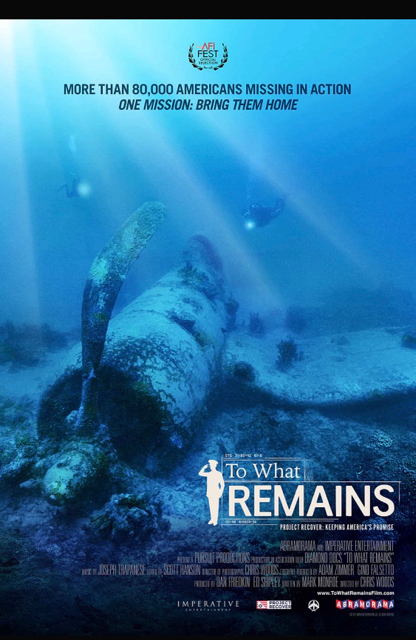 Greetings again from the darkness. Sometimes it feels pointless to write about a film, while sometimes it seems that the right words escape me. I don’t have the right words for this documentary from Chris Woods, yet I do know that it should be seen by as many folks as possible. As the divisiveness of our country continues to fester, this story about real people takes us to a time when heroes fought for freedom against real enemies, while so many families sacrificed for the benefit of all. Millions lost their lives in World War II, and Woods focuses on one small organization doing everything possible to bring closure to the especially brutal Battle of Peleliu.
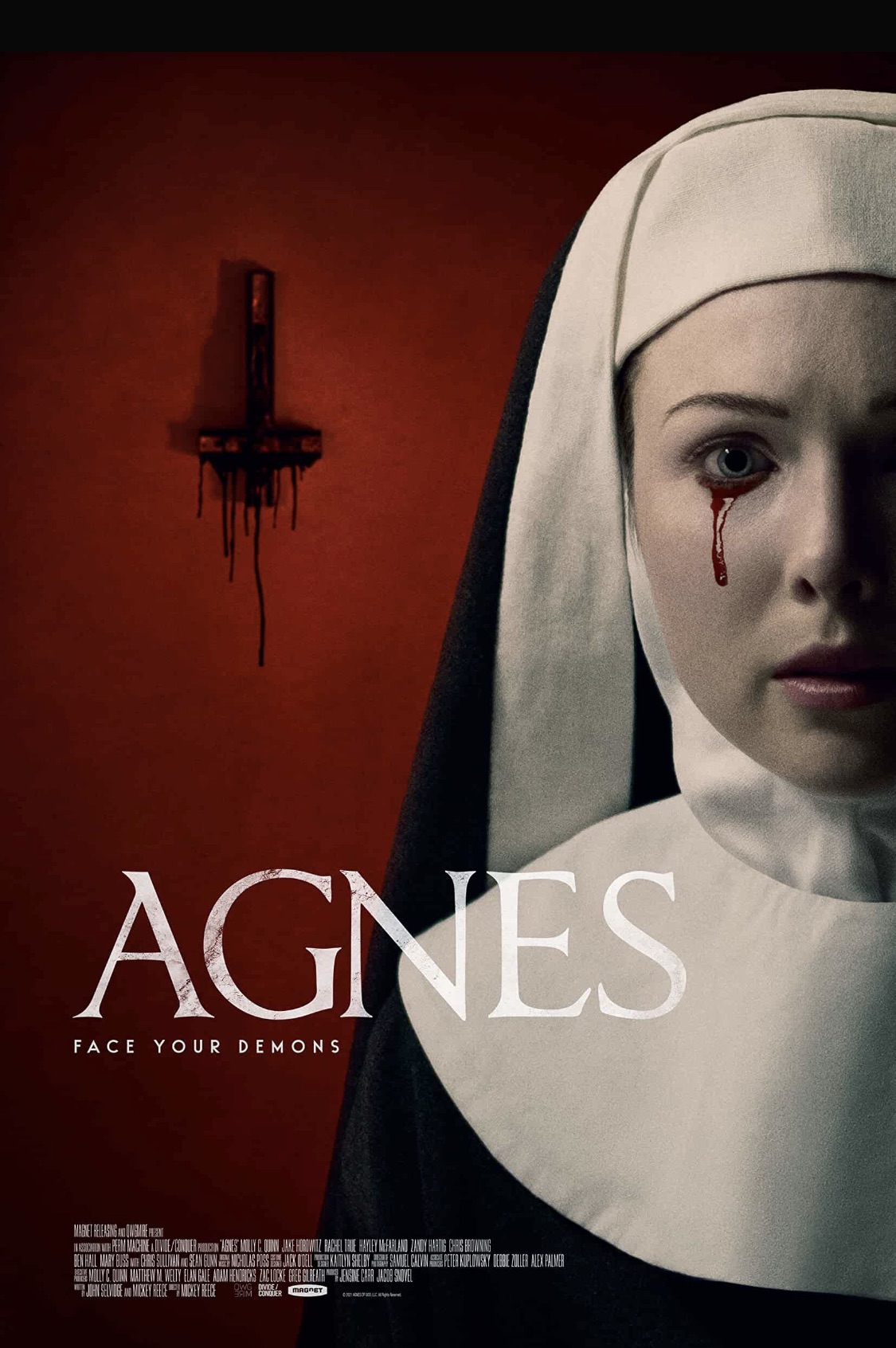 Greetings again from the darkness. William Friedkin’s 1973 movie THE EXORCIST, adapted from William Peter Blatty’s novel, shook the movie world at the time. It even garnered 10 Oscar nominations, winning two (Best Sound, Best Adapted Screenplay). Over the nearly 50 years since, there have been five sequels in the franchise, and it has inspired countless genre movies, including parodies and knock-offs. Writer-Director Mickey Reece and co-writer and frequent collaborator John Selvidge deliver a set-up that leads us to believe we are in for yet another faith-based horror film focusing on demonic possession. Instead, what follows is more like two distinct stories.
 Movie Reviews from the Dark