SCORE: A FILM MUSIC DOCUMENTARY (2017)

June 14, 2017

Dallas International Film Festival 2017

 Greetings again from the darkness. Some people remember movies by recalling the story … others by picturing the actors … still others by crediting the writer and director. Surprisingly, it’s the film’s music that we subconsciously carry with us. Even years later, a theme song can trigger an emotional tie to our favorite movies. The magic of movies and their scores are so inter-connected that you often can’t think of one without the other: Jaws, Star Wars, The Magnificent Seven, The Good, The Bad, and The Ugly, Psycho, Gone with the Wind, James Bond, Batman, Titanic, Chariots of Fire, and Jurassic Park (to name a few). Chances are, just reading that list caused you to hear the themes!

Director Matt Schrader, in his directorial debut, takes us back to the beginning by explaining that silent films were never actually silent. There was invariably live or recorded musical accompaniment to help muffle the sound of the projector. But it was Max Steiner’s score for King Kong in 1933 that really changed the game. His music transformed that film from a schlocky special effects B-movie into a tense, thrilling cinematic experience – one still enjoyed today.

This is so much more than a history of important and beautifully written scores. Director Schrader interviews most of the well-known film composers working today. He gains insight into their writing process, commentary on the ground-breakers who came before them, and uncovers how technology, new instruments, new styles, and a different approach are always in the works.

Some of those interviewed include Rachel Portman (the only female composer included here), Randy Newman, Danny Elfman, Atticus Ross and Trent Reznor, and Thomas Newman (son of Alfred). There is also a well-deserved segment reserved entirely for the great John Williams, and we get reminded of the revolutionary composers like Jerry Goldsmith (Planet of the Apes, Chinatown) and Bernard Hermann (Psycho), as well as Henry Mancini (The Pink Panther), Monty Norman (James Bond), and Ennio Morricone (classic westerns). A quick segment that proves quite entertaining focuses on Mark Mothersbaugh (formerly of Devo) telling the story of how he used a toy piano for the score of Rugrats, but regrettably no longer has possession of the little piano.

Oscar winning composer Hans Zimmer is a recurring voice throughout and provides some structure to the numerous interviews and segments. It’s quite humorous to see this highly accomplished, world-renowned composer in his early days as a keyboardist for The Buggles’ “Video Killed the Radio Star” (the first video played on MTV). More importantly, Mr. Zimmer discusses the insecurities and pressures that go along with the job, and how change (such as his aggressive sounds) isn’t always welcomed openly.

The technical aspects of creating the score are certainly not ignored. We get a glimpse inside Abbey Road Studios, and how thrilling it is for a composer to hear the live orchestra bring his or her music to life that first time. It also serves as a reminder that film composing employs a significant number of the live orchestral musicians working today, and that we all hope technology doesn’t replace that imperfect beauty of the real thing.

Adding a scientific perspective was a nice touch. Learning that our brains respond to movie music in a similar manner to chocolate and sex made a great deal of sense, as I’ve often wondered if film scores are more manipulative or complementary in nature. If there is a disappointment in the film, it’s that the recently deceased James Horner seems woefully short-changed, with only a brief post-credits segment featuring director James Cameron who, as usual, spends the time talking more about himself than the impact of Horner. This documentary is a must for movie lovers and music lovers, and on a personal note, made me miss my friend Adam very much. He would have certainly enjoyed this one and had a great deal to say about it.

watch the trailer:


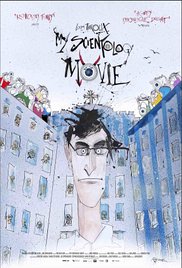
MY SCIENTOLOGY MOVIE (2017, doc)

June 13, 2017

 Greetings again from the darkness. Here’s hoping Tom Cruise doesn’t hunt me down, and that a group of believers doesn’t shout insults at me in an airport; but I’ll admit that the more I learn about the Church of Scientology, the more creeped out I get. Director John Dower and BBC reporter Louis Theroux do nothing to put me at ease or even help understand how people fall for this “religion” … a self-described “universal solvent”.

Yes, Scientology is a religion that was founded by a science fiction writer. The genre has seen many popular writers over the years – Ray Bradbury, Arthur C Clarke, H.G. Wells, and Philip K Dick were all great writers, and some were read religiously by their fans. However only one, L Ron Hubbard, had the pluck to actually start a religious cult and consider himself God’s conduit. His 1950 book “Dianetics” is known as Book One and the foundation for the movement that became Scientology.

Mr. Hubbard died in 1986. Twenty-something David Miscavige took control and to this day remains the mysterious leader of the organization. His one TV interview was in 1990 with Ted Koppell on “Nightline” and he has since refrained from public appearances – a stance that has only enhanced the weirdness and rumors surrounding Scientology. Instead, public figures like Tom Cruise and John Travolta have become the faces that people associate with the organization, and have been influential in recruiting efforts.

The extremely polite Theroux takes an unusual approach to this and actually holds auditions for the key roles of David Miscavige and Tom Cruise, with the plan to reenact some of the more infamous ongoings behind the secure walls of Scientology. When the open call for participants hits social media, warnings to Theroux start flooding in – literally cautioning him to stay away from this subject. Undeterred, though maybe a bit shaken (is Paz de la Huerta a bikini-clad spy?), he enlists Marty Rathbun, a former senior leader in Scientology. He bolted after 27 years, and the organization now labels him as an embittered SP (Suppressive Person) and works to discredit everything he says.

Andrew Perez wins the role of Miscavige by expressing the necessary level of “righteous anger” according to Rathbun. The reenactments of Miscavige speeches, the E-meter sessions, and bull-baiting (belittling to build backbone) provide us a simulated peek behind the cloak of secrecy. We learn about The Celebrity Centre, Gold Base, and The Hole – each adding to the creepiness that is difficult to shake.

Three other former Scientologists are interviewed: Tom De Vochts, Marc Headley and Jeff Hawkins. It’s through them that we learn about Sea Orgs – the most devoted of those within the organization. There is also a fascinating tie-in with Mr. Hawkins’ wife Catherine Frazier, who not only remains an active Scientologist, but plays a key role in one of Theroux’s contentious interactions on a road that is either public or private, depending on whom you ask.

Alex Gibney’s Going Clear documentary stands in contrast to Theroux’s almost playful approach to getting information and details out of those who were/are there. Although the playfulness disappears when, late in the film, Theroux confronts Mr. Rathbun on his role in building the structure that he now condemns. We know we can’t trust the “church”, but we (including Theroux) are never quite sure whether to trust Rathbun, or if he is merely out for revenge. It’s rare that a true story can provide such comical moments and yet, at its core, provide such frightening insights. Call it a cult, a religion, an organization, or any other label you prefer … it’s still just downright creepy.


OAK CLIFF FILM FESTIVAL 2017 preview

June 7, 2017

The 6th annual Oak Cliff Film Festival kicks off Thursday evening (June 8, 2017) at the historic Texas Theatre on Jefferson Blvd in Dallas. The festival has grown each year and is now nationally recognized for its unique and vibrant melding of film, music, workshops, and parties, along with live interactions and insight from writers, directors, producers and actors. And if that’s not enough to entice you, the festival takes advantage of various local venues … each with its own personality and flavor.

Full details and ticket information is available at http://oakclifffilmfestival.com/ and here’s a quick look at some of the most intriguing events:

Thursday June 8: Director Janicza Bravo will be joined by her writer/actor Brett Gelman to present the opening night feature LEMON, an absurdist comedy starring Michael Cera. The evening’s second feature film is one of Anton Yelchin’s final screen appearances in the Dallas premiere of director Gabe Klinger’s PROTO.

Friday June 9: The Texas premiere of GOLDEN EXITS from filmmaker Alex Ross Perry. The cast includes: Emily Browning, Jason Schwartzman, Mary-Louise Parker, and Adam Horovitz. Immediately following the evening’s second film A LIFE IN WAVES will be a Texas Theatre musical special event ‘behind the screen’.

Saturday June 10: A full 13 hours of events start at 11:00 am and involves 8 different venues, making this the most interesting and difficult to plan day of the festival. The schedule includes workshops, happy hours, short films, live music, and feature films such as back-to-back screenings from iconic director Alejandro Jodorowsky and his son Adan.

Sunday June 11: The Alamo Drafthouse Cedars has a screening of director John Carroll Lynch’s film LUCKY with legendary character actor (90 year old) Harry Dean Stanton. There is also a block of documentary short films, as well as the Texas premiere of director Jeff Baena’s THE LITTLE HOURS – another absurdist comedy, though this one features Aubrey Plaza and Alison Brie as nuns. The festival’s final spotlight feature is A GHOST STORY from acclaimed director David Lowery (AIN’T THEM BODIES SAINTS) featuring Rooney Mara and the reigning Academy Award winning Best Actor Casey Affleck.

This only covers a few of the movies and events that are options over the four days, and it’s also a reminder of how exciting and innovative a film festival can be. An added bonus is the local flavor of a Dallas neighborhood that has much to discover.


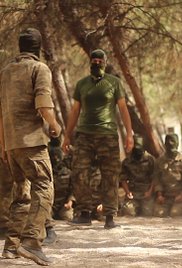
HELL ON EARTH: THE FALL OF SYRIA AND THE RISE OF ISIS (2017)

June 6, 2017

 Greetings again from the darkness. Co-directors Sebastian Junger and Nick Quested previously collaborated on a trilogy focusing on the Afghanistan War, including the Oscar nominated Restrepo (2010). Mr. Junger is also a best-selling author and Mr. Quested (a producer) is an Emmy winner. This time out they focus on the Syrian War, the plight of refugees, and the role of West in creating ISIS.

This is a National Geographic sponsored documentary, and though it’s a bit overly politicized, it’s also an extremely well made, detailed, and informative overview for those looking to catch up on the past seven years in Syria. Some of the front line video is stunning and affecting in its clarity of atrocities. In addition to the clips, pointed interviews with a mixture of types provide information and insight that we might otherwise misinterpret or remain oblivious to. Activists, journalists, refugees, politicians (including the recently dismissed National Security Adviser Michael Flynn) and soldiers all offer perspective on a situation that is difficult for most of us to comprehend.

Understanding the political strategy of President Bashar Al-Assad clarifies what to outsiders made little sense. Rather than allow the reform movement to gain traction, he instigated and encouraged the Civil War within his country – with the plan to have the military crush the uprising and gain power. The decision is difficult to swallow … the leader of a country choosing to slaughter his own people. It also led to what’s known as the Free Syrian Army – a confluence of various groups of citizen militias.

Ensuring this plays like a real life horror film, we see ISIS recruitment videos. These are brutally explicit propaganda with extraordinarily high production value. Beheadings, public hangings and other torture are presented in a manner designed to give hope and power to those who have little hope. It’s terrifying.

We follow the story of brothers Radwan and Marwan and their families as they struggle to survive and escape. It seems to be a call to action for those opposed to accepting Syrian refugees, especially when combined with the filmmakers’ finger-pointing at the U.S. for political decisions that (they argue) led to the strengthening of ISIS. There is also an emphasis on President Obama’s infamous “red line” statement, on which he reneged on his promise to act if chemical weapons were used.

It is fascinating to hear a portion of an interview with Anna Erelle, author of “In the Skin of a Jihadist”. She’s a journalist who risked her life going undercover, and probably deserves her own documentary – though it’s doubtful she wishes to lose what’s left of her privacy. It’s said that a radical movement is formed out of desperation, and with half of the Syrian population displaced, and more than 400,000 dead, desperation seems an understatement. The film is probably the best yet in its depiction of what has happened, but watch out for those puddles of finger-pointing.


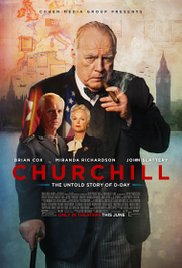
CHURCHILL (2017)

June 4, 2017

 Greetings again from the darkness. Well, well. The image to most of Winston Churchill is epitomized by his nickname, The Lion of Britain. Undeniably one of the most iconic historical figures of the last 150 years, there have been volumes of articles and books and movies documenting his important role in so many moments that shaped our modern world. Director Jonathan Teplitzky (The Railway Man) and writer Alex von Tunzelmann (she herself a British historian) take us behind the public façade and into the personal doubts and fears … even literally into his bedroom and the middle of his marital spats.

Brian Cox takes on the role of Churchill, and seems to relish more than the ever-present stogie and its lingering smoke. He captures many of the physical traits and movements, while employing his stage-trained voice in an exceptional reenactment of the infamous and impassioned D-Day radio speech. Complementing his performance is Miranda Richardson as Clemmie Churchill, the strong and diligent great woman behind the great man.

Most of the film takes place in the four days leading up to the June 6, 1944 Allied Forces invasion of Normandy, known of course as D-Day and Operation Overlord. At the time, Churchill was almost 70 years old, and what we see here is man teetering between past and present while cloaked in an almost paralyzing fear stemming from the 1915 Gallipoli debacle. He is presented as vehemently opposed to the Normandy invasion, though most documentation shows his initial resistance from (1941-43) had subsided, and he was fully on board by this time.

Although the ticking clock throughout the film leads to the invasion, this isn’t a war movie per se, but rather a peek at the human side of leadership in a time of crisis. Ask yourself if you could readily order tens of thousands of young soldiers to face slaughter, especially after you had experienced such tragic results a still-fresh-on-the-conscience 29 years earlier.

John Slattery (“Mad Men”) plays General Dwight Eisenhower, the Supreme Allied Commander (and future President of the United States) and he more than holds his own in scenes with Cox/Churchill. Julian Wadham plays Bernard Montgomery, the Spartan General. He was over all Allied ground forces and accepted Germany’s surrender in 1945. Taking on the role of British Field Marshal Jan Smuts (also the Prime Minister of South Africa) is Richard Durden. Having the thankless job of trying to keep Churchill on track, Smuts was the only person to sign the peace treaties for both WWI and WWII, and later established the League of Nations. James Purefoy does a really nice job as King George VI (replete with minor stutter), and Ella Purnell (Emma in Miss Peregrine’s Home for Peculiar Children) shines as Churchill’s bright-eyed new secretary, and invested British citizen.

The best scenes are between Winston and Clemmie, and those where he fine-tunes his remarkable speeches. At times the film veers into near-caricature mode, but manages to right itself thanks to the counsel and wisdom of two strong women. Later this year, Atonement director Joe Wright will present Darkest Hour, with the great Gary Oldman as Churchill, and it’s likely to feature more politics and acts of state. Despite the blustering and sense of “losing it”, all is well when the D-Day speech is delivered. It’s so much more than words on the page. Well, well.

watch the trailer:


BAND AID (2017)

June 1, 2017

 Greetings again from the darkness. “Where words fail, music speaks.” Danish author Hans Christian Andersen wrote those words more than 150 years ago, and he surely never imagined a 21st century California couple would prove true the adage. Zoe Lister-Jones (a regular on TV’s “Whitney”) has been acting regularly since 2004, and this is her first “all in” film project where she is writer/director/producer/lead actress. Her talent as a writer is evident in a topic assumed close to her heart: thirty-something angst.

Ms. Lister-Jones stars as Anna, a disenchanted Uber driver who is married to super slobby slacker Ben played by Adam Pally (Slow Learners, 2015). These two seem perfectly matched – or would be, if not for the constant bickering over anything and everything. Before you assume this is a remake of the ultra-depressing Revolutionary Road (2008), please note that the two leads are incredibly funny people and masters of witty one-liners. They make marital squabbles quite entertaining, once they decide to form a band with the sole purpose of singing their arguments.

Admittedly, it’s a shaky premise, but these two manage to pull it off with help from neighbor/drummer/sex addict “Weird Dave” (Fred Armisen). Along the way, they take shots at their friends’ exuberance over babies, the Holocaust, a kid named ISIS, pizza, dirty dishes, a mousetrap, sex, drugs, and art. They even bring levity to a marriage counseling scene featuring Retta (“Parks and Recreation”).

Just as impressive as the humor is how the film balances the drama associated with lingering depression tied to the trauma of a miscarriage. This and the couple’s inability to communicate their emotions are what drive their marital challenges. For a short time, the ‘argument music’ seems to improve their relationship, but it’s obvious that the real issue must be dealt with. Enter Ben’s mom (Susie Essman), whose only scene serves the purpose of explaining women to Ben and all the dumb guys in the audience.

There are actually quite a few familiar faces (many with ties to “Life in Pieces”) that appear in only one or two scenes: Chris D’Elia, Ravi Patel, the aforementioned Retta, Majandra Delfino, Jesse Williams, Colin Hanks, Brooklyn Decker, Erinn Hayes, Jamie Chung, Hannah Simone, and Angelique Cabral. These quick hit scenes serve as a dose of reality, as “moments” are what make up life … even if many interactions are “crazy” (D’Elia) or creepy (Williams).

The film was well received at Sundance, and it immediately marks Zoe Lister-Jones as a filmmaker to watch. Her comedic presence is a rarity, and is complimented nicely by her musical talent, and her willingness to hit serious topics head-on. Here, she offers a woman’s perspective on having kids, being questioned about having kids, and traditional women’s roles within society and marriage. Her inspired observations (a spontaneous jam session at the kid’s birthday party) are a welcome addition to today’s cinema, while also offering a west coast contrast to east coast indie film.

watch the trailer:


PAST LIFE (2017)

June 1, 2017

 Greetings again from the darkness. Renowned Israeli filmmaker Avi Nesher tackles the familiar topic of Holocaust survivors and drops in a related family mystery, two dueling and personality-opposite sisters, plus numerous sub-plots including: arguing spouses, musical sexism (it’s a thing), cancer, and a cross-country investigation. The film was inspired by the autobiography of Dr. Baruch Milch, who is the father of the rival sisters and whose past actions are at the core of the investigation.

It’s 1977 West Berlin, and after successfully performing a solo during a concert, no singer wants to be grabbed by a crazy-eyed old lady and accused of being the daughter of a murderer … an act exacerbated by the fact that the accusation is in a language she doesn’t understand. This is exactly what happens to young Sephi Milch (played well by Joy Rieger, who reminds of a late 1970’s Amy Irving). It’s an unsettling moment for Sephi and when she mentions it to her dissident older sister Nana (Nelly Tagar), who also happens to be a journalist/editor, the girls unite for an investigation that will take them deep into the mysterious past of their father.

The sisters of conflict are never really on the same page, as Nana is relentless in pursuit of the truth while the more reserved Sephi can’t see the benefit to uncovering something that could tear the family apart. Also, Sephi is focused on her dream of becoming the first respected female classical composer in history. In an odd twist of fate, it’s the son of the accusing crazy lady who is instrumental (apologies for the pun) in helping Sephi purse her goal. Thomas Zielinski (played by Rafael Stachowiak) is a well known conductor who is either a creepy guy (with an even creepier mother) with amorous intentions toward Sephi or a generous guy in a position to help the rising star.

The story could have been interesting enough with this foundation, but it becomes cluttered with side stories that actually bog down and divert our attention from what we care about. Doron Tavory plays Dr. Baruch Milch, and though his being a lousy father doesn’t make him a murderer, it certainly allows for doubt in both the girls and the audience. Often, the film feels like a jigsaw puzzle with missing pieces … or worse, including pieces from a different puzzle.

Taking place at a time when Egyptian President Anwar Sadat was working towards a peaceful accord with Israel, the film also acts as a reminder that war pushes people into actions that might be out of character, yet necessary in the moment. Should these digressions be forgiven or become one’s lingering shadowy legacy? The clashes with past and present, historical and modern, confuse these issues and divert our attention away from two sisters trying to understand the impact of their father’s actions during WWII on their family today. The rest is just noise … disguised as beautiful music.

watch the trailer:


WINE TASTING (2017)

June 1, 2017

 Greetings again from the darkness. The film isn’t likely to teach you much about wine, wine history or even wine tasting (despite the title), but at least you won’t have to watch Paul Giamatti guzzle the spit bucket. Director Josh Mitchell and writer Justin Samuels have combined on this look at four friends studying for the Master Sommelier exam, as well as how their friendship is impacted by the results.

The opening scene finds the four lads drilling blindfolded for the tasting section. When they are told their answers are “not even close”, we realize there is a bit of humor mixed in with the highly stressful process that requires years of studying and practice (and a high failure rate). It’s also our first indication that the film is a bit stagey, and that the cast may not have the acting chops we are accustomed to seeing on the silver screen. However, this is not a factor of effort, as everyone involved seems committed to their roles and the project.

The director Josh Mitchell plays Mateo, a chef who finds support not just with his buddies, but also with an understanding girlfriend played by Alysa Scanzano. Jesse O’Neill plays John, who tries to handle the stress and long hours with a boost from cocaine; while Josh Thrower portrays Ed, the wine taster who succumbs to alcoholism after his girlfriend dumps him. The most colorful character of the four is Franco, a rowdy and opportunistic Serbian played by Vanja Kapetanovic. These four toss around the “dude’s” and “bro’s” at a pace that would make any stoner movie proud.

The film is at its best when focused on the pressure of preparing for the exam, and it’s the second half that reminds us of the power of friendship … though it leans a bit heavy on dude-drama. The Jason Wise documentary Somm (2012) provides a more detailed, behind-the-curtain look at what it takes to become a Sommelier, and of course, Sideways (2004) and Bottle Shock (2006) are the two best known films centered on wine tasting and wine competition, respectively. While this one isn’t at the level of those films, its description of “fire hose of information” and the relentless studying and commitment to the cause, do hit home.