20th CENTURY WOMEN (2016)

January 12, 2017

20th-century Greetings again from the darkness. Writer/director Mike Mills has found a niche, and a form of therapy, by exploring and exposing his life in a most public manner … on the silver screen. Beginners (2010) brought us the story of his father’s (an Oscar winner for Christopher Plummer) late life pronouncement of homosexuality. This time, Mr. Mills turns his lens and his pen towards his mother, and he seems to understand her much better in retrospect than in the summer of 1979 when the film is set.

This can be viewed as the story of three women, masked as a coming-of-age story for a teenage boy. Annette Bening stars as Dorothea, a chain-smoking single mother in her mid-50’s who seems to have surrendered to her own sadness and loneliness, while simultaneously trying to make sense of a changing world. One of her tenants is Abbie (Greta Gerwig), a photographer and NYC punk scene drop-out, who is now battling cervical cancer. The third female is the seemingly always present Julie (Elle Fanning), a sexually promiscuous and borderline depressive 18 year old who values the platonic friendship she has with Dorothea’s 15 year old son Jamie (Lucas Jade Zuman).

Factor in another tenant in the form of laid-back handyman and former hippie William (Billy Crudup), and we have a makeshift family in a communal setting that seems almost normal for 1979 Santa Barbara. Dorothea enlists the other two women to show Jamie their lives – the intent being to influence his growth in ways an older mother can’t. Of course, Jamie is at the age where exploring life isn’t necessarily best served by tagging along on a trip to the gynecologist with Abbie or having no-touch sleepovers with Julie.

Ms. Bening finds her groove as the story progresses and we feel her struggling to connect to each of the characters. When William plays a Black Flag song, her reaction is priceless: “They know they’re not good, right?” She doesn’t mean it as a put down, but rather her attempt to understand why her son is drawn to this. An even more emotionally naked moment occurs when Jamie is reading a passage from “The Feminine Mystique” to his mother. It’s a passage that captures what he thinks of her, as well as what she thinks of herself … a mostly invisible woman finding it difficult to be a parent while also maintaining a self.

Mills is not one to be nostalgic or glorify the past. His brilliant writing includes lines like “Wondering if you are happy is a great short cut to being depressed.” The movie can be slow moving at times, but it’s the best I’ve seen in awhile at expressing what makes us tick. The film is what Running with Scissors should have been. Real people are sometimes interesting, sometimes boring, and sometimes annoying. Each of the characters here are all of the above (just like you and me).

watch the trailer:


CLAIRE IN MOTION (2016)

January 12, 2017

claire-in-motion Greetings again from the darkness. A math professor and an art professor are apt to view the world discordantly, but it doesn’t mean they aren’t capable of a strong personal relationship together. After planting a morning kiss on the cheek of his wife, Paul sets off on a one-man survival hike through the hills and forest. When he doesn’t return, the mystery begins. Only it’s not really a mystery, and it’s certainly not the thriller it seems to be disguised as. Rather, it’s a character study of how a rational mind works to make sense of a world that can’t always be explained logically.

Lisa Robinson and Annie J Howell have co-written and co-directed this story that gives Betsy Brandt a chance to really spread her dramatic acting wings after her time on “Breaking Bad”. Here she plays Claire, a math professor, wife, and mother to Connor (Zev Haworth). Being of sound mind and structured thought, Claire immediately starts trying to find the logical reason for the disappearance of her husband. What she discovers is her husband often secretly veered from the structured life she so valued. This leads Claire to an awkward meeting with Allison (Anna Margaret Hollyman), one of his grad students. It turns out Allison and Paul had a pretty close connection over an upcoming art project.

By now, you are probably sure you have this movie figured out. Fortunately, the filmmakers ensure it’s not as predictable as you might think. It’s not a thriller like Gone Girl or Deceived. We watch Claire re-trace Paul’s steps on a path unfamiliar to her, and this evolves into a self-realization that she had been sleep-walking through life: doing her job, raising her kid, going home each day. There’s a key moment when she’s watching an old video of herself and Paul, and he says “look at me”. It’s at this point she begins to understand – and it’s enhanced by a chance meeting in a bar with a former student. Maybe Paul isn’t the only missing person.

Son Connor probably doesn’t get the screen time his character deserves. Like his father, Connor has some secrets of his own. His friends don’t know he enjoys knitting, and he intends to keep it that way. It’s one more indicator that no matter how close we are to someone, we don’t know or share all. Finding and discovering one’s self can be a torturous process before it ever reaches enlightenment, and though the story short-changes the process of grief, we do understand not to mindlessly nod when someone says “you know me”.

watch the trailer:


BEST OF 2016 link

January 8, 2017

best-of-2016

The BEST OF 2016 list has been posted and can be reached at the following link:

Best of 2016

This year’s list is dedicated to my friend Adam, who spent his entire life finding reasons to enjoy the moment, despite challenges that would have been too great for anyone without his courage and strength.  Adam and I periodically exchanged opinions on movies and music, and he generously shared his knowledge on film scores. I will miss my friend.


PATERSON (2016)

January 8, 2017

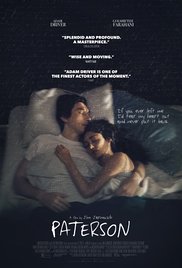
paterson-b Greetings again from the darkness. Do you find poetry in everyday life? What about poets … do you envision loners whose lives are filled with angst and suffering? Our lead character here is a pretty normal guy who drives a city bus, has a happy marriage, and walks his dog each evening. He’s also a poet – and a pretty interesting one.

Writer/director Jim Jarmusch (Broken Flowers, 2005) often seems like he is making films for his circle of friends … all whom must be much cooler than you and me. This time, however, he takes an opposite approach and brilliantly focuses on a dude that any of us could know. Paterson (Adam Driver) is a New Jersey Transit bus driver who writes poetry based on his observations of life’s seemingly minor details (his first poem notes “We have plenty of matches in our house”).

You should be forewarned: there are no murders, kidnappings, bank robberies or shootouts. Things move rather deliberately. Also missing are any special effects – heck, Adam Driver even got licensed to drive a bus for the role. Instead, we are forced to slow down and see each of the seven days of a week through the eyes and words of Paterson. He observes. He listens. He people watches. He then commits his thoughts to the page and recites them for our benefit. Sometimes he is eavesdropping on bus passengers, while other times he curiously tries to figure out the newest “dream” for his beloved wife Laura (Golshifteh Farahani). Having the soul of an artist, Laura cloaks her world in a geometric black and white color scheme while energetically bounding from cupcakes to country and western music to cooking as she pursues her place in life.

There are many Jarmusch touches throughout. Paterson the poet actually lives and works in Paterson, New Jersey … yep, Paterson from Paterson. The interactions at the neighborhood bar (run by Barry Shabaka Henley) are simultaneously real and surreal – right down to the wall of local fame (including Hurricane Carter and Lou Costello, but no mention of Larry Doby). Coincidences abound. A young girl recites her poem to Paterson … her writing style, personal book, and delivery make her seem like his poetic doppelganger – all while the recurring appearance of numerous sets of twins make us believe in the law of attraction. Lastly, the closest thing to a villain in the film is Paterson’s bulldog Marvin, in what plays like a love-hate relationship with the mailbox being center-ring.

Another local Paterson (the city) aspect is Paterson’s (the poet) admiration of the works of William Carlos Williams, a poet whose style he emulates. One of the terrific scenes near the end involves a spontaneous interaction between Paterson and town visitor (Masatoshi Nagase) that takes place next to The Great Falls, and serves as a reminder that we should accept who we are, no matter the challenges or lack of glory. This is truly director Jarmusch’s ode to the artist/poet in each of us and in ordinary life. Creating art as best we can is a very personal thing, and for some it’s a need – while for others it’s one of life’s simple pleasures. Regardless, a “normal” life with daily routines is not to be scorned, but rather embraced, should you be so fortunate. If you doubt this, Paterson asks, “Would you rather be a fish?”

**NOTE: sharp moviegoer eyes will recognize Kara Hayward and Jared Gilman, who both had their debut in Wes Anderson’s Moonrise Kingdom (2012).

watch the trailer:


A MONSTER CALLS (2016)

January 5, 2017

a-monster-calls Greetings again from the darkness. “From ghoulies and ghosties/ And long-legged beasties/ And things that go bump in the night,/ Good Lord, deliver us”. It’s an old Scottish poem that doesn’t take into account what movies like Pete’s Dragon, The Jungle Book, The BFG, and now this latest from director JA Bayona have intimated this year … not all those ‘bumps’ are necessarily evil.

Lewis MacDougal delivers an incredibly nuanced performance displaying a wide array of emotions as “a boy too young to be a man, and too old to be a child”. His beloved mother (the always terrific Felicity Jones) is bedridden with a terminal illness, and Conor faces relentless pressure for a kid: bullies at school, a dying mom, a strict grandmother, and some rough and vivid dreams/nightmares. As his clock flips to 12:07 am, he watches as a Groot-like giant sprouts from a nearby Yew tree. It’s an intimidating and magnificent beast who, through the dulcet tones of Liam Neeson, informs Conor that he will tell the boy three stories … after which Conor must tell his own.

The meaning behind the three stories (Prince/Queen, Apothecary/Parson, Invisible Man) is not immediately obvious to Conor, but the stories are animated through beautiful watercolors providing depth to the dreams and the lessons. This fascinating film is based on the novel by Patrick Ness who completed the idea of Siobhan Dowd after she passed away from the terminal illness that inspired the story.

I made the mistake of assuming this was going to be a kid’s movie in the style of another featuring the voice work of Mr. Neeson (as Aslan) – The Chronicles of Narnia: The Lion, The Witch, and the Wardrobe (2005). Instead, it’s a heavy drama, filled with emotions beyond what most kids experience. Conor is trying to come to grips with living with his stuffy grandmother (a solid Sigourney Weaver) while his mother slowly fades (but not without first introducing her son to the original misunderstood beast in King Kong), and already having a mostly absentee Dad (Toby Kebbell).

As with most tearjerkers (and this certainly is that!), there will be those who describe it as manipulative and obvious, but it’s likely most will find it to be a touching, well-written, superbly acted film with standout special effects utilized for the advancement of the story. Young Mr. MacDougal carries most of the movie and seamlessly bounds from anger to sadness to hopeful. Director Bayona proved in The Impossible and The Orphanage that he has an eye for kid actors, and when combined with the voice of Liam and the other fine actors it makes for a powerful experience … and a reminder that dealing with death is difficult for both kids and parents, and we all need a little help letting go (displayed literally here).

**NOTE: sharp-eyed viewers will spot a photograph of Liam Neeson as Conor’s grandfather on a shelf in the house.

watch the trailer:


SILENCE (2016)

January 5, 2017

silence Greetings again from the darkness. Martin Luther King said “Faith is taking the first step even when you don’t see the whole staircase”. Martin Scorcese’s esteemed film career could be described as unveiling that staircase, one step/film at a time. Religion, spirituality and yes, faith, have played a key role in his life and his films – most notably, Kundun and The Last Temptation of Christ, but also most of his other projects.

A high-ranking priest (Ciaran Hinds) is meeting with two younger Portuguese priests and informing them of the rumor that their mentor Father Ferreira (Liam Neeson) has reportedly renounced his faith and is now living as a Japanese Buddhist in Nagasaki. The two young Jesuit priests, Rodrigues (Andrew Garfield) and Garupe (Adam Driver) refuse to believe this and request to be allowed to track down Ferreira and bring him home. It could be termed a rescue mission, and the two men could be called missionaries, but what follows is an excruciating test of their own faith.

Martin Scorcese has been working on this passion project for more than two decades – ever since he read the Shusaku Endo novel (published in 1966). Cast members have changed through the various iterations of the project, but after the box office success of The Wolf of Wall Street, Scorcese received the financial backing to bring his vision to the screen. He co-wrote the screenplay with Jay Cocks (Gangs of New York) and the result is the visual and emotional epic that you might expect from one of the greatest filmmakers of all time.

17th century Christianity in Japan might be a difficult subject to sell to the general movie-going public, and Scorcese goes out of his way to leave unanswered the multitude of questions the film raises. Rather than wrapping it up with a clean ending, he leaves viewers craving further discussions, clarity and explanations. In other words, it lacks mass appeal and shouldn’t be confused with light-hearted entertainment.

Rodrigues is resolute in his belief that God is the answer … even when the film’s title is at the forefront. As Rodrigues and Garupe minister to the village of secret Christians (led by Yoshi Oida and Shinya Tsukamoto) at night and hide during the day, we learn of the Japanese state’s commitment to eradicating Christians and Christianity to ensure the power and isolation of the country. The oddest character in the film is that of Kichijiro (an excellent Yosuke Kubozuka). He is both guide to the priests and a constant challenge to their faith, while also providing moments of comic relief in a film with very few. Were this a Kurosawa film, this role would have been a perfect fit for the great Tishiro Mifune.

The most obvious adversary for the priests is the Japanese elder known as The Inquisitor. Issei Ogata excels in the role as a wily, half-smiling, quite knowledgeable wartime (a war on Christianity) leader intent on creating the most painful and public extermination of Christian believers and those priests who dare to infect his country (Japan’s 1614 Edict of Expulsion). The torture and persecution is too much to detail here, but it portrays how even the most ardent believers could choose life over faith.

The film blends fiction with some true-to-life aspects, and is most effective at asking questions and spurring thought. Which is more crucial – public or private faith? Is doubt allowable and even understandable? Is Rodrigues so committed to faith or is there also an element of martyrdom present? How about the “Judas” sub-plots? Is it betrayal if it saves one’s own life? Just where is that line? Is Ferreira a disgraced priest or simply a man valuing survival? The film is beautiful to look at (superb work from cinematographer Rodrigo Prieto and editor Thelma Schoonmaker) while being exceedingly tough to watch (and quite long). Be prepared to set aside time for reflection and discussion … you may even discover some surprises in your views and beliefs.

watch the trailer:


UNDER THE SUN (2016, doc)

January 1, 2017

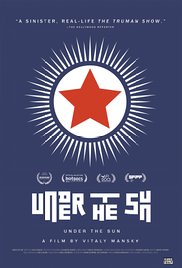
under-the-sun Greetings again from the darkness. There is an old episode of “The Twilight Zone” that has always stuck with me. It starred Bill Mumy (who later became well known as Will Robinson in “Lost in Space”) as a young boy with God-like mental and telekinetic powers. The entire town was afraid of him, so they constantly acted in ways to make him believe they were happy and appreciated him. Memories of that show came rushing back as I watched this documentary from Russian director Vitaly Manskiy. We outsiders know little about life in North Korea (it’s known as ‘the Hermit Kingdom’), though the film seems to confirm what we’ve been led to believe: it’s a country filled with citizens either living in fear or living with acceptance of their plight (or both).

Director Manskiy was contracted to make a movie about daily life of an ordinary family in Pyongyang. Two “escorts” were assigned to him, a state-sponsored script was provided, and his footage was reviewed daily. When the project was dissolved, Manskiy assembled the pieces … and added the secretly saved snippets from when he kept the cameras rolling between takes. The result is a documentary on the attempts of a Communist government to stage an illusion of perfection. It comes off as a foolish propaganda effort to convince the world that North Koreans are a happy people. What we see on screen convinces us otherwise.

At the center of all this is 8 year old Zin-mi and her family. If you thought The Monkees were a pre-fab TV version of The Beatles, this shows what true manipulation is all about. Zin-mi’s parents are given new jobs for the movie version. Rather than a print journalist, her father is given a job as an executive at a garment factory; and rather than a cafeteria worker, her mother is presented as working at a soy milk factory. Additionally, the family is moved into a nice apartment and then provided with meal time conversation, and even told where and how to sit and stand.

Zin-mi has joined the Childrens Union and the whole community is preparing for Day of the Shining Star – the national holiday celebrating the birthday of Kim Jong-Il; keeping alive the memory of their supreme leader who died in 2011. During these preparations, we see the clean streets and no-frills buildings, as well as the brainwashing that occurs during presentations and classes … the Japanese are labeled scoundrels, while Americans are cowards. The lingering images, and faces of those posing for photos, can’t mask the emptiness of the individuals.

The film reinforces more than enlightens, and it’s more a rare snapshot of this society than a global perspective. Still, we can’t help but feel saddened for the people as their lines are fed to them with directions like, that was “too gloomy”, and, do it again with “joy”. No proof of the brutal regime is presented, but it’s obvious freedom of thought is not encouraged. The correlation becomes all the more ironic when it’s recalled that the title of that Twilight Zone episode was “It’s a Good Life”.