TMI (Today’s Movie Info)
February: Director’s Month
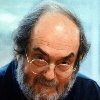 STANLEY KUBRICK (1928-1999) only made 12 full length feature films, but 11 of them could be considered classics. His 1956 The Killing is still considered one of the best of the Film Noir genre, and Paths of Glory (1957) is a staple in Film Classes for war films. Spartacus (1960) and Lolita (1962) provided true insight into his filmmaking genius, and the turning point in his career was the critical acclaim and box office success of his war/political black comedy Dr Strangelove or: How I Learned to Stop Worrying and Love the Bomb (1964). After that, Kubrick had the power that only a handful of directors ever achieve – he was free to choose what movies he wanted to make, when he would make them, how he would make them, and with whom he would make them. In 1968 he collaborated with Arthur C Clarke to create what many still consider the best sci-fi film ever, 2001: A Space Odyssey. In the 70’s came his ultra-violent masterpiece A Clockwork Orange (1971) and also Barry Lyndon (1975). For many film lovers the classic modern horror film is Kubrick’s The Shining (1980), based on Stephen King’s novel (though King despised the adaptation). In 1987, Kubrick explored the dark psychological damage caused by war in Full Metal Jacket. His final film was Eyes Wide Shut (1999), which received very mixed critical reviews (he claimed it was his best film). Kubrick died in his sleep in while working on another sci-fi film. His friend, Steven Spielberg, finished the film and dedicated AI: Artificial Intelligence (2001) to Stanley Kubrick. Over his career, Kubrick received 13 Oscar nominations, winning for Best Special Effects for “2001”. Since he gave so few interviews, he was often described as a recluse. Kubrick scoffed at the label saying “I have a wife, three children, three dogs, seven cats. I’m not a Franz Kafka sitting alone and suffering.”
 Movie Reviews from the Dark