 Greetings again from the darkness. This time it’s the darkness of Chauvet Cave in southern France, which was discovered by accident in 1994 by three spelunkers, including the cave’s namesake. Discovering a “new” cave must be incredibly thrilling. But what about one that houses the earliest human cave drawings ever found?
The French government quickly recognized the importance of this find and installed an electronic metal door to seal off the cave to all but a few scientists who spent years carefully mapping every square inch of the cave. Protecting the air and the type of intrusion will, hopefully, protect the 400 or so wall drawings. These drawings are beautiful and cause the imagination to run wild. We see animals similar, yet different than those we know today. Why is there a difference? Well these drawings have been dated to 32,000 years ago! Thousands of years prior to any other human drawings previously discovered.
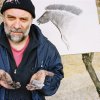
 Director Werner Herzog and his crew are given limited access and are severely limited on the type of equipment they can use. They are confined to a very narrow walkway and are not allowed to touch the drawings. In fact, these limitations work to provide an ethereal look and feel … it’s as if the flickering torches of the original artists are guiding us.
Mr. Herzog is well-known for his unique voice and approach to filmmaking. If you have seen his Fitzcarraldo or his documentary Grizzly Man, you understand what I mean. Here, he spends much time narrating what could have been, speculating on the inspiration, and wondering why so little proof of humans exist here. We see a footprint and some palm prints, but really the drawings are the only sign of human intrusion. Instead fossil remains of cave bears and other wildlife are present. Then again, it has been at least 20,000 since the cave was sealed by a natural rock-slide.
 I am sure this will show up on the History Channel and an argument could be made that TV would have been the proper display for this piece. I will say that the big screen does allow for greater appreciation of the artwork, even if some of the interviews come across as filler and the pacing is quite slow. As for the epilogue featuring a French nuclear reactor and and the introduction of warm waters perfect for breeding mutant albino alligators that “may someday reach Clauvet Cave”, I say … oh, Werner.
SEE THIS MOVIE IF: you are a dedicated anthropologist, archealogist, paleantologist, spelunker OR would like a glimpse into an ancient world that you will probably never see first hand.
SKIP THIS MOVIE IF: you appreciate the historic significance of this find, but would just as soon check out the website
 Movie Reviews from the Dark